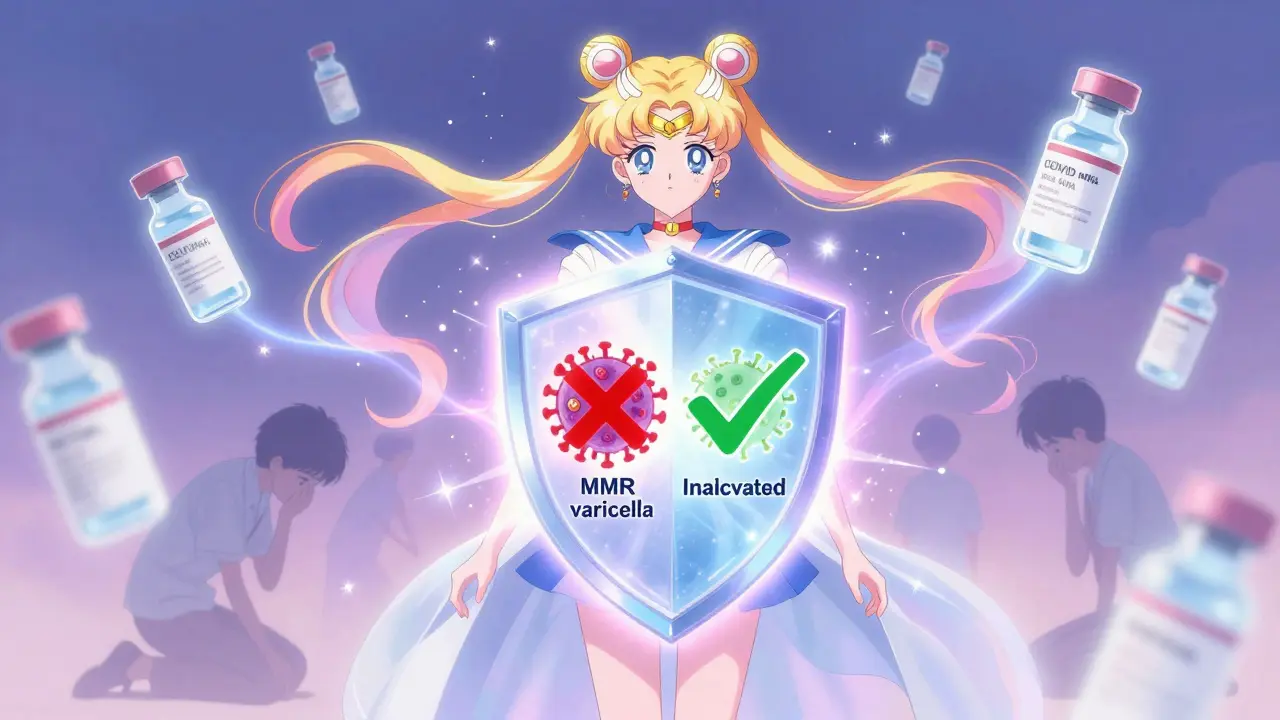
Vaccines While on Immunosuppressants Checker
Is This Vaccine Safe For You?
This tool helps determine if specific vaccines are safe while taking immunosuppressive medications. Always consult your healthcare provider for personalized advice.
Result:
Getting vaccinated while on immunosuppressants isn’t just a matter of showing up for a shot. It’s a carefully timed, highly personalized decision that can mean the difference between protection and serious illness. If you’re taking steroids, rituximab, methotrexate, cyclophosphamide, or any other drug that dampens your immune system, the rules for vaccines change completely. What’s safe for someone healthy could be dangerous for you. And what works for one person on immunosuppressants might not work for another. The key is understanding the difference between live and inactivated vaccines - and when, how, and even if you should get them.
Why Your Immune System Matters More Than Ever
When your immune system is turned down - whether from a transplant, cancer treatment, autoimmune disease, or long-term steroid use - your body can’t respond the way it used to. That doesn’t mean you’re immune to diseases. In fact, you’re at higher risk. A simple flu can turn into pneumonia. A case of chickenpox can spread through your whole body. And COVID-19? It hits harder and lasts longer. But here’s the catch: your immune system also can’t respond well to vaccines the way it used to. Studies show that people on immunosuppressants often produce far fewer antibodies after vaccination. One 2025 study found that only 15% to 85% of immunocompromised patients developed protective antibody levels after mRNA COVID-19 vaccines, compared to over 90% in healthy people. That’s why timing, dosing, and vaccine type matter so much.Live Vaccines: Don’t Risk It
Live vaccines contain a weakened version of the actual virus. They work by tricking your body into thinking it’s infected - so it learns how to fight it. For healthy people, that’s perfect. For someone on immunosuppressants? It’s a gamble. The IDSA 2025 guidelines and the CDC are clear: live vaccines are generally contraindicated for anyone moderately or severely immunocompromised. That means you should avoid them unless your doctor says otherwise - and even then, only under strict conditions. Here are the live vaccines you need to watch out for:- MMR (measles, mumps, rubella)
- Varicella (chickenpox)
- Zoster (Zostavax - the older shingles shot)
- Live attenuated influenza vaccine (LAIV - the nasal spray flu vaccine)
- Oral polio (rarely used now)
- Smallpox (not given to the public)
Inactivated Vaccines: Safe - But Not Always Effective
Inactivated vaccines are made from dead viruses or parts of viruses. They can’t cause disease. That’s why they’re the go-to for immunocompromised people. But safety doesn’t mean they always work. These vaccines are recommended for almost everyone on immunosuppressants:- Inactivated influenza (flu shot - NOT the nasal spray)
- COVID-19 mRNA (Pfizer, Moderna) or protein-based (Novavax)
- Pneumococcal (PCV20, PPSV23)
- Hepatitis B (Engerix-B, Recombivax HB, or Heplisav-B)
- Tetanus, diphtheria, pertussis (Tdap)
- Polio (injected version)
- Meningococcal
- COVID-19: If you’re immunocompromised, you need two additional doses of the 2025-2026 vaccine after your initial series. Some people need a third booster, depending on their condition.
- Hepatitis B: You may need a full 3-dose series (at 0, 1, and 6 months), and your doctor might check your antibody levels after to see if you’re protected.
- Pneumococcal: You might need both PCV20 and PPSV23, given at least one year apart.

Timing Is Everything
Getting the right vaccine isn’t enough. You have to get it at the right time. The best time to vaccinate is before you start immunosuppressants. If you’re planning a transplant or starting chemotherapy, get all your vaccines at least 14 days before treatment begins. That’s your best shot at building strong immunity. But what if you’re already on treatment? Then you need to work with your doctor to find the best window. Here’s how timing works for common therapies:- Rituximab or ocrelizumab (B-cell depleting drugs): Wait at least 6 months after your last dose before getting any vaccine. The ideal window is 3 to 6 months after treatment ends. If you’re on ongoing therapy, get the vaccine 4 weeks before your next infusion.
- Methotrexate: Some patients skip their weekly dose for 1-2 weeks after vaccination. One patient on Reddit reported that after doing this, they finally developed detectable antibodies - something they hadn’t done before.
- Cyclophosphamide: Vaccines should be given during the “nadir week” - the week after your chemo cycle when your white blood cells are starting to recover.
- Corticosteroids (prednisone ≥20 mg/day for 14+ days): Try to vaccinate when your dose is lowered to under 20 mg/day. If that’s not possible, vaccinate anyway - just know your response may be weaker.
What About Your Family?
You’re not the only one at risk. People around you can bring germs home. The IDSA guidelines strongly recommend that household members and close contacts get vaccinated too - especially for flu, COVID-19, and pertussis. This is called “cocooning.” One 2025 study showed that when everyone around an immunocompromised person was up to date on vaccines, household transmission dropped by 57%. Make sure your kids get their MMR and varicella shots. Your partner should get the flu shot. Grandparents should get pneumococcal and shingles vaccines (the non-live one - Shingrix, not Zostavax). It’s not just about protecting you - it’s about protecting the whole circle.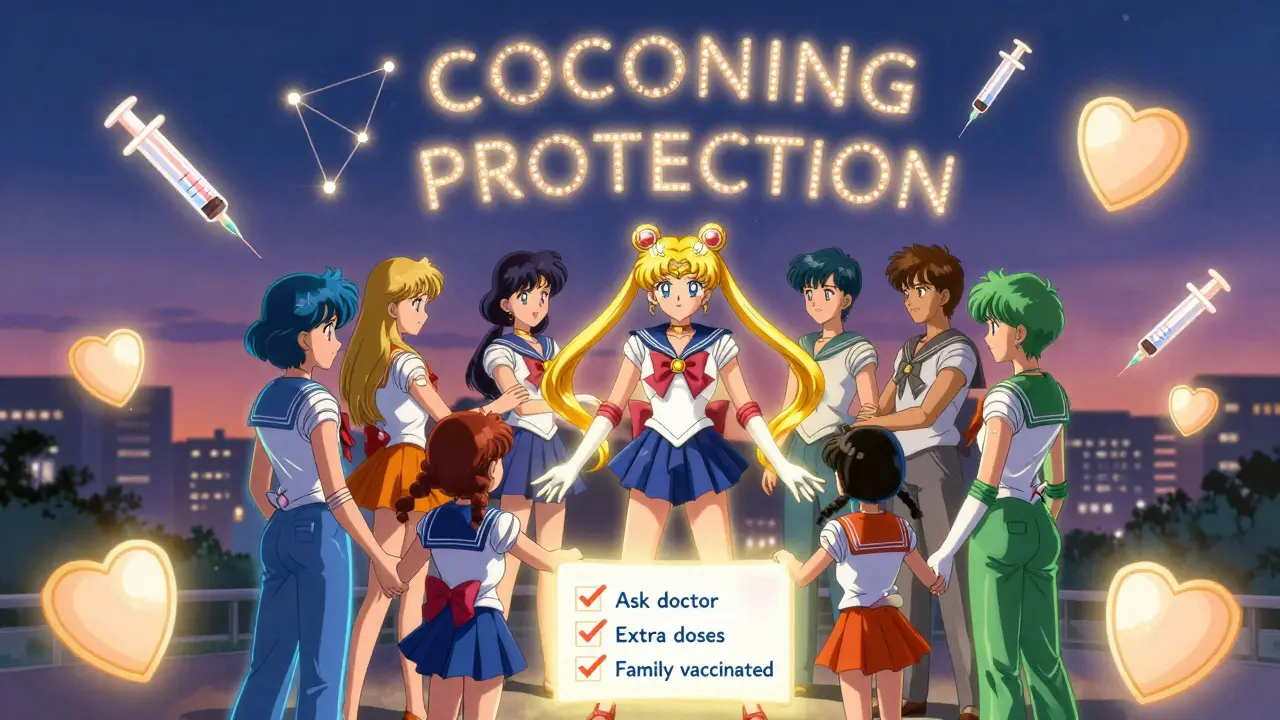
What If You Got the Wrong Vaccine?
Mistakes happen. One patient in a 2025 survey said her oncologist scheduled her for the nasal flu vaccine while she was on rituximab. She only caught it because her infectious disease specialist reviewed her chart. If you accidentally got a live vaccine:- Call your doctor immediately.
- Monitor for fever, rash, or unusual fatigue.
- Don’t panic - serious reactions are rare, but they do happen.
- Document the mistake. Ask for it to be noted in your medical record.
What You Can Do Today
Don’t wait for your doctor to bring it up. Take charge:- Make a list of every medication you’re on - including doses and start dates.
- Check your vaccination record. What have you had? When?
- Ask your doctor: “Am I on a live vaccine contraindication list?”
- Ask: “When is the best time to get my next vaccine based on my treatment cycle?”
- Ask: “Do I need extra doses of the flu or COVID-19 vaccine?”
- Ask your family members to get their vaccines too.
The Bottom Line
Vaccines for people on immunosuppressants aren’t one-size-fits-all. Live vaccines? Avoid them. Inactivated vaccines? Get them - but get them at the right time, with the right number of doses. And don’t forget the people around you. The science is clear. The guidelines are updated. The tools are available. What’s missing is the conversation. Start it. Ask the questions. Push for the right timing. Your life depends on it.Can I get the flu shot if I’m on steroids?
Yes - but only the inactivated flu shot (the injection), not the nasal spray. If you’re on high-dose steroids (20 mg prednisone or more daily for over two weeks), your immune response may be weaker. Try to get the shot when your steroid dose is lower, if possible. If you can’t wait, get it anyway - it’s still better than nothing.
Why can’t I get the shingles vaccine if I’m on immunosuppressants?
You can - but not the old one (Zostavax). That was a live vaccine and is dangerous for you. The new one, Shingrix, is an inactivated vaccine and is safe and recommended. It requires two doses, 2 to 6 months apart. If you’re on rituximab or similar drugs, wait at least 6 months after your last dose before getting Shingrix.
Do I need to get the COVID-19 vaccine every year if I’m immunocompromised?
Yes - and more than once. The CDC and IDSA recommend two doses of the 2025-2026 COVID-19 vaccine for immunocompromised people, even if you’ve had previous boosters. Some may need a third dose, depending on their condition. Don’t assume one shot is enough. Your immune system needs extra help.
What if my doctor says I don’t need extra vaccine doses?
Ask for the IDSA 2025 guidelines or CDC’s 2025 immunization schedule for immunocompromised people. Many doctors aren’t up to date on the latest recommendations. You can print the summary from the CDC website and bring it to your appointment. Your life is worth the follow-up.
Can I get vaccinated during chemotherapy?
Yes - but timing matters. For drugs like cyclophosphamide, the best time is during the “nadir week” - the week after your chemo when your white blood cells are starting to recover. For others, like rituximab, you need to wait months after your last dose. Talk to your oncologist and ask for help from an infectious disease specialist.
Are there vaccines I should avoid even if I’m not on strong immunosuppressants?
Yes. Even if you’re on low-dose prednisone or hydroxychloroquine, live vaccines like MMR, varicella, and the nasal flu shot are still risky. The IDSA defines “moderate” immunosuppression as any treatment that increases infection risk - and that includes many common autoimmune drugs. When in doubt, assume live vaccines are off-limits unless your specialist says otherwise.