
Clearing out expired medications isn’t just about tidying up your medicine cabinet. It’s a safety step that can prevent accidental poisoning, reduce drug waste, and stop dangerous recalls from spreading. But here’s the problem: lot numbers don’t tell you when a drug expires. And if you’re guessing, you’re risking lives.
Don’t Guess the Expiration Date from the Lot Number
You might think, "If the lot number is 230515, doesn’t that mean it expired in May 2025?" No. It doesn’t. Lot numbers are for tracking batches, not dates. They’re like a car’s VIN-useful for recalls, useless for telling you when something goes bad. The FDA requires manufacturers to print the expiration date clearly on every package as "EXP MM/YY" or "EXP DD/MM/YY." That’s the only date you should trust. A lot number like "L1234567B" or "MK22B047" tells you which factory made it and when it was packed-but not when it stops working. Trying to calculate expiration from the lot number is like trying to guess your phone’s battery life from its serial number. It just doesn’t work. A 2024 study by Medplore found that 74% of medication errors during inventory clearance happened because staff tried to reverse-engineer expiration dates from lot numbers. One pharmacy in Ohio accidentally threw out $8,000 worth of insulin because they thought "220812" meant it expired in August 2022. It didn’t. The EXP date on the label said 08/2024. The drug was still good.Always Read the EXP Date First
Before you even look at the lot number, find the expiration date. It’s usually on the side or bottom of the bottle, blister pack, or box. Look for "EXP," "EXPIRES," or "USE BY." If it says "05/25," that means May 2025. If it says "25/05," that’s the same thing-just written in day/month format, common on international meds. Don’t rely on memory. Don’t assume all pills from the same bottle expire together. Some liquid antibiotics expire 14 days after opening, even if the bottle says 2026. Always check the label. If the label is faded, torn, or missing, treat it as expired. No exceptions.Use the Lot Number to Check for Recalls
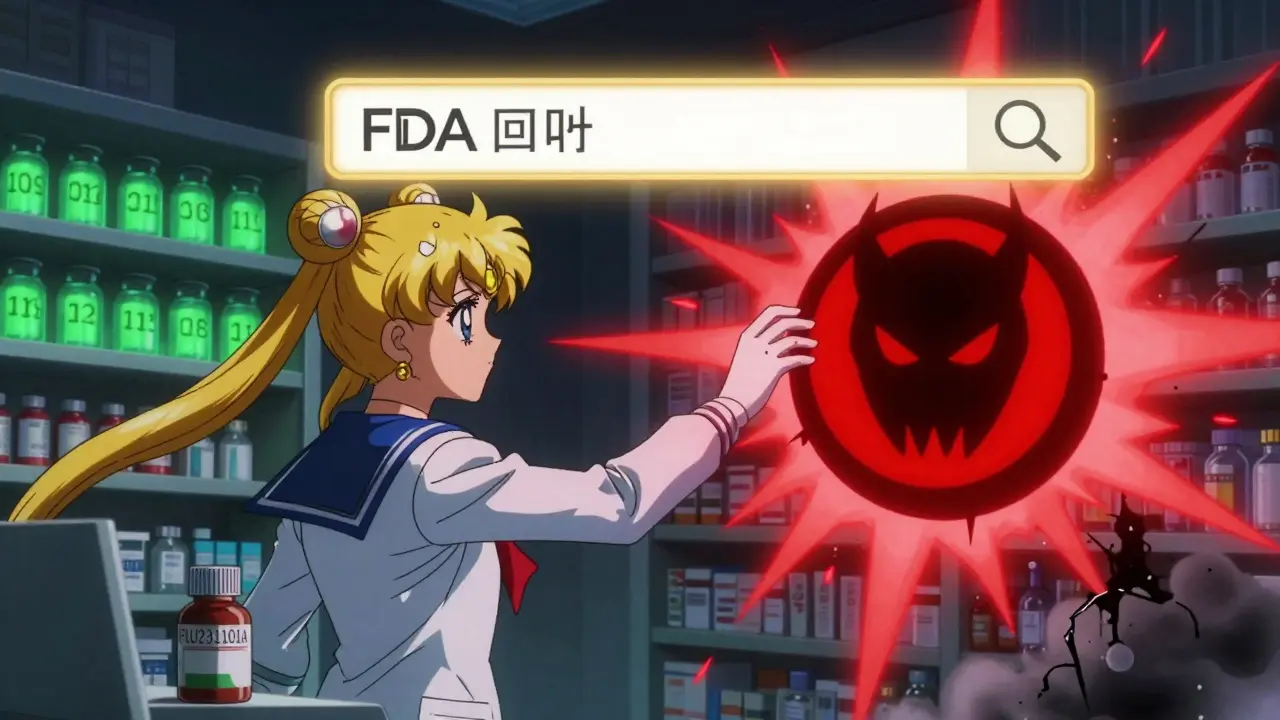
Once you’ve confirmed the expiration date, use the lot number to check for recalls. This is where the lot number actually matters. The FDA tracks every batch of medication that’s pulled from shelves because of contamination, mislabeling, or safety risks. Go to the FDA’s official Recalls, Market Withdrawals & Safety Alerts page. Search by the lot number. If you see a match, the drug might be unsafe-even if it hasn’t expired yet. You don’t need to be a pharmacist to do this. Just copy the lot number from the package and paste it into the search bar. In 2023, a recall of a popular blood pressure medication affected 12 different lot numbers. Pharmacies that scanned their inventory against the FDA list caught the problem before a single patient took a bad pill. Those that didn’t? They had to pull 400 bottles from shelves after a patient had a seizure.How to Verify Lot Numbers in a Pharmacy Setting
If you work in a pharmacy, clinic, or long-term care facility, here’s the three-step process the American Society of Health-System Pharmacists (ASHP) says you must follow:- Look at the package. Find and read the EXP date.
- Scan or type the lot number into your inventory system.
- Check the FDA’s recall database using that same lot number.
What to Do When You Find an Expired or Recalled Med
Don’t throw expired or recalled meds in the trash. Don’t flush them unless the label says it’s safe. The safest way is to drop them off at a drug take-back location. Many pharmacies, hospitals, and police stations offer free disposal bins. If you can’t get to a take-back site, mix the pills with coffee grounds or cat litter, seal them in a plastic bag, and toss them in the trash. This prevents kids or pets from getting into them. Remove personal info from the bottle before recycling it. For controlled substances like opioids or sedatives, you must fill out FDA Form 3639. Keep a copy for two years. This isn’t optional. The DEA requires it.Why Some Pharmacies Are Still Getting It Wrong
Chain pharmacies like CVS and Walgreens mostly use automated systems. They scan barcodes, match lot numbers, and get instant recall alerts. But independent pharmacies? Many still use paper logs or old software that doesn’t connect to the FDA’s database. A 2023 survey by the National Community Pharmacists Association found that only 42% of independent pharmacies use systems that track lot-specific expiration dates. That means nearly 6 in 10 are flying blind. One pharmacist in Montana told us she had to manually call 17 different manufacturers last year just to check if a batch of antibiotics was recalled. She spent 18 hours on the phone. The FDA is pushing for full electronic tracking by November 2025. But until then, if you’re running a small clinic or home pharmacy, you’re on the hook. Don’t wait for technology to save you. Do the work yourself.What’s Coming: AI and Standardized Labels
The FDA approved a new AI tool in April 2024 that can read expiration dates from blurry, damaged, or poorly lit labels with 99.2% accuracy. It’s already being used in hospitals in California and New York. Within two years, most pharmacies will have these scanners. The FDA is also working on a new standard called SNI (Standardized Numerical Identification) to make lot numbers easier to read and track. But here’s the key: expiration dates will still be separate. Even with better lot numbers, you’ll still need to look for the EXP date. Don’t wait for the future to fix this. Start today.Real-Life Example: A Pharmacy’s Mistake
In January 2024, a small pharmacy in Wisconsin received a shipment of flu shots. The EXP date on the box said 12/2024. The lot number was "FLU231101A." The staff assumed it was good because it wasn’t expired yet. They didn’t check the recall list. Turns out, that exact lot had been recalled because of bacterial contamination. Four patients developed infections after getting the shot. The pharmacy lost its license. The manufacturer sued. The cost? Over $2 million. All because they skipped step three.
Final Checklist: Clearing Expired Meds Safely
Use this every time you clear out old meds:- Find the EXP date on the package-never guess from the lot number.
- Write down the lot number exactly as it appears.
- Go to the FDA’s recall website and search that lot number.
- If it’s expired OR recalled, don’t use it.
- Dispose of it properly at a take-back site or by mixing with coffee grounds.
- Document what you threw out and why.
- Keep records for at least two years.
What If the Label Is Gone?
If the bottle has no label, no lot number, and no EXP date-throw it out. No exceptions. Even if you think it’s aspirin or vitamin D, you can’t be sure. Counterfeit meds are up 217% since 2020. If you can’t verify it, assume it’s dangerous.How Often Should You Check?
Check your medicine cabinet every three months. If you’re a pharmacy, check inventory weekly. Set a calendar reminder. Make it part of your routine-like changing smoke detector batteries. Don’t wait until the medicine is visibly discolored or smells weird. That’s too late.Why This Matters More Than You Think
The FDA says expired medications cause over 1.3 million emergency room visits every year in the U.S. That’s not a small number. It’s not just about wasted money. It’s about people getting sick because someone didn’t check a label. You don’t need fancy tools. You don’t need to be a pharmacist. You just need to look. And then check. And then act.Can I use the lot number to find out when my medicine expires?
No. Lot numbers are for tracking batches, not expiration dates. The only reliable way to know when a medicine expires is to read the "EXP" date printed on the package. Never guess or calculate it from the lot number.
Where do I check if my medication has been recalled?
Go to the FDA’s official website: Recalls, Market Withdrawals & Safety Alerts. Enter the lot number exactly as it appears on the packaging. If there’s a match, the drug has been recalled and should not be used.
What should I do with expired or recalled medications?
Take them to a drug take-back location, like a pharmacy or police station. If that’s not available, mix pills with coffee grounds or cat litter, seal them in a plastic bag, and throw them in the trash. Never flush them unless the label says it’s safe. Remove personal info from the bottle before recycling.
Do I need to check for recalls even if the medicine hasn’t expired yet?
Yes. A medicine can be recalled for safety reasons-like contamination or mislabeling-even if it’s still within its expiration date. Always check the lot number against the FDA’s recall list before using any medication.
What if the expiration date is faded or missing?
If you can’t read the EXP date or the label is damaged, treat the medication as expired. Do not use it. Even if you think it’s something harmless like ibuprofen, you can’t be sure of its safety without proper labeling.
Stewart Smith
January 1, 2026 AT 04:17Man, I just threw out a whole bottle of ibuprofen last week because the label was faded. Guess I’m not the only one who’s been winging it. Glad someone finally spelled this out.
Aaron Bales
January 1, 2026 AT 23:43Step one: read EXP. Step two: check lot number on FDA site. Step three: dispose properly. That’s it. No magic. No guesswork. Do it every time.
Emma Hooper
January 3, 2026 AT 14:00Oh honey, you’re telling me we’ve been treating lot numbers like horoscopes? 🤦♀️ I thought ‘L1234567B’ meant ‘lucky batch’ - turns out it just means ‘bless your heart, you’re holding a time bomb.’
Darren Pearson
January 3, 2026 AT 14:36It is deeply concerning that the majority of medication errors stem from a fundamental misunderstanding of pharmaceutical labeling conventions. The FDA’s mandate for explicit expiration dating is not merely regulatory-it is a bioethical imperative. To conflate batch identification with temporal efficacy is not merely negligent; it is a breach of professional duty.
One must ask: if a pharmacist cannot distinguish between a lot number and an expiration date, what other foundational knowledge is compromised? The 74% error rate cited is not an anomaly-it is a systemic failure.
The anecdote regarding the Ohio pharmacy is not tragic-it is predictable. In an era of AI-assisted diagnostics and blockchain-enabled supply chains, such errors should be relics of the pre-digital age. The fact that they persist speaks volumes about institutional inertia.
Moreover, the suggestion that individuals without formal training should manually cross-reference recalls is not a solution-it is a stopgap. We must demand interoperable systems, not glorified checklists.
Until every pharmacy integrates real-time FDA recall feeds into their inventory software, we are merely rearranging deck chairs on the Titanic.
John Chapman
January 5, 2026 AT 03:58YESSSSS this is sooo true!! 😭 I used to think lot numbers were like expiration codes like on yogurt!! I just found out my ‘220812’ was supposed to last until 2024?? 😵💫 I’m gonna check my whole cabinet tonight. Thanks for saving lives!! 💪💊
Jenny Salmingo
January 6, 2026 AT 18:41I’m a grandma with diabetes. I’ve been saving my insulin bottles for years because they ‘look fine.’ Now I know better. I’m taking them to the pharmacy tomorrow. No more guessing.
Urvi Patel
January 7, 2026 AT 22:20Why do Americans make everything so complicated? In India we just check the expiry date and if it looks old we throw it out. Lot numbers? Who cares? You want to die? Fine. But don’t lecture us
anggit marga
January 8, 2026 AT 23:14USA thinks it owns medicine safety? In Nigeria we have no labels at all and we still live. You people overthink everything. Your pills are more dangerous than your bureaucracy
Joy Nickles
January 10, 2026 AT 19:52Wait… so you’re saying… I threw out my Xanax because the lot number had ‘22’ in it… and it was actually good until 2025??? I’m crying. I’m so stupid. 😭😭😭 I didn’t even know FDA had a website for this. I thought it was just for food recalls. I’m gonna check my whole drawer right now. I feel like a criminal.
Kayla Kliphardt
January 12, 2026 AT 07:14What if the FDA website is down? Or the lot number isn’t searchable? Is there a backup system? Or do you just assume it’s safe?
Retha Dungga
January 13, 2026 AT 06:19Lot numbers are like cosmic codes 🌀✨ You think you’re checking safety but you’re just chasing ghosts in a machine that doesn’t care. The real expiration date? When you stop listening to labels and start listening to your gut. 🌿💊
Martin Viau
January 13, 2026 AT 20:27Let’s be real: if your pharmacy still uses paper logs in 2024, you’re not running a clinic-you’re running a museum exhibit titled ‘How Not to Kill People.’ The FDA’s 2025 deadline is a joke. We need mandatory API integrations, not ‘manual checks.’ And if your system doesn’t auto-flag recalls, you’re not just behind-you’re a liability.