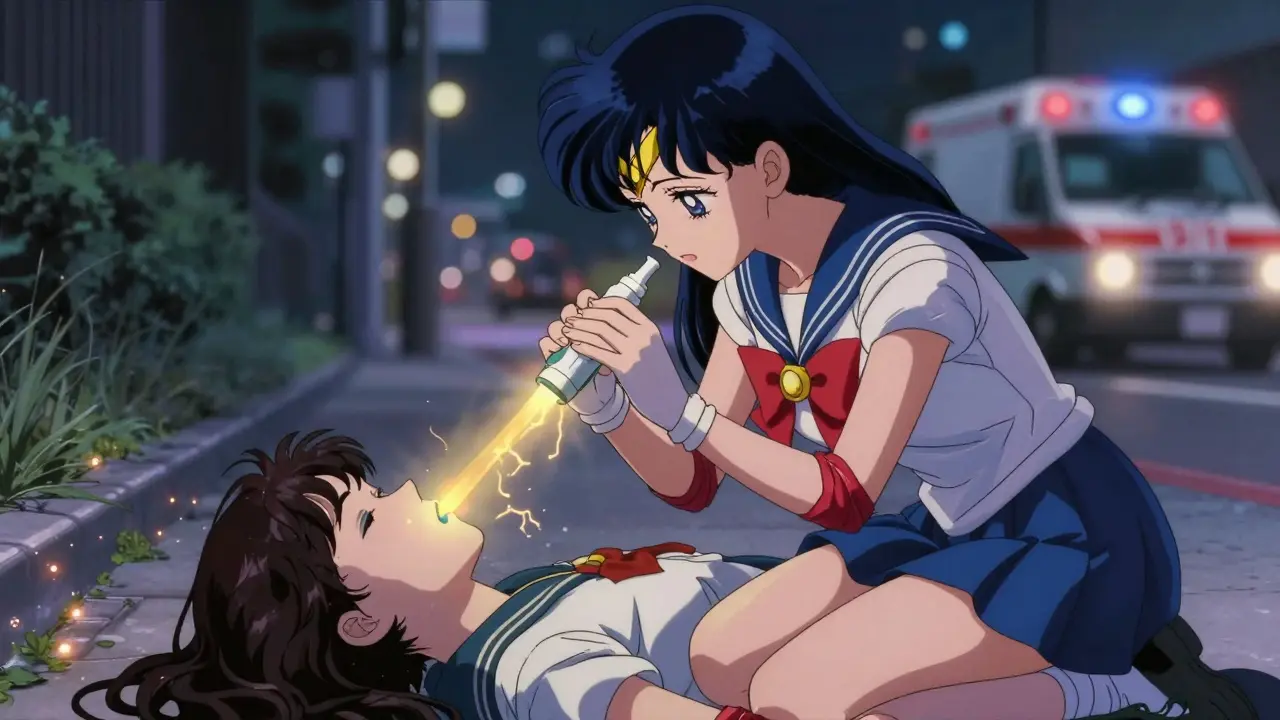
When someone overdoses on opioids, every second counts. Their breathing slows down, then stops. Their skin turns blue. They don’t respond to shouting or shaking. This isn’t just a medical emergency-it’s a race against time. And naloxone nasal spray is one of the most powerful tools we have to win that race. It doesn’t cure addiction. It doesn’t treat pain. But it can bring someone back from the brink-fast. And the best part? You don’t need to be a doctor to use it.
What Naloxone Nasal Spray Does
Naloxone nasal spray, sold under the brand name NARCAN, is a medication that blocks opioids from binding to brain receptors. Opioids like heroin, fentanyl, and oxycodone slow down breathing by over-activating these receptors. Naloxone kicks them out, allowing the person to start breathing again. It works within 2 to 5 minutes and lasts 30 to 90 minutes. That’s enough time to get emergency help.
It’s important to know: naloxone only works on opioids. It won’t reverse overdoses from alcohol, benzodiazepines, or cocaine. But if you’re unsure whether opioids are involved, use it anyway. It’s safe. Giving naloxone to someone who didn’t take opioids won’t hurt them.
Recognizing an Opioid Overdose
You don’t need a lab test to know if someone overdosed. Look for these signs:
- Slow, shallow, or stopped breathing (fewer than 12 breaths per minute or no chest movement for 15 seconds)
- Unresponsive to voice or physical stimulation-try rubbing your knuckles hard on their sternum for 5 to 10 seconds
- Pinpoint pupils (very small, dark circles in the center of the eyes)
- Blue, gray, or pale skin, especially around the lips and fingernails
- Limp body, snoring or gurgling sounds (like they’re choking)
If you see even one of these, assume it’s an overdose. Don’t wait for all of them. Time is everything.
Step-by-Step: How to Use Naloxone Nasal Spray
Here’s exactly what to do, in order. No guesswork. No confusion.
- Call 911 immediately. Even if you’re about to give naloxone, call first. Emergency responders need to know what’s happening. Say: “Someone has overdosed on opioids. I have naloxone and am giving it now.”
- Position the person on their back. Tilt their head back slightly to open the airway. This helps them breathe easier after naloxone kicks in.
- Remove the nasal spray from its package. Don’t test it. Don’t press the plunger before you’re ready. The device is single-use and pre-filled. Just pull it out.
- Insert the nozzle into one nostril. Gently slide it in until your fingers touch the bottom of their nose. That’s about half an inch to one inch deep. Don’t force it.
- Press the plunger firmly. Push all the way down until you hear a click. Hold it there for a second. You’re giving the full 4 mg dose. If you don’t press all the way, you won’t deliver the full dose-and that could cost them their life.
- Remove the device and wait. Watch the person closely for 2 to 3 minutes. Are they breathing normally? Is their color returning? Are they waking up?
- If no response, give a second dose. Use a new nasal spray and put it in the other nostril. Don’t wait longer than 3 minutes. Fentanyl and other strong opioids often require more than one dose. The CDC says 32% of fentanyl overdoses need two or more doses.
- Place them in the recovery position. If they start breathing but stay unconscious, roll them onto their side. Bend the top knee and arm to keep them stable. This stops them from choking if they vomit.
- Stay with them for at least 4 hours. Naloxone wears off faster than some opioids. Fentanyl, carfentanil, and other synthetics can stay in the body much longer. They might stop breathing again. Don’t leave them alone. Keep monitoring.
Why This Works-And When It Doesn’t
Naloxone nasal spray has saved over 27,000 lives in the U.S. in 2022 alone. But it’s not magic. It only reverses opioid effects. If someone stops breathing and you don’t start CPR or get help fast enough, they can still die. That’s why calling 911 is step one-not step three.
Some people report naloxone not working. Often, it’s because:
- The dose was too low (they used only one spray when they needed two)
- The spray wasn’t fully delivered (didn’t press the plunger all the way)
- The person took a super-strong opioid like carfentanil, which needs multiple doses
- They were given naloxone too late-after brain damage had already occurred
Practice helps. The CDC found that 92% of people can use naloxone correctly after just 15 minutes of training. Many community centers offer free practice sessions with training devices that look and feel like the real thing. No shame in practicing. It could save your friend, your child, or a stranger.
What to Expect After Giving Naloxone
When naloxone works, the person wakes up fast. Sometimes too fast. They might panic, scream, or become aggressive. This isn’t anger-it’s withdrawal. Opioid withdrawal is painful. They may feel like they’re dying. Don’t take it personally. Stay calm. Reassure them: “You’re safe. Help is coming.”
Some people refuse to go to the hospital after being revived. Don’t let them leave. The risk of a second overdose is real. Their body still has opioids in it. Naloxone’s effect fades. Without medical care, they could slip back into respiratory failure.
Where to Get Naloxone Nasal Spray
In the U.S., NARCAN Nasal Spray is available over-the-counter at pharmacies like CVS, Walgreens, and Walmart-no prescription needed. Most states have laws protecting people who give naloxone in good faith. That means you can’t be sued for trying to save someone.
Cost varies. A two-pack usually runs $140 before insurance. Some community programs, harm reduction centers, and local health departments give it out for free. If you’re worried about cost, call your local health department or search “free naloxone near me.”
Myths and Misconceptions
Myth: Giving naloxone encourages drug use.
Truth: No evidence supports this. Studies show communities with naloxone programs have lower overdose death rates-not higher drug use.
Myth: Only drug users need naloxone.
Truth: People overdose on prescription painkillers, fentanyl-laced pills, and even counterfeit medications. Anyone could be at risk. A friend, a family member, a coworker.
Myth: Naloxone is dangerous.
Truth: It’s one of the safest medications available. Side effects are rare. The biggest risk? Not using it when you should.
What to Keep in Your Kit
If you carry naloxone, keep these with it:
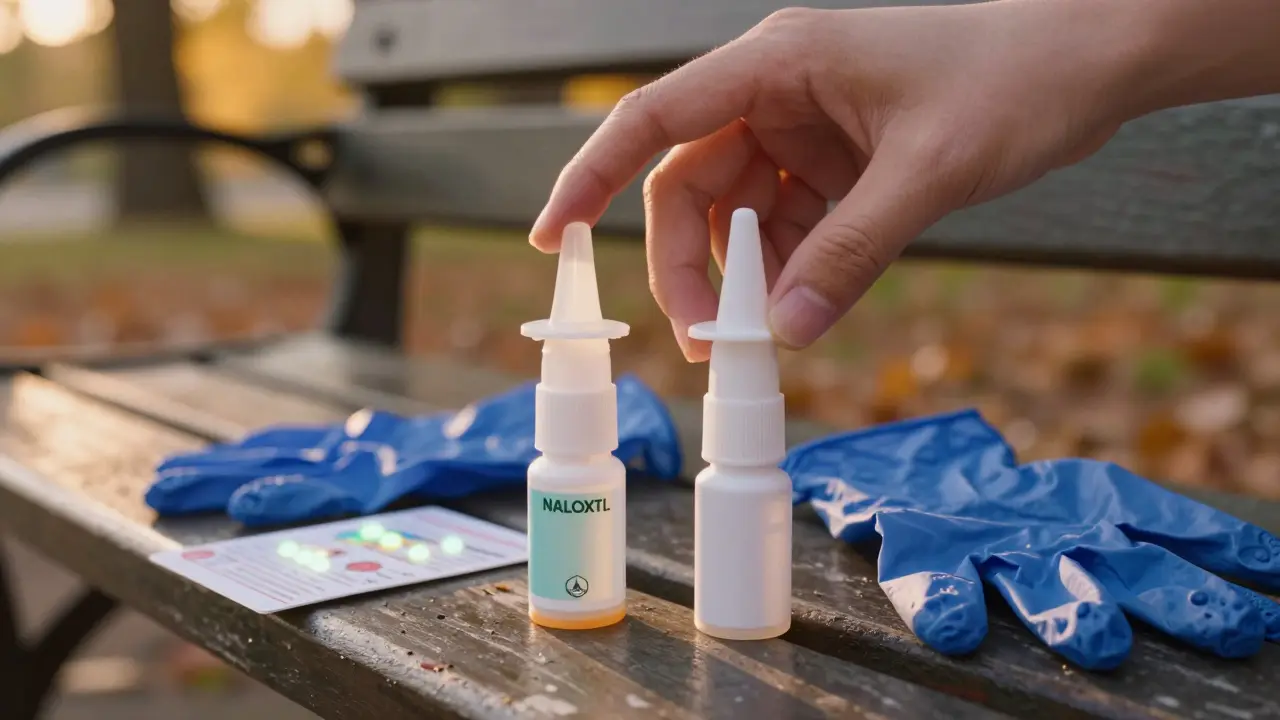
- Two nasal spray devices (one as backup)
- A pair of gloves (if you have them)
- A pocket card with the steps printed on it
- A phone (so you can call 911)
Store it at room temperature. Don’t leave it in a hot car or freezing garage. The shelf life is 24 months. Check the expiration date. Replace it when it’s close.
Final Thought: You Don’t Need to Be a Hero
You don’t need courage. You don’t need training. You just need to act. Someone you care about might overdose tomorrow. Or next week. Or tonight. Naloxone nasal spray is simple. It’s safe. It’s available. And if you know how to use it, you can be the difference between life and death.
Can I use naloxone nasal spray on a child?
Yes. Naloxone nasal spray is safe for children and infants. The 4 mg dose is appropriate for all ages. If the child is small, you can still use the full dose. The risk of giving too much naloxone is extremely low. Not giving it when needed is far more dangerous.
What if I don’t have naloxone? Can I still help?
Yes. If you don’t have naloxone, start CPR immediately. Focus on rescue breathing-give one breath every 5 seconds. Keep going until help arrives. Opioid overdoses are often caused by stopped breathing, not heart failure. Keeping oxygen flowing is the most critical thing you can do.
Does naloxone work on fentanyl?
Yes, but it often requires more than one dose. Fentanyl is 50 to 100 times stronger than morphine. A single 4 mg spray may not be enough. If the person doesn’t respond after 2 to 3 minutes, give a second dose in the other nostril. Some cases need three or more doses. Don’t stop trying.
Can I give naloxone to someone who’s not overdosing?
Yes, and it’s safe. Naloxone has no effect on people who haven’t taken opioids. It won’t cause harm, addiction, or withdrawal. If you’re unsure whether someone overdosed, give naloxone. Better to give it and be wrong than to wait and lose someone.
How long does naloxone last, and why does that matter?
Naloxone lasts 30 to 90 minutes. But many opioids, especially fentanyl, last much longer. That means the person can slip back into overdose after naloxone wears off. This is why you must monitor them for at least 4 hours and get them to a hospital-even if they seem fine. The danger doesn’t end when they wake up.
peter vencken
March 24, 2026 AT 23:14just used this on my bro last month after he OD’d on fentanyl-laced xanax. i didnt even know how to use it till i read this guide. pressed the plunger like a boss, he gasped like a fish outta water, then started cussin me out. worth it. dont wait, just do it.
Chris Crosson
March 26, 2026 AT 16:35this is gold. i work in retail and we had a guy collapse in the parking lot last winter. i had naloxone in my truck because my cousin died from it. saved his life. no hospital wanted to give us info on how to use it, so we had to google it. everyone should have this in their glovebox.
Jacob Hessler
March 26, 2026 AT 23:26why are we giving free drugs to junkies? this just enables them. if they wanna die, let em. why waste taxpayer money on this? i dont get it. its their fault for doing drugs. stop coddling losers.
James Moreau
March 28, 2026 AT 15:57thank you for this. my sister’s boyfriend overdosed last year. we didn’t have naloxone. he died. i got two kits after. one for my house, one for my car. if you’re reading this and you’re not sure-just get it. you’ll thank yourself later.
J. Murphy
March 29, 2026 AT 18:37cool. so now we have a spray for fentanyl. what about the next thing? carfentanil? xylazine? are we gonna keep playing whack-a-mole with chemicals? this feels like putting a bandaid on a hemorrhage.
Jesse Hall
March 31, 2026 AT 14:35THIS. IS. LIFE. 💙 I carried this in my backpack for 2 years. Used it twice. Both times, the person woke up. One cried. One hugged me. I’m not a hero. I just had the damn spray. Get one. Seriously. 🙏
Seth Eugenne
April 1, 2026 AT 17:39just got my free naloxone from the community center yesterday. they gave me a little card with the steps and a keychain. i keep it on my keys now. my mom used to say, ‘better safe than sorry.’ this is one of those times. thanks for the clear guide.
Alex Arcilla
April 3, 2026 AT 07:04so we’re giving out lifesaving meds like candy now? cool. next up: free oxygen for smokers. free defibrillators for people who eat fried chicken. this is what happens when you confuse compassion with enabling. but hey, if you wanna be the guy who saves a junkie, go ahead. i’ll be the one who says ‘stop the bleeding at the source.’
Brandon Shatley
April 4, 2026 AT 03:13my cousin overdosed. i didn’t know what to do. i called 911, but they took 20 mins. i tried mouth-to-mouth. i was scared. then i found this guide. i wish i’d read it sooner. now i carry two sprays. i give one to my friends. you never know who needs it. just… be ready.
Jefferson Moratin
April 5, 2026 AT 13:29the moral architecture of naloxone is not about rehabilitation-it is about the preservation of biological continuity under conditions of systemic failure. to withhold it is not to enforce consequence; it is to abdicate the minimal ethical duty of human presence. we do not save lives to condone behavior-we save them because life, in its rawest form, is not ours to extinguish.
Caroline Dennis
April 7, 2026 AT 12:564 mg is standard. but with carfentanil, you need 8 mg. dual nostril. repeat. monitor. 4 hours minimum. don’t assume recovery = safety. respiratory depression lingers. call 911 first. then act. protocol is non-negotiable.