Save Money on Meds: How to Cut Prescription Costs Without Compromising Care
When you need to save money on meds, it’s not about cutting corners—it’s about cutting waste. Many people think brand-name drugs are better, but the truth is simple: generic medications, the same active ingredients as brand-name drugs, approved by the FDA, and often 80% cheaper. Also known as generic drugs, they’re not second-rate—they’re the same medicine, just without the marketing tag. You’re not risking your health by choosing them. You’re making a smart, science-backed choice.
How you buy your meds matters just as much as what you buy. prescription drug prices, vary wildly between pharmacies, even for the same pill. Also known as pharmacy pricing, this isn’t random—it’s a system you can navigate. A study by the Kaiser Family Foundation found that the same 30-day supply of metformin cost $4 at one pharmacy and $87 at another, just miles apart. That’s not a typo. The difference isn’t quality. It’s markup. And if you’re paying full price because you don’t know where to look, you’re leaving money on the table. affordable medications, aren’t just a wish—they’re a reality if you know where to search and what to ask for. Also known as low-cost prescriptions, they’re available through mail-order pharmacies, discount programs like GoodRx, and even some big-box retailers that sell generics for under $5.
It’s not just about generics. It’s about timing, alternatives, and knowing when to speak up. Some medications have multiple versions with the same effect—like comparing famciclovir to acyclovir for cold sores, or choosing between different antihistamines that work just as well but cost less. You don’t need to accept whatever your doctor writes. Ask: "Is there a generic?" "Is there a cheaper alternative?" "Can I get a 90-day supply for less?" These questions save hundreds a year. And if you’re on long-term meds—like gabapentin, topamax, or Zyrtec—you’re not just saving a few dollars. You’re saving hundreds.
There’s also the hidden cost of not asking. People skip doses because they can’t afford pills. Others buy from sketchy websites looking for a deal and end up with fake drugs. The real win isn’t just the lowest price—it’s the safest, smartest price. That means knowing which online pharmacies are legit, how to spot a scam, and how to use tools like GoodRx or SingleCare to compare prices in real time. It’s not magic. It’s just knowing what to look for.
Below, you’ll find real stories and practical guides from people who’ve done this. From how to buy cheap generic Zyrtec safely to why you should never skip checking the price of your gabapentin at Walmart versus CVS. You’ll see how people saved $300 a month switching to generics. How others found their meds for $5 a month using discount cards. And how some avoided dangerous interactions by asking the right questions before filling a prescription. This isn’t about being cheap. It’s about being informed. And if you’re spending more than you need to on meds, you’re not alone—and you don’t have to keep paying it.
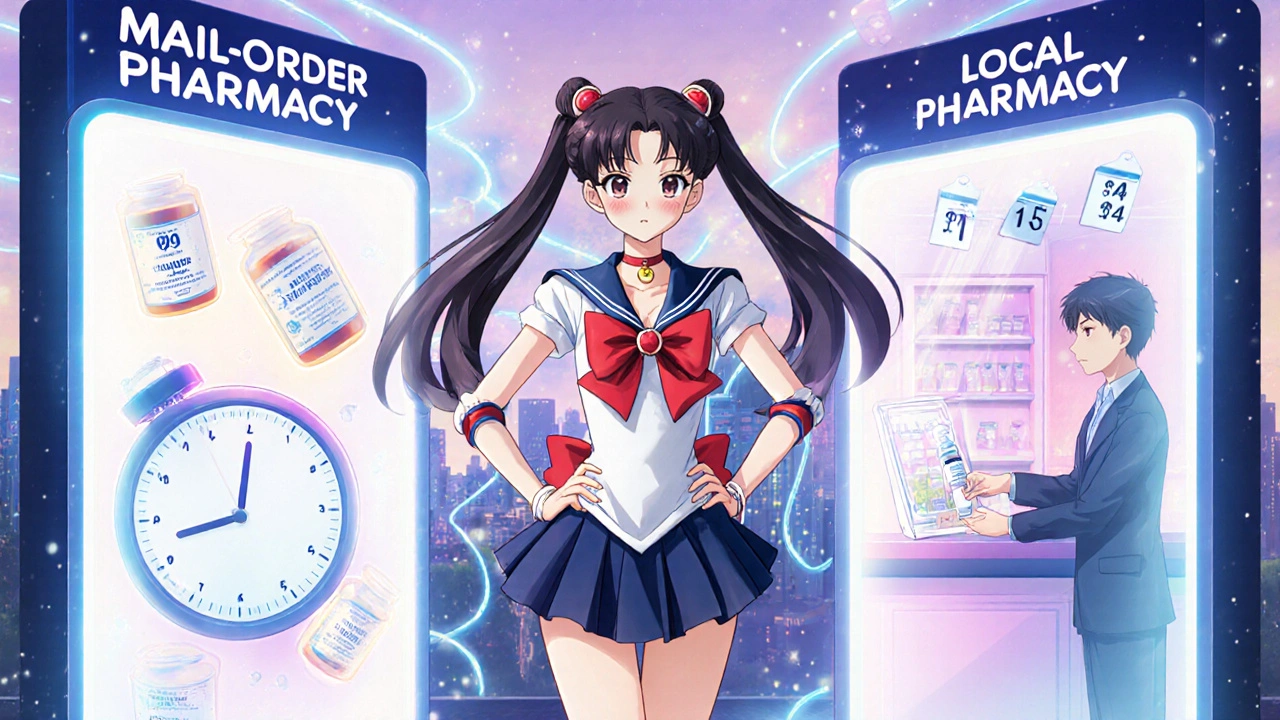
Learn how to split your prescriptions between mail-order and local pharmacies to save hundreds a year on medications. Discover which drugs to order online, which to pick up in person, and how to avoid common cost traps.
Read More