
When you eat a meal and still feel bloated, gassy, or like your stomach is sitting like a rock afterward, it’s easy to blame the food. But sometimes, the problem isn’t what you ate-it’s what your body can’t break down. Digestive enzymes are the body’s natural tools for splitting food into nutrients your system can use. But when those enzymes don’t work well enough, supplements might help. Not always. Not for everyone. But in specific cases, they can make a real difference.
What Digestive Enzymes Actually Do
Your body makes enzymes naturally-mostly from your pancreas. Every day, it produces about 800 to 1,500 milliliters of pancreatic juice packed with amylase (for carbs), protease (for proteins), and lipase (for fats). These enzymes kick in as food moves from your stomach into your small intestine. Without them, you’re not just digesting poorly-you’re missing out on essential nutrients. Fat-soluble vitamins like A, D, E, and K get lost. Calories turn into undigested waste. And that’s when symptoms like oily stools, weight loss, and constant bloating show up.When Enzyme Supplements Are a Medical Necessity
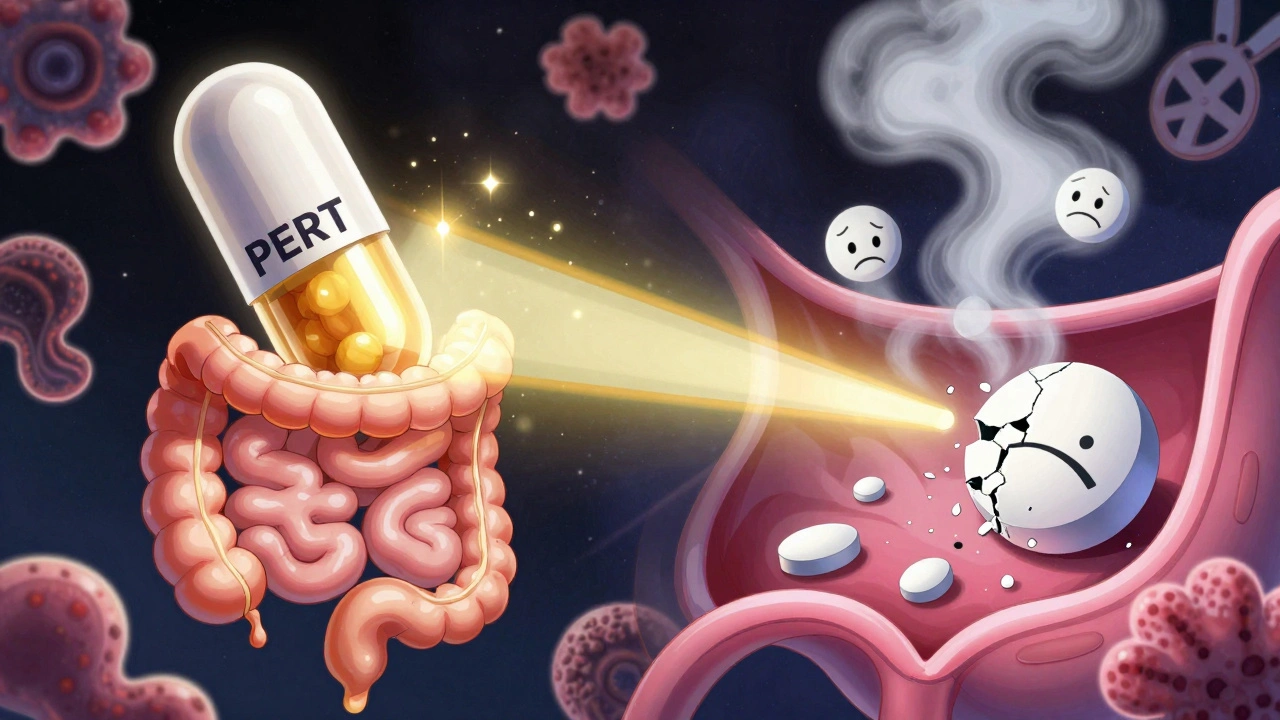
For people with exocrine pancreatic insufficiency (EPI), enzyme supplements aren’t optional-they’re life-changing. EPI means your pancreas isn’t making enough enzymes. It’s not rare in people with chronic pancreatitis (30-50% have it) or pancreatic cancer (80-90%). Even in the general population, 1-5% live with undiagnosed EPI. Prescription enzyme replacement therapy (PERT), like Creon or Zenpep, is the gold standard. These aren’t just fancy pills. They’re enteric-coated capsules designed to survive stomach acid and release enzymes exactly where they’re needed: the small intestine. Each capsule contains precise doses-10,000, 20,000, or 40,000 lipase units. In clinical trials, PERT reduces fatty stools by 70-85%. Patients report fewer bathroom trips, more energy, and better weight stability. The catch? These are drugs, not supplements. They’re FDA-approved, tightly regulated, and usually covered by insurance. But they cost $100-$300 a month without coverage. And they have to be taken right before each meal. Miss the timing, and they won’t work.OTC Enzymes: Helpful for Some, Useless for Others
Over-the-counter (OTC) digestive enzymes are everywhere-on Amazon, in pharmacies, in health food stores. Brands like Digestive Gold, NOW Foods, and Lactaid are popular. But they’re not the same as prescription PERT. Most OTC enzymes lack enteric coating. That means stomach acid can destroy them before they reach the small intestine. Testing by ConsumerLab found 15-25% of OTC products contain less than 80% of the enzyme amount listed on the label. That’s a gamble. But here’s the twist: for some conditions, OTC enzymes work surprisingly well.- Lactose intolerance: Lactaid, which contains lactase enzyme, helps 82% of users digest dairy without bloating or cramps. It’s one of the few OTC enzymes with strong, consistent evidence.
- IBS and bloating: A 2021 meta-analysis showed OTC enzymes reduced symptoms like gas and diarrhea by 50-60% in people with IBS, especially after eating high-FODMAP foods like beans, onions, or broccoli.
- General food discomfort: Many users report fewer gas episodes after eating cruciferous vegetables or high-protein meals. One Amazon review said, “I finally stopped feeling like a balloon after lentils.”
Who Should Avoid Them
Not everyone should take enzyme supplements. In fact, some people should avoid them entirely.- Acute pancreatitis: Taking enzymes during a flare-up can make inflammation worse. The FDA warns against it.
- Small intestinal bacterial overgrowth (SIBO): Enzymes can feed the bad bacteria in your small intestine, making bloating and pain worse. A 2021 case series documented patients whose symptoms spiked after starting OTC enzymes.
- People on proton pump inhibitors (PPIs): Drugs like omeprazole reduce stomach acid, which can interfere with how some enzymes activate. Taking PERT with PPIs without medical supervision can lower effectiveness.
How to Use Them Right
If you’re going to try enzymes, do it right.- Timing matters: Take them within 15 minutes before eating. If you wait until halfway through the meal, they’re too late.
- Start low: Begin with 10,000 lipase units per meal. If symptoms persist after a week, increase by 10,000 units. Most people find their sweet spot between 25,000 and 50,000 units per meal.
- Split doses for big meals: If you’re eating a heavy, fatty meal, take half the dose at the start and half halfway through. A 2018 trial showed this improved symptom control by 35%.
- Track fat intake: Roughly 500 lipase units are needed to digest 1 gram of fat. A steak with butter might need 40,000 units. A salad? Maybe 5,000.

The Bottom Line
Digestive enzyme supplements aren’t a magic fix. They’re a tool-with specific uses.- If you have EPI: You need prescription PERT. No substitute.
- If you have lactose intolerance: Lactase supplements like Lactaid are reliable and affordable.
- If you have IBS or occasional bloating: Try a high-quality OTC enzyme with protease, amylase, and lipase. Look for brands with third-party testing (like NSF or USP).
- If you’re just trying to “digest better” without clear symptoms: Focus on eating slowly, chewing well, and reducing processed foods. Your body’s own enzymes are usually enough.
What to Do Next
If you’re regularly experiencing gas, bloating, diarrhea, or oily stools after meals:- Keep a food and symptom diary for two weeks.
- See your doctor. Ask about testing for EPI or SIBO.
- If EPI is confirmed, get a prescription for PERT.
- If not, try a single OTC enzyme (like one with lactase or a broad-spectrum blend) for 3-4 weeks.
- If no improvement? Stop. There’s likely another cause.
Can digestive enzyme supplements cure IBS?
No, digestive enzyme supplements don’t cure IBS. But they can reduce symptoms like bloating, gas, and diarrhea-especially after eating trigger foods like beans, onions, or dairy. Studies show about 50-60% of IBS patients experience symptom improvement with OTC enzymes. However, IBS is a functional disorder, meaning the root cause is often gut-brain communication or gut sensitivity, not enzyme deficiency. Enzymes help manage symptoms, not fix the underlying issue.
Are OTC digestive enzymes safe to take long-term?
For most people without underlying conditions, short-term use of OTC digestive enzymes is safe. But long-term use without medical supervision isn’t recommended. Since OTC products aren’t regulated like drugs, their quality varies. Some contain fillers, allergens, or inconsistent enzyme levels. If you’re relying on them for months or years, you should be tested for conditions like EPI, SIBO, or celiac disease-things that need real medical treatment, not just enzyme pills.
Why do some people say enzymes made their bloating worse?
This often happens in people with undiagnosed SIBO (small intestinal bacterial overgrowth). Enzymes break down food into simple sugars and nutrients-but if bad bacteria are already living in the small intestine, those nutrients feed them. The result? More gas, more bloating, and worse discomfort. If your symptoms get worse after starting enzymes, stop and get tested for SIBO. Treating the bacterial overgrowth first usually fixes the problem.
Do I need to take enzymes with every meal?
If you have EPI or are using prescription PERT, yes-every meal and snack that contains fat, protein, or carbs. For OTC enzymes used for occasional bloating, you only need them with meals that trigger symptoms. For example, if you only get gassy after eating beans, take the enzyme only with those meals. There’s no benefit to taking them with fruit or plain rice if you don’t have issues.
Can I take digestive enzymes with probiotics?
Yes, and in some cases, it helps. A 2023 clinical trial showed that combining lactase enzyme with Bifidobacterium probiotics reduced lactose intolerance symptoms 45% more than lactase alone. The probiotics help balance gut bacteria, while enzymes break down hard-to-digest sugars. Many OTC products now combine both. Just make sure they’re stored properly-probiotics often need refrigeration, while enzymes don’t.
What’s the difference between prescription and OTC enzymes?
Prescription enzymes (like Creon) are FDA-regulated drugs with precise, standardized doses and enteric coating to survive stomach acid. OTC enzymes are dietary supplements with variable potency, no guaranteed coating, and often lower enzyme levels. Prescription versions are designed to treat EPI and are proven to reduce fat malabsorption by 70-85%. OTC versions may help with mild symptoms but won’t fix true pancreatic insufficiency.
Do digestive enzymes help with gluten sensitivity?
For people with celiac disease, no-enzymes are not a substitute for a gluten-free diet. But new research shows certain gluten-specific protease enzymes (like AN-PEP) can reduce gluten toxicity by up to 80% in small amounts. These are still experimental and not approved for regular use. For non-celiac gluten sensitivity, some people report less bloating with enzyme blends, but evidence is weak. The safest approach remains avoiding gluten entirely if you’re sensitive.
Constantine Vigderman
December 14, 2025 AT 02:32omg i tried those enzyme pills after eating beans and holy crap it was like a miracle 🙌 i used to feel like a balloon for hours, now i can chill after dinner. still gotta take them right before though, forgot once and regretted it lol
Webster Bull
December 14, 2025 AT 20:08enzymes aren’t magic. they’re tools. if your body’s broken, fix the root. not the symptom.
Scott Butler
December 16, 2025 AT 05:02another wellness scam. people take these because they’re lazy. chew your food. stop blaming your pancreas for eating pizza at 2am.
Michael Gardner
December 17, 2025 AT 21:05interesting how the market exploded while actual science stayed flat. people want a pill for everything. even if it’s just their bad habits.
Tyrone Marshall
December 18, 2025 AT 22:17if you're bloated after lentils, try soaking them overnight first. or just eat less. enzymes aren’t the first step. lifestyle is. but hey, if it helps, go for it - just don’t pretend it’s a cure.
kevin moranga
December 20, 2025 AT 12:27man, i’ve been using lactase drops for years - life changer. used to avoid cheese like it was poison. now i can have a little brie with my wine 🍷 no bloating, no guilt. i wish more people knew how simple this was. also, timing matters - i take it right as i start eating, not after. big difference.
and yeah, the OTC stuff is hit or miss. i switched to a brand with USP verification and it’s been perfect. don’t buy the cheapest one on amazon - you’re just throwing money away. and if you’re taking them for weight loss? nah. that’s just marketing noise. real people know better.
also, probiotics + enzymes? yes. i do both. my gut feels like a happy little ecosystem now. not a warzone. i don’t know why more docs don’t talk about this combo. it’s low risk, high reward. just don’t forget to refrigerate the probiotics. i learned that the hard way.
and if you’ve been on PPIs for years? talk to your doctor before starting enzymes. acid suppression messes with activation. it’s not just about swallowing a pill. it’s about timing, dosage, and your whole system.
the bottom line? if you’ve got real EPI, you need Creon. period. no substitute. but for the rest of us just trying to enjoy life without feeling like a human airbag? a good OTC enzyme can be a quiet hero.
just don’t make it your crutch. your body’s still the boss.
Alvin Montanez
December 22, 2025 AT 05:45you people are so naive. these supplements are pushed by big pharma and wellness influencers to keep you dependent. the real cause of your bloating? processed foods, sugar, and stress. not your pancreas. fix your diet. stop buying pills. your body didn’t evolve to digest whey protein powder and gluten-free cookies. it evolved to eat real food. chew it. digest it. stop outsourcing your biology.
and don’t get me started on the ‘I took enzymes and felt better’ crowd. placebo effect is real. you think you’re fixed, but you’re just ignoring the real problem. your gut is screaming for you to stop eating junk - and you’re giving it a pill instead of listening.
also, if you’re taking enzymes long-term without testing, you’re playing russian roulette with your health. SIBO? celiac? you could be missing something serious. stop treating symptoms like they’re the disease.
the $1.8 billion market? that’s not progress. that’s exploitation.
Richard Ayres
December 23, 2025 AT 19:17the science here is remarkably clear: enzymes are context-dependent. they’re not universally beneficial, nor are they universally harmful. what matters is the underlying physiology. if your pancreas can’t produce lipase, no amount of OTC supplements will help. if your lactase gene is downregulated, lactase supplements are a near-perfect solution. the challenge is accurate diagnosis - which is why I always encourage people to keep a food-symptom diary and consult a gastroenterologist before self-prescribing.
the rise in enzyme use mirrors the rise in self-diagnosis via social media. we’ve turned medical tools into lifestyle accessories. that’s dangerous. but it’s also understandable - the medical system is slow, expensive, and often dismissive. so people turn to what’s accessible. the solution isn’t to shame them - it’s to make proper testing more accessible.
also, the combination of probiotics and enzymes is under-researched but promising. the synergy makes biological sense: enzymes break down substrates, probiotics metabolize the byproducts. it’s not magic - it’s ecology.
Sheldon Bird
December 25, 2025 AT 09:06lactase changed my life. i used to avoid all dairy and felt left out at family dinners. now i can have ice cream with my niece 🍦❤️ just take it before you eat. and if you’re unsure which brand? look for the USP mark. it’s not glamorous, but it’s honest.
Karen Mccullouch
December 26, 2025 AT 03:25they’re hiding the truth. enzymes are just the beginning. Big Pharma doesn’t want you to know that your gut issues are caused by GMOs and fluoride in the water. they sell you pills so you never ask why your food is poison. i tested my water - it’s full of chemicals. your enzymes won’t fix that. your body is under attack. wake up.
Jennifer Taylor
December 27, 2025 AT 14:41i tried enzymes and my bloating got worse - then i found out i had SIBO. but here’s the twist: my doctor didn’t even test me for it. i had to google it myself. they just said ‘maybe it’s IBS’ and gave me a pill. i’m lucky i didn’t die. now i’m on antibiotics and a low-FODMAP diet. enzymes? nope. they made it 10x worse. if you feel worse after taking them - stop. and get tested. no one cares enough to help you unless you fight for it.
Shelby Ume
December 27, 2025 AT 23:33While I appreciate the nuanced breakdown of enzyme therapy, I must emphasize that dietary modulation remains the foundational intervention for most gastrointestinal discomfort. Enzyme supplementation should be considered an adjunctive, not primary, strategy. The clinical evidence supporting the efficacy of enteric-coated pancreatic enzyme replacement therapy in exocrine pancreatic insufficiency is robust; however, the over-the-counter market remains largely unregulated, and consumer expectations frequently outpace biological plausibility. I encourage all individuals experiencing persistent symptoms to pursue formal diagnostic evaluation before initiating any therapeutic regimen.
Jade Hovet
December 28, 2025 AT 16:13just started taking enzymes with my protein shakes and OMG it’s a game changer 🤯 no more bloating after my post-gym meal. i used to feel like i swallowed a rock. now i can actually move. also, i take them 10 mins before eating - if i wait, they don’t work. and yeah, i got the USP certified one. worth every penny. also, probiotics + enzymes = bestie energy 💪❤️
Donna Hammond
December 29, 2025 AT 07:02One of the most balanced and evidence-based summaries I’ve read on this topic. The distinction between EPI and functional bloating is critical - and too often blurred in online discourse. I’ve worked with patients who spent years on OTC enzymes before being diagnosed with celiac disease, and others who were misdiagnosed with IBS when they had true pancreatic insufficiency. The key is not to bypass medical evaluation. Enzymes are powerful tools - but like any tool, they require proper diagnosis to be used safely and effectively. Thank you for emphasizing testing, timing, and evidence over hype.
Willie Onst
December 30, 2025 AT 17:31my grandpa had EPI after pancreatitis. he took Creon like clockwork - before every meal, even snacks. he lived to 89. no weight loss, no oily stools. just ate what he wanted. i saw it firsthand. so when people say ‘enzymes are a scam’ - i just smile. for some of us, they’re the difference between life and a slow decline.