
When your pharmacy hands you a pill that looks nothing like the one you’ve been taking for years, it’s normal to feel uneasy. The bottle says it’s the same medicine - just cheaper. But is it really? Switching from brand-name drugs to generics is common, often automatic, and usually safe. But it’s not always simple. For some people, even a small change in how a drug works can mean big problems.
Why You Might Be Switched Without Asking
Most of the time, you don’t get a say. In many places, including parts of the U.S., Canada, and New Zealand, pharmacists are allowed to swap a brand-name drug for its generic version unless the doctor specifically writes “dispense as written” or “no substitution.” Insurance companies push this too - they often charge much less for generics, or won’t cover the brand at all. In the U.S., about 90% of prescriptions are filled with generics. That’s not just a trend. It’s policy.The reason? Cost. A brand-name drug can cost $300 a month. The generic? Often under $20. A 2019 report from the Association for Accessible Medicines found that patients were 266% more likely to abandon a brand-name prescription because of price. People skip doses. They stop taking it entirely. That’s when health problems get worse - and costs go up.
What Makes a Generic Drug the Same?
The U.S. Food and Drug Administration (FDA) says generics must be identical to the brand in three key ways: active ingredient, strength, and how fast the body absorbs it. That last part - bioequivalence - is critical. The FDA requires generics to deliver the active drug within an 80% to 125% range of the brand’s absorption rate. That sounds broad, but it’s not. For most drugs, that tiny variation doesn’t matter.Take antibiotics or blood pressure pills. Millions of people switch to generics every year with zero issues. Studies show they work just as well. But there’s a catch: that 80-125% window doesn’t apply equally to every drug. For medications with a narrow therapeutic index - where even a small change in blood levels can cause harm - that range can be dangerous.
When Switching Can Go Wrong
Some drugs are unforgiving. Small differences in how they’re absorbed can lead to serious side effects or loss of control over a condition. The biggest red flags are:- Anti-seizure medications - Studies show patients on generic versions of drugs like phenytoin or levetiracetam sometimes have more seizures after switching.
- Thyroid hormone (levothyroxine) - One patient in Boston saw their TSH jump from 2.5 to 8.7 after switching from Synthroid to generic. That’s a big shift. It can mean fatigue, weight gain, or worse.
- Blood thinners (warfarin) - Even tiny changes in dose can lead to dangerous bleeding or clots.
- Immunosuppressants - After organ transplants, patients need rock-solid consistency. Switching generics here can risk rejection.
These aren’t rare cases. They’re documented. In one review of 30 studies, epilepsy patients were the most likely to have problems after switching. That’s why many neurologists refuse to let patients switch unless they’re fully informed - and sometimes, they fight to keep the brand.
Why Do Generics Look Different?
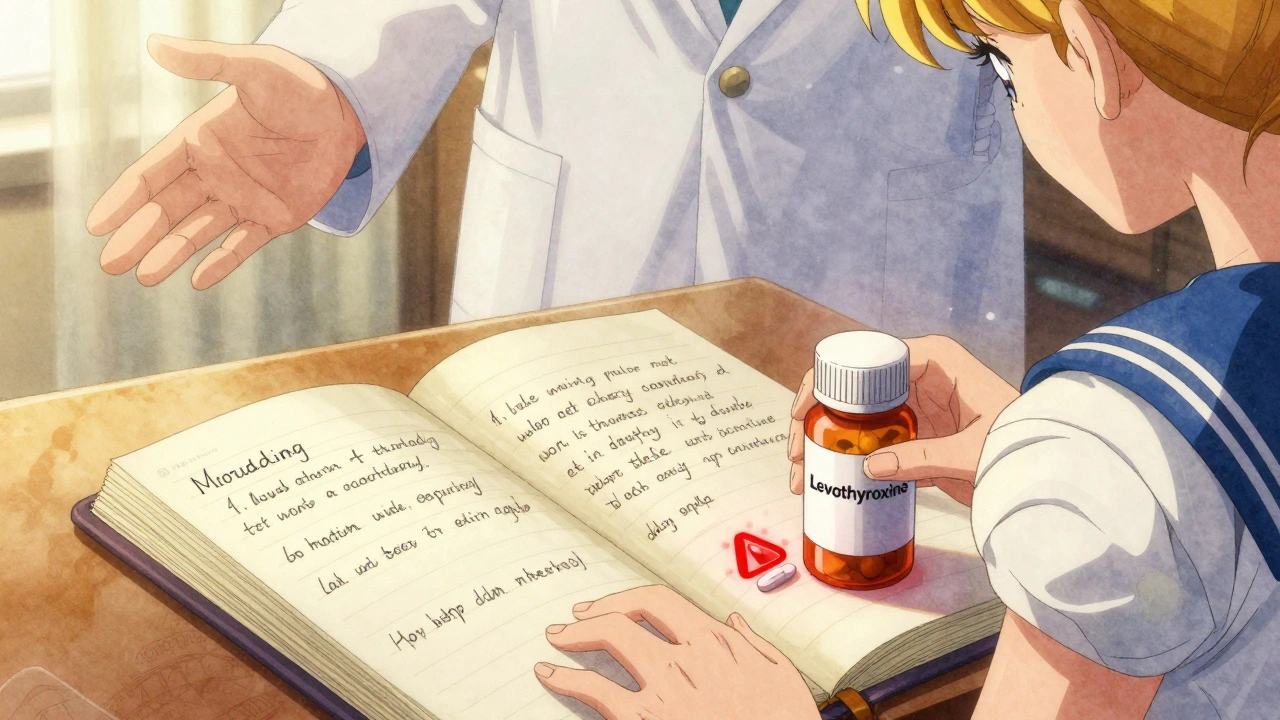
You might notice your pill changed color, shape, or size. That’s not a mistake. By law, generic manufacturers can’t copy the exact look of the brand-name drug - it’s a trademark issue. So a blue oval pill from one company might become a white round pill from another. That’s fine for most people. But for older adults or those on multiple meds, it’s confusing.One study in Massachusetts found that 63% of patients were worried when their pill looked different. But after three months, 82% said they were happy - because the cost was lower. Still, confusion leads to mistakes. Someone might think the new pill is a different drug and skip it. Or they might take two, thinking the old one didn’t work.
What About the Fillers? They Matter More Than You Think
The active ingredient is the same. But the rest? Not always. Generics use different binders, dyes, and fillers. For most people, that’s harmless. But if you’re sensitive to lactose, gluten, or certain dyes, a switch could cause bloating, rashes, or even allergic reactions.One Reddit user shared that after switching to a generic version of their antidepressant, they got terrible headaches and nausea. Their doctor didn’t know why - until they checked the inactive ingredients. The new version had a dye the old one didn’t. Switch back to the original? Symptoms vanished.
It’s rare. But it happens. That’s why it’s important to know what’s in your pill - not just the name.
How to Protect Yourself
You don’t have to accept every switch. Here’s what you can do:- Ask your doctor - If you’re on a drug for epilepsy, thyroid, warfarin, or an immunosuppressant, ask if it’s safe to switch. Say: “Can you write ‘dispense as written’ on this prescription?”
- Check the label - When you pick up your refill, compare the pill’s shape, color, and imprint to your last bottle. If it’s different, ask the pharmacist why.
- Track your symptoms - Keep a simple log for two weeks after switching. Note energy levels, sleep, mood, or any new side effects. If something changes, call your doctor.
- Use the same pharmacy - Pharmacies that fill your prescriptions regularly can spot changes faster and help you avoid confusion.
- Don’t assume all generics are equal - Sometimes, switching from one generic to another (not from brand to generic) causes problems. That’s because different generic makers use different formulas.
Cost vs. Risk: Is It Worth It?
The math is clear: generics save billions. In the U.S. alone, they saved $370 billion in 2023. For people on fixed incomes, that’s life-changing. A $20 copay vs. a $300 one means someone can actually afford to stay on their meds.But money isn’t the only cost. If switching causes a seizure, a hospital visit, or a missed work week, the real cost skyrockets. That’s why experts say: don’t switch blindly. For most drugs, generics are safe and effective. For others, the risk isn’t worth the savings.
Harvard Health puts it simply: “Brand-name drugs aren’t always better. But sometimes, they’re necessary.”

What’s Changing Now?
Some states and health systems are starting to listen. In Saudi Arabia, researchers found that patients were switched between brand and generic - or between different generics - over 25% of the time in just five years. That’s because procurement contracts are renewed annually. The result? More confusion, more errors.Now, experts are pushing for longer contracts - so the same generic stays on the shelf for longer. Others want generic pills to look more like the brand, to reduce confusion. Some pharmacists are now printing clear notes on vials: “This is a generic version of [brand name]. Same active ingredient.”
And insurance companies? They’re still pushing generics hard. But more are starting to allow exceptions - if a doctor explains why the brand is needed.
Bottom Line: You Have a Right to Know
Switching from brand to generic isn’t good or bad. It’s a tool. Used right, it saves money and keeps people healthy. Used carelessly, it can hurt.If you’re on a high-risk medication - thyroid, seizure, blood thinner, transplant drug - don’t let a switch happen without talking to your doctor. If you’re on a common drug like statins, antibiotics, or antidepressants, generics are almost always fine. But pay attention. If something feels off after a switch, speak up. Your body knows.
Generics aren’t second-rate. They’re regulated, tested, and proven for most people. But medicine isn’t one-size-fits-all. Your health is personal. Make sure your prescription reflects that.
Are generic drugs as effective as brand-name drugs?
For most medications, yes. The FDA requires generics to have the same active ingredient, strength, and absorption rate as the brand. Studies show they work just as well for conditions like high blood pressure, cholesterol, and infections. But for drugs with a narrow therapeutic index - like levothyroxine, warfarin, or anti-seizure meds - even small differences can matter. Always talk to your doctor before switching these.
Why do generic pills look different?
By law, generic manufacturers can’t copy the exact appearance of brand-name pills - that’s protected by trademark rules. So the color, shape, or size might change. This doesn’t affect how the drug works, but it can confuse patients, especially those taking multiple pills. Always check the label and ask your pharmacist if you notice a change.
Can I be switched to a different generic without knowing?
Yes. In many places, pharmacists can switch your brand to any approved generic - even to a different generic manufacturer - without telling you. That’s why it’s important to check your pill each time you refill. If it looks different, ask if it’s still the same drug. You can also ask your doctor to write “dispense as written” on your prescription to prevent any switches.
What should I do if I feel worse after switching?
Don’t ignore it. Keep a journal of your symptoms - when they started, how bad they are, and what you’re taking. Call your doctor right away. You might need to switch back to the brand or try a different generic. For high-risk drugs like thyroid or seizure meds, even small changes in how you feel can be a sign of a problem.
Are there any drugs I should never switch?
Some drugs are riskier to switch. These include: levothyroxine (for thyroid), warfarin (blood thinner), phenytoin or other anti-seizure medications, and immunosuppressants after organ transplants. These have a narrow therapeutic index - meaning tiny changes in blood levels can cause serious side effects. Always discuss switching with your doctor before changing.
Why are generics so much cheaper?
Generics don’t need to repeat expensive clinical trials. Once a brand-name drug’s patent expires, other companies can make the same active ingredient. They save money on research, marketing, and packaging. That savings gets passed on. A brand might cost $300 a month; the generic often costs under $20. That’s why insurers and governments push for generics - they save billions.
Do generics have the same side effects?
The active ingredient causes the same side effects. But inactive ingredients - like fillers, dyes, or preservatives - can be different. For most people, that doesn’t matter. But if you’re allergic to lactose, gluten, or certain dyes, a new generic could trigger a reaction. Always check the inactive ingredients on the label if you have sensitivities.
Can I ask my doctor to keep me on the brand name?
Yes. If you’re on a high-risk medication or have had problems after switching, your doctor can write “dispense as written” or “no substitution” on your prescription. Insurance may still require prior authorization, but many will approve it if there’s a medical reason. Don’t be afraid to ask - your health comes first.
What Comes Next?
If you’re switching - or thinking about it - start with your doctor. Ask: “Is this a safe switch?” Then, watch your body. Keep a simple log. If things feel off, don’t wait. Call your provider. Most people switch without issue. But for those who do have problems, early action makes all the difference.Generics aren’t a compromise. They’re a smart choice - when used right. But medicine isn’t just about cost. It’s about what works for you. And you deserve to know exactly what’s in your bottle - and why it changed.
Jimmy Jude
December 5, 2025 AT 20:05Let me tell you something, folks. I switched my levothyroxine to generic and woke up one morning feeling like my soul had been vacuumed out. I was dragging myself to work like a zombie with a caffeine addiction. My doctor acted like I was complaining about the color of the pill. Turns out, the generic had a different filler-lactose. I’m lactose intolerant. Nobody asked. Nobody told me. Now I’m back on Synthroid, paying $280 a month, and I don’t care. My thyroid isn’t a budget line item.
Generics are great… until they’re not. And when they’re not, you’re the one paying with your health.
Stop treating people like numbers. We’re not widgets.
Mark Ziegenbein
December 7, 2025 AT 00:23There exists a profound epistemological dissonance in the modern pharmacopeia wherein the state, under the auspices of fiscal prudence, mandates the substitution of chemically identical but ontologically distinct pharmaceutical entities under the false pretense of therapeutic equivalence. The FDA’s 80-125% bioequivalence window is not a scientific standard-it is a statistical sleight of hand, a bureaucratic compromise masquerading as evidence-based medicine. For drugs with narrow therapeutic indices, this margin is not merely tolerable-it is an existential gamble with the patient’s homeostasis.
Consider levothyroxine: the difference between a TSH of 2.5 and 8.7 is not a lab anomaly-it is the collapse of metabolic identity. The body does not care if the pill was made in India or Ohio. It only knows the concentration of T4 in its bloodstream. And when that concentration fluctuates without warning, the patient becomes a statistical outlier in a corporate balance sheet. This is not healthcare. This is commodified biology.
And yet, we call this progress.
Juliet Morgan
December 7, 2025 AT 07:45OMG I had the exact same thing happen with my antidepressant. I switched to generic and started having these crazy headaches and felt like I was underwater all day. I thought I was going crazy. Took me weeks to figure out it was the dye in the new pill. My doctor was like ‘huh, weird’ but didn’t even know the inactive ingredients changed. I switched back and boom-normal again. Don’t ignore changes, y’all. Your body talks. You just gotta listen.
Also, always check the pill shape. I keep a photo of my meds on my phone now. Saved me twice.
❤️
Harry Nguyen
December 8, 2025 AT 00:54So let me get this straight-you want to keep paying $300 for a pill because you’re too lazy to look at the label? This is why America’s broke. You think your thyroid is special? Everyone else takes generics and doesn’t turn into a drama queen. You’re not entitled to a branded placebo because you like the color blue. The FDA doesn’t lie. If it’s approved, it works. Stop whining and take your $20 pill like an adult.
Also, if you’re allergic to dyes, maybe don’t eat Skittles.
Stephanie Fiero
December 9, 2025 AT 03:42Y’all are overcomplicating this. If you’re on warfarin or seizure meds-DON’T SWITCH WITHOUT TALKING TO YOUR DOCTOR. PERIOD. I’m a nurse and I’ve seen people end up in the ER because they didn’t check the pill. It’s not about brand vs generic-it’s about consistency. Same pill, same maker, same filler. If your pharmacy switches it and you feel weird? Call your doc. Don’t wait. Don’t Google it. Call.
And yes, the pills look different. That’s normal. But if you don’t know what your pill is supposed to look like, you’re playing Russian roulette with your health. Take a picture. Write it down. Your future self will thank you.
Laura Saye
December 10, 2025 AT 01:07There’s a deeper phenomenological layer here that transcends pharmacoeconomics. The pill is not merely a chemical entity-it is a symbol of continuity, of ritual, of bodily trust. When the shape, color, or imprint changes without narrative, the patient’s embodied relationship with their own healing is disrupted. The pharmacological equivalence is quantitatively validated, but qualitatively, the rupture in symbolic fidelity generates anxiety, nonadherence, and in some cases, iatrogenic symptomatology.
Moreover, the commodification of therapeutic identity-wherein the patient’s lived experience is reduced to a cost-per-dose metric-represents a systemic erosion of patient autonomy. The absence of informed consent in substitution protocols is not merely procedural negligence-it is epistemic violence.
Perhaps the solution lies not in more generics, but in more transparency: standardized pill imagery, pharmacist-led counseling, and mandatory disclosure of inactive ingredients at point-of-dispense.
Stephanie Bodde
December 11, 2025 AT 17:09I just wanted to say-thank you for writing this. I’ve been on levothyroxine for 12 years and switched generics last year without knowing. I felt so tired I could barely play with my kids. I thought it was just stress or aging. Then I checked the label and saw the filler was different. I asked my pharmacist to switch me back to the same generic I had before-and boom, energy returned. I didn’t even know I could ask for that!
Don’t be shy. Ask for the same one. Write it down. Keep a photo. You’re not being difficult-you’re being smart. 💪❤️
Mellissa Landrum
December 12, 2025 AT 07:59Generics are a government scam. The FDA is owned by Big Pharma. They let the same companies make the generics-just under a different name. The ‘active ingredient’ is the same? Sure. But the fillers? They’re laced with microchips to track you. You think your pill looks different? That’s because they’re testing new surveillance tech on you. And the reason they push generics? So they can control your dosage remotely. Wake up. Your thyroid isn’t the only thing they’re regulating.
Also, why do you think the pills are always white? To hide the truth. They’re not ‘safe.’ They’re silenced.