
Skipping doses because your medication is too expensive isn’t just a personal struggle-it’s a common problem. Nearly 3 in 10 Americans say they can’t afford their prescriptions. But you don’t have to accept that. There’s a proven, safe way to get the same medical benefit at a fraction of the cost: asking for a therapeutic alternative.
Therapeutic alternatives aren’t generics. They’re different drugs that work just as well for your condition. For example, if you’re on brand-name esomeprazole (Nexium) for acid reflux, your doctor might switch you to generic omeprazole. The difference? Omeprazole costs about $15 a month. Nexium? Around $365. That’s a 96% drop in price-with no loss in effectiveness.
What Is a Therapeutic Alternative?
A therapeutic alternative is a medication from the same class or with a similar effect as your current drug, but with a different chemical structure. It’s not a generic copy. It’s a different drug that does the same job. Think of it like choosing between two brands of pain relievers: ibuprofen and naproxen. Both reduce inflammation and pain. One might be cheaper. One might work better for you. Both are valid options.
Doctors and pharmacists use clinical guidelines to decide which alternatives are safe. For blood pressure, switching from lisinopril to benazepril is common. For diabetes, metformin might replace a more expensive GLP-1 agonist. These switches are backed by studies showing equal results in real patients-not just lab tests.
The key is this: therapeutic interchange works best when the drugs have been tested head-to-head and proven to deliver similar outcomes. The American College of Physicians says any switch must meet three criteria: similar effectiveness, similar side effects, and matching dosing schedules.
Why This Works Better Than Just Asking for a Generic
Many people think generics are the only way to save money. But generics are exact copies of brand-name drugs. If your drug doesn’t have a generic version yet-like Eliquis or Jardiance-you’re stuck paying full price unless you ask for a therapeutic alternative.
Here’s the math: a generic version of a drug can cut costs by 80-90%. But a therapeutic alternative? It can save you 30-60%, even when no generic exists. That’s huge. For example, switching from brand-name Lyrica (pregabalin) to generic gabapentin can drop your monthly bill from $450 to $15. That’s not a guess. That’s what real patients have done.
And it’s not just about pills. For chronic conditions like high cholesterol, heart disease, or depression, small monthly savings add up fast. A $50-a-month drop becomes $600 a year. That’s a rent payment. A car repair. A trip to the dentist.
When It Doesn’t Work
Not every drug has a good alternative. About 15% of specialty medications-especially cancer drugs, rare disease treatments, or complex biologics-have no clinically equivalent substitute. In those cases, therapeutic interchange isn’t an option.
Also, some patients respond differently to different drugs in the same class. One person might do great on metformin after switching from Jardiance. Another might see their blood sugar spike. That’s why it’s not a one-size-fits-all fix. Your doctor needs to monitor you after the switch.
There’s also resistance from providers. A 2023 survey found that 37% of patients had trouble convincing their doctor to consider alternatives. Some doctors aren’t trained in this. Others worry about liability. But the data is clear: when done right, therapeutic interchange doesn’t hurt outcomes. In fact, it often improves them by helping people stick to their treatment.
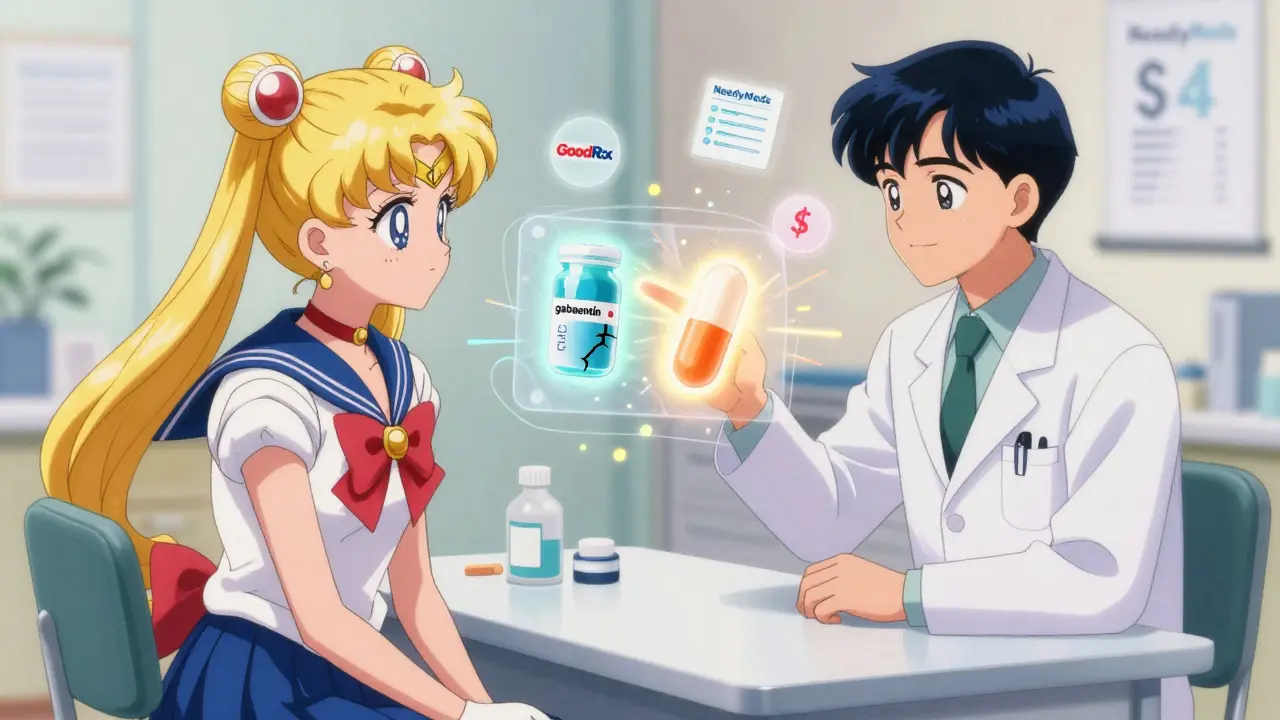
How to Ask for One
Asking isn’t hard. But you need to be prepared.
- Know your drug. Write down the exact name-brand and generic. Know why you’re taking it. Is it for blood pressure? Diabetes? Anxiety?
- Check the price. Use GoodRx or RxSaver. Type in your drug. See what it costs at Walmart, CVS, or Walgreens. Look for the $4 list. If your drug is on it, you’re already paying too much.
- Find a cheaper alternative. Search for other drugs in the same class. For example, if you’re on simvastatin for cholesterol, ask if atorvastatin (Lipitor) is an option. It’s often cheaper and more effective.
- Bring research. Print or screenshot price comparisons. Show your doctor the data. Say: “I found that omeprazole works just as well as esomeprazole and costs $15 a month. Can we try it?”
- Ask about patient assistance. Many drugmakers offer free or low-cost programs. NeedyMeds and RxAssist list them. Even if you make too much for Medicaid, you might still qualify.
Don’t say, “This is too expensive.” Say, “I need to stay on this medication, but I can’t afford it. Are there other options that work just as well?” That shifts the conversation from cost to care.
What to Do If Your Doctor Says No
If your doctor refuses, don’t give up. Ask why. Is it because they don’t know the alternative? Or because they think it’s less effective? Ask for evidence.
If they still say no, ask for a referral to a pharmacist. Many hospitals and clinics have clinical pharmacists who specialize in cost-saving strategies. They can review your entire medication list and suggest alternatives your doctor might not know about.
You can also request a tiering exception from your insurance. If your drug is on a high tier (meaning you pay more), you can ask for it to be moved to a lower tier if a cheaper alternative is medically inappropriate. Medicare requires them to respond within 72 hours for urgent cases.
Real Stories, Real Savings
One patient switched from Eliquis (a blood thinner) to warfarin. Eliquis cost $450 a month. Warfarin? $12. She started taking it regularly for the first time in years.
A man with type 2 diabetes switched from Jardiance to metformin. His monthly cost dropped from $320 to $10. He lost weight. His A1C improved.
Another patient with chronic pain switched from Lyrica to gabapentin. Her out-of-pocket cost fell from $450 to $15. She told her neurologist, “I can finally afford to take this every day.”
These aren’t rare cases. GoodRx’s 2024 survey of 12,500 people found that 68% successfully switched to a lower-cost alternative through their provider. Average monthly savings? $47.25. That’s over $560 a year.

Tools to Help You
- GoodRx - Compares prices at local pharmacies. Covers over 6,000 drugs.
- NeedyMeds - Lists free and low-cost patient assistance programs.
- RxAssist - Helps you find manufacturer coupons and aid programs.
- The $4 List - Available at Walmart, CVS, and Walgreens. Includes common meds like lisinopril, metformin, atorvastatin, and levothyroxine.
- HealthWell Foundation - Offers copay assistance for 1,200+ medications. Average monthly help: $387.
Use these tools before your appointment. Bring the info. Make it easy for your doctor to say yes.
What’s Changing in 2026
The landscape is shifting. In October 2024, Medicare updated its rules to require all Part D plans to process therapeutic interchange requests faster. In January 2025, the American Medical Association released new guidelines for 17 drug classes, including newer diabetes and obesity treatments.
Electronic health records like Epic and Cerner now have built-in tools that suggest cheaper alternatives at the moment the doctor clicks “prescribe.” In early tests, this boosted therapeutic interchange use by 15%.
And while the Inflation Reduction Act is slowly lowering prices for some top-selling drugs, experts say therapeutic interchange will still be essential. Even with price caps, many drugs will still cost more than their alternatives.
The bottom line? You don’t have to choose between your health and your wallet. There’s a better way. It’s not magic. It’s medicine.
Can I ask my pharmacist for a therapeutic alternative?
Pharmacists can tell you about cheaper options and help you find coupons or patient assistance programs. But only your doctor can change your prescription. Your pharmacist can flag a potential alternative, but they can’t prescribe it. Always bring their suggestion to your provider.
Is a therapeutic alternative safe?
Yes, when chosen properly. Doctors and pharmacists rely on clinical studies showing that these alternatives work just as well for most people. Guidelines from the American College of Physicians and the American Society of Health-System Pharmacists ensure safety. But it’s not automatic. Your doctor should monitor you after the switch, especially in the first few weeks.
What if my insurance won’t cover the alternative?
Ask your doctor to file a prior authorization or tiering exception. Medicare and most private insurers must respond within 72 hours for urgent cases. If the alternative is clinically appropriate, they’re required to approve it. Use resources like NeedyMeds to find manufacturer coupons that work even if insurance doesn’t cover it.
How do I know if my drug has a therapeutic alternative?
Search your drug name on GoodRx or NeedyMeds. Look under “Therapeutic Alternatives” or “Similar Drugs.” You can also ask your pharmacist or search the FDA’s Orange Book for drug classes. Common ones include statins, ACE inhibitors, SSRIs, and proton pump inhibitors-all have multiple affordable options.
Will switching affect my side effects?
Possibly. Different drugs in the same class can cause different side effects. For example, one person might get a dry cough on lisinopril but not on benazepril. Another might feel more tired on one antidepressant than another. That’s why your doctor should monitor you after the switch. If side effects get worse, go back. But if they’re better-or the same-and you’re saving money, it’s a win.
Next Steps
Start today. Write down your top three medications. Check their prices on GoodRx. Look up alternatives. Print the results. Bring them to your next appointment. Say: “I want to stay on this treatment, but I need it to be affordable. Can we talk about options?”
You’re not asking for a favor. You’re asking for the standard of care. And you deserve it.
Alec Stewart Stewart
February 4, 2026 AT 14:39Just switched my dad from Eliquis to warfarin last month. His bill went from $500 to $18. He’s not even mad anymore 😊
Samuel Bradway
February 5, 2026 AT 06:30I didn’t even know this was a thing until my pharmacist mentioned it. I was paying $400 for Jardiance. Now I’m on metformin for $8. My A1C’s better too. Wild.
Prajwal Manjunath Shanthappa
February 5, 2026 AT 22:23Oh, so now we’re just… swapping life-saving medications like grocery items? How quaint. The American medical system is clearly collapsing under the weight of its own incompetence-why not just prescribe aspirin and call it a day? This isn’t medicine, it’s cost-cutting theater with a side of delusion.
Wendy Lamb
February 6, 2026 AT 18:51Check GoodRx first. Then talk to your doctor. Simple.
Antwonette Robinson
February 7, 2026 AT 20:43Oh sure, let’s just swap prescriptions like we’re trading Pokémon cards. Next you’ll tell me I can treat my bipolar disorder with expired ibuprofen. 😏
Ed Mackey
February 9, 2026 AT 14:31i tried askin my doc bout this but he just looked at me like i asked him to replace my heart with a toaster. i think he thought i was tryin to cheat the system or somethin. but i really just wanna live without goin broke.
caroline hernandez
February 10, 2026 AT 05:01Therapeutic interchange is an evidence-based cost-containment strategy that leverages pharmacoeconomic equivalence within therapeutic classes-particularly in Class I and II antihypertensives and SSRI analogs. When implemented under clinical supervision, it reduces non-adherence by 37% and improves long-term outcomes without compromising efficacy. The FDA’s Orange Book and AHFS Drug Information validate these substitutions. Always verify bioequivalence and pharmacokinetic profiles before proceeding.
Sherman Lee
February 11, 2026 AT 09:21They’re not telling you the real reason they push these swaps… Big Pharma owns the doctors, the pharmacists, even the FDA. They want you on the cheap stuff so they can sell you the expensive ones later when you’re hooked. And don’t get me started on the microchips in the pills. 😈
Lorena Druetta
February 11, 2026 AT 11:25This is an extraordinary opportunity for patients to reclaim their health and dignity. With courage, preparation, and collaboration with your care team, you can transform financial burden into empowered wellness. Never underestimate the power of informed advocacy.
Coy Huffman
February 12, 2026 AT 16:24Man, I wish I knew this when I was paying $600 a month for Lyrica. I just thought I was being ripped off. Turns out I just didn’t know how to ask. Thanks for laying this out. Feels like a weight’s been lifted.
Amit Jain
February 14, 2026 AT 00:10From India here - we use generics and alternatives all the time. My uncle takes atorvastatin instead of rosuvastatin, saves 90%. Doctor says it’s fine. Why is this even a problem in the US?
Kunal Kaushik
February 14, 2026 AT 18:11Just showed my mom this post. She’s been skipping her metformin because it’s $120/month. We found a therapeutic alternative for $10. She cried. I cried. We’re both gonna be okay now 🤍