Expired Pediatric Meds: What You Need to Know Before Using Them
When you find an old bottle of children’s medicine in the back of a cabinet, it’s natural to wonder: expired pediatric meds, medications for children that have passed their printed expiration date. Are they still safe? Do they still work? The answer isn’t simple, but it’s not as scary as you might think. The expiration date on a medicine isn’t a "use-by" date like milk—it’s the last day the manufacturer guarantees full strength and safety under proper storage. But that doesn’t mean it turns toxic the next day. Many studies, including one by the FDA itself, show that most solid medications like tablets and syrups remain stable for years past their label date, especially if kept cool, dry, and out of sunlight.
But child medication safety, the practice of giving medicines to children in ways that minimize risk and maximize effectiveness isn’t just about potency. It’s about precision. Kids aren’t small adults. A dose that’s safe for a 12-year-old could be too much for a 2-year-old. If a liquid antibiotic has been sitting for two years, even if it hasn’t changed color or smell, the concentration might have shifted. That’s dangerous when you’re trying to hit the exact milligram per kilogram needed. Same goes for asthma inhalers or seizure meds—losing even a little effectiveness could mean a child doesn’t get the protection they need.
drug expiration dates, the date printed on medicine packaging indicating when the manufacturer guarantees full potency and safety matter more for some drugs than others. Insulin, nitroglycerin, and liquid antibiotics degrade faster. Oral suspensions can grow bacteria if left too long. But a bottle of children’s ibuprofen from last year? It’s probably fine—assuming it was stored right. The real danger isn’t the expiration date itself—it’s the assumption that old medicine is always safe to use. If it’s been exposed to heat, humidity, or direct light, or if it’s changed color, texture, or smell, toss it. Never guess when it comes to a child’s health.
And don’t forget pediatric pharmaceuticals, medications specifically formulated for children in appropriate doses and forms like liquids, chewables, or dissolvable tablets. These are designed with taste, size, and absorption in mind. Using an adult version, even if it’s not expired, can be risky. The same goes for repurposing old pediatric meds for a different child. Every prescription is tailored to the individual. What worked for your older kid might not be right for your younger one—even if the symptoms look the same.
What you’ll find in the posts below isn’t just a list of expired drugs. It’s a practical guide to how medications behave over time, how storage affects them, and what to do when you find something old in the medicine cabinet. You’ll see real examples of how common kids’ meds like antihistamines, antibiotics, and pain relievers hold up—or fall apart—after their expiration date. You’ll also learn how to store them properly so they last, how to safely dispose of what you don’t need, and when to call your doctor instead of reaching for that old bottle. This isn’t about fear. It’s about knowing exactly when to use what you have, and when to let it go.
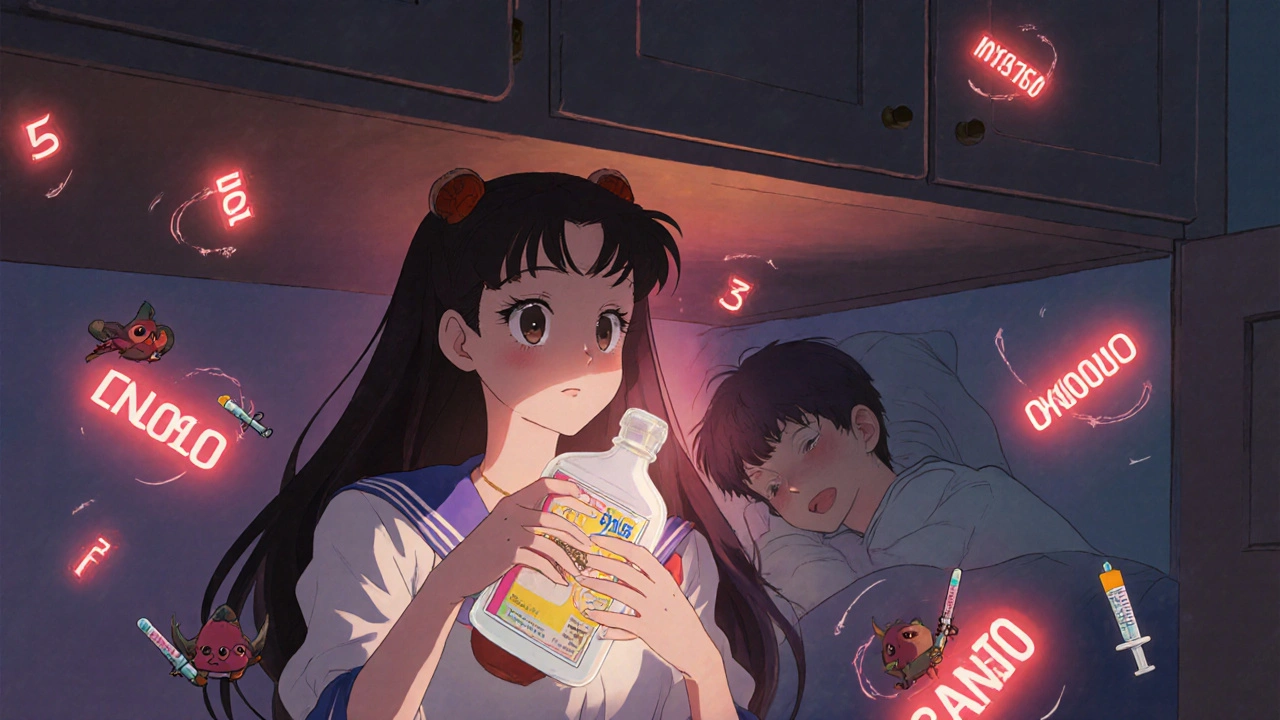
Expired pediatric medications can be dangerous-even deadly-for children. Learn why you should never give them, how to safely dispose of them, and how to prevent accidental exposure in your home.
Read More