Dry Eye Lubricants: What Works, What Doesn’t, and How to Choose
When your eyes feel gritty, burning, or like they’re full of sand, you’re likely dealing with dry eye lubricants, products designed to replace or supplement natural tear film to soothe and protect the ocular surface. Also known as artificial tears, these are the first line of defense for millions who struggle with dry eye syndrome, a condition where eyes don’t produce enough tears or the tears evaporate too quickly. It’s not just an annoyance—it can make reading, driving, or staring at screens unbearable.
Not all eye drops are created equal. Some contain preservatives like benzalkonium chloride that can irritate sensitive eyes over time. Others are preservative-free, packed with lipids to slow tear evaporation, or include hyaluronic acid to hold moisture longer. If you’re using them daily, you need to know what’s in the bottle. artificial tears, the most common type of dry eye lubricant, come in different formulations: gel, liquid, or ointment. Gels last longer but blur vision, so they’re best for bedtime. Liquids give quick relief but wear off fast. Ointments are thick and sticky—great for overnight use, not for daytime.
What you avoid matters just as much as what you use. Some drops promise "redness relief" but contain vasoconstrictors like tetrahydrozoline. They make your eyes look whiter temporarily, but over time, they cause rebound redness and dependency. If you’ve been using the same bottle for months and your symptoms are getting worse, it might not be the dry eye—it’s the drop itself. Also, don’t assume more expensive means better. Many generic brands offer the same active ingredients as name-brand drops at a fraction of the cost.
People with autoimmune conditions like Sjögren’s, those on antihistamines, or anyone who spends hours on screens are especially prone to dry eye. But even healthy people can develop it from air conditioning, wind, or aging. The good news? You don’t need a prescription for most lubricants. But if over-the-counter drops aren’t helping after a few weeks, it’s time to look deeper. Underlying causes—like meibomian gland dysfunction or inflammation—need different treatment, like warm compresses or prescription anti-inflammatories.
What you’ll find below isn’t a list of top 10 products. It’s a collection of real, practical insights from people who’ve been there: how to spot the right formula for your eyes, why some drops make things worse, and what to do when your usual bottle stops working. These posts cut through the marketing and give you what actually works—based on symptoms, ingredients, and experience, not ads.
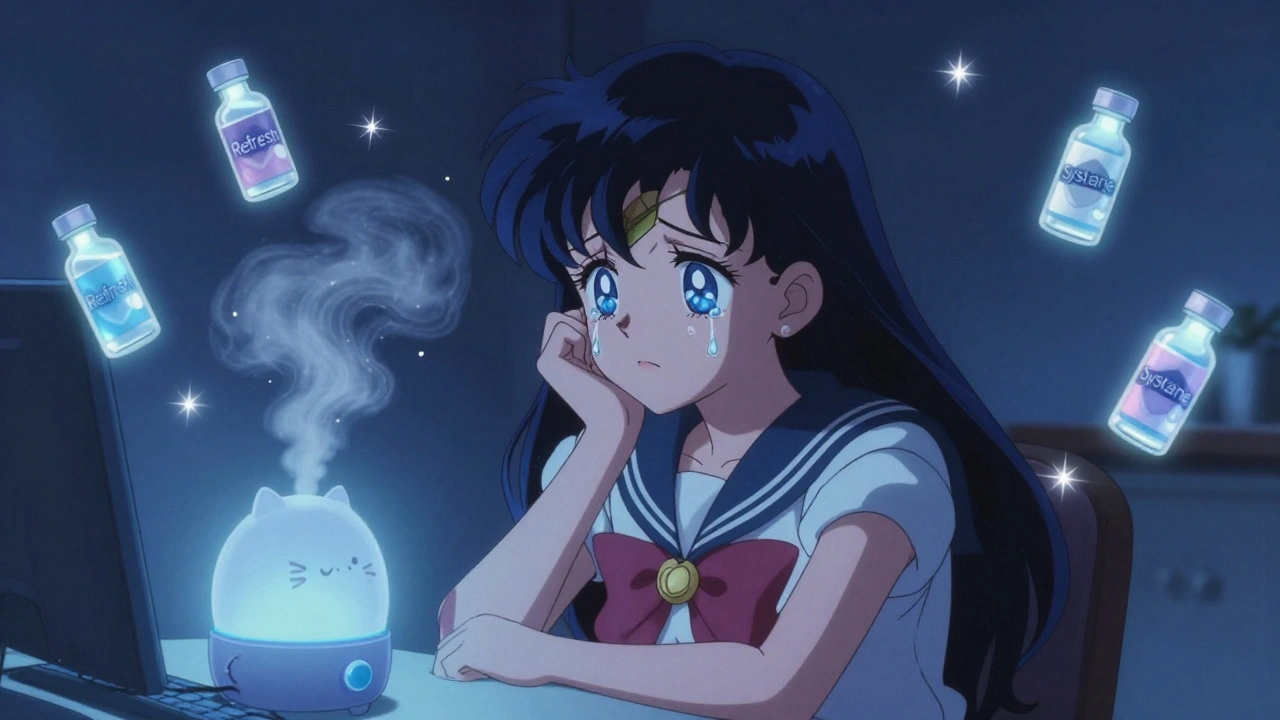
Learn how to manage dry eye symptoms using lubricants and humidifiers. Compare OTC drops, prescription medications like Restasis and Miebo, and how humidifiers can improve comfort - backed by clinical data and real user experiences.
Read More