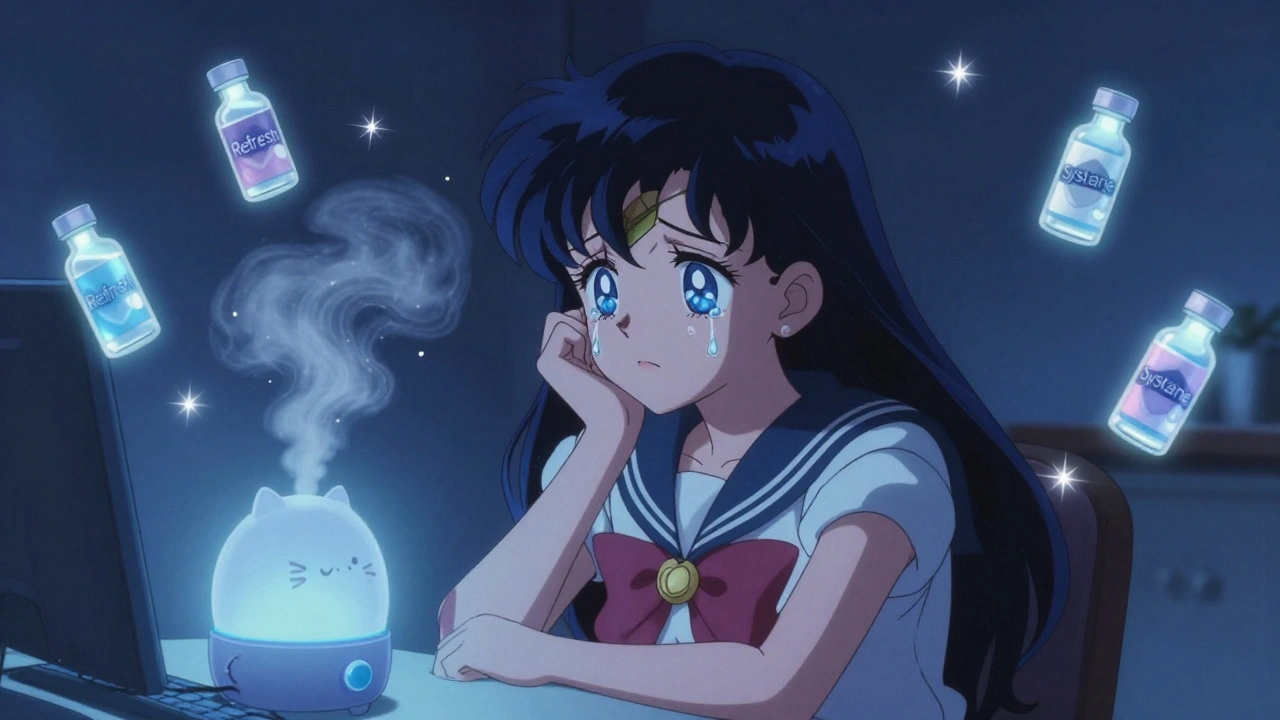
Dry Eye Treatment Recommender
Find Your Best Dry Eye Treatment
Answer a few questions to get personalized recommendations based on your symptoms, budget, and desired relief speed.
Your Recommended Treatment
Note: Always consult with your eye care professional before starting any new treatment.
Why Dry Eye Feels Like Sand in Your Eyes
Most people think dry eyes are just a nuisance - a little grit, redness, or discomfort that goes away after a few drops. But for over 16 million adults in the U.S. alone, it’s a chronic condition that makes reading, driving, and even looking at a screen unbearable. This isn’t just about being in a dry room. Dry eye disease (DED) happens when your tears don’t do their job - either you don’t make enough, or they evaporate too fast. The result? Burning, blurred vision, and a constant urge to rub your eyes.
The good news? You don’t have to live with it. Management starts with two simple, powerful tools: lubricants and humidifiers. But not all lubricants are the same, and not all humidifiers work the way you think. Understanding the difference between over-the-counter drops and prescription meds - and how humidity fits in - can change everything.
Artificial Tears: The First Line of Defense
If you’ve ever bought eye drops at the drugstore, you’ve used an artificial tear. These are the most common starting point for dry eye, and for good reason. They’re cheap, easy to find, and work fast - if you pick the right one.
Low-viscosity drops like Refresh Tears or Systane Ultra contain ingredients like carboxymethylcellulose or polyethylene glycol. They’re thin, clear, and give you relief for about 1-2 hours. Perfect for mild dryness during the day, especially if you’re on a computer. But if you’re dealing with moderate to severe dry eye, these won’t cut it. They evaporate too quickly, and you’ll be reaching for them every hour.
High-viscosity options like Refresh Celluvisc or GenTeal Gel are thicker. They last 4-6 hours and are better for nighttime use or when your eyes feel raw. The trade-off? They blur your vision for a few minutes after you put them in. That’s okay if you’re not driving or working right after - but if you need sharp vision immediately, you’ll want to avoid these during the day.
Here’s the catch: OTC drops don’t fix the problem. They just cover it up. If your eyes keep drying out, it’s not because you’re not using enough drops - it’s because the root cause isn’t being treated.
Prescription Lubricants: When OTC Isn’t Enough
When artificial tears stop helping, it’s time to look at prescription options. These aren’t just stronger versions of store-bought drops. They work differently - targeting inflammation, the hidden driver behind most chronic dry eye.
Restasis (cyclosporine 0.05%) has been the gold standard since 1998. It’s an immunosuppressant that tells your tear glands to start making more tears again. But it doesn’t work overnight. You need to use it twice daily for 3 to 6 months before you feel real improvement. That’s a long time to wait - and many people quit because of the burning sensation. About 68% of users on Drugs.com complain about this. The good news? Generic cyclosporine is now available for $150-$250 a month, down from $500-$600 for the brand. That makes it much more accessible.
Xiidra (lifitegrast 5%) works faster. It blocks inflammation at the surface level and often shows results in as little as two weeks. But it comes with its own problem: 25% of users report stinging or irritation right after putting it in. That’s why some people use it once a day instead of twice - even though the label says otherwise. It’s a trade-off: faster relief vs. discomfort.
Miebo (perfluorohexyloctane 3.5%) is the newest player, approved in 2023. Instead of making more tears, it forms a protective barrier over your eye - like a clear, invisible film - to stop tears from evaporating. It works immediately. In clinical trials, users reported 1.5 times more relief than with placebo within two weeks. And it’s gentle: only 0.16% of patients stopped using it due to side effects. The downside? It costs about $650 a month. Insurance often requires you to try cheaper options first, which can delay access.
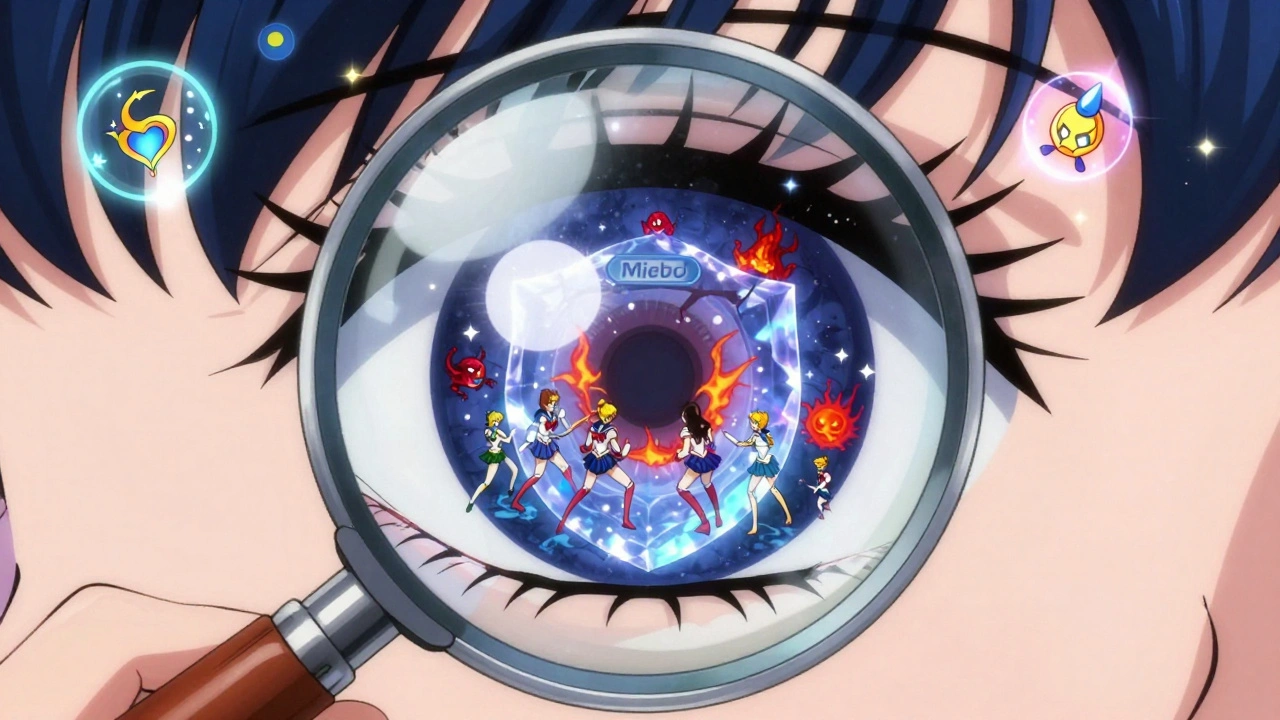
How Humidifiers Help - And Why Most People Use Them Wrong
Humidifiers aren’t just for winter. They’re a quiet, powerful tool for dry eye management - especially if your symptoms get worse at night or in air-conditioned rooms.
When the air is dry (below 40% humidity), your tears evaporate faster. That’s why your eyes feel worse after sleeping in a room with the heater on, or after hours in an office with central AC. A humidifier adds moisture back into the air, slowing down evaporation and giving your eyes a break.
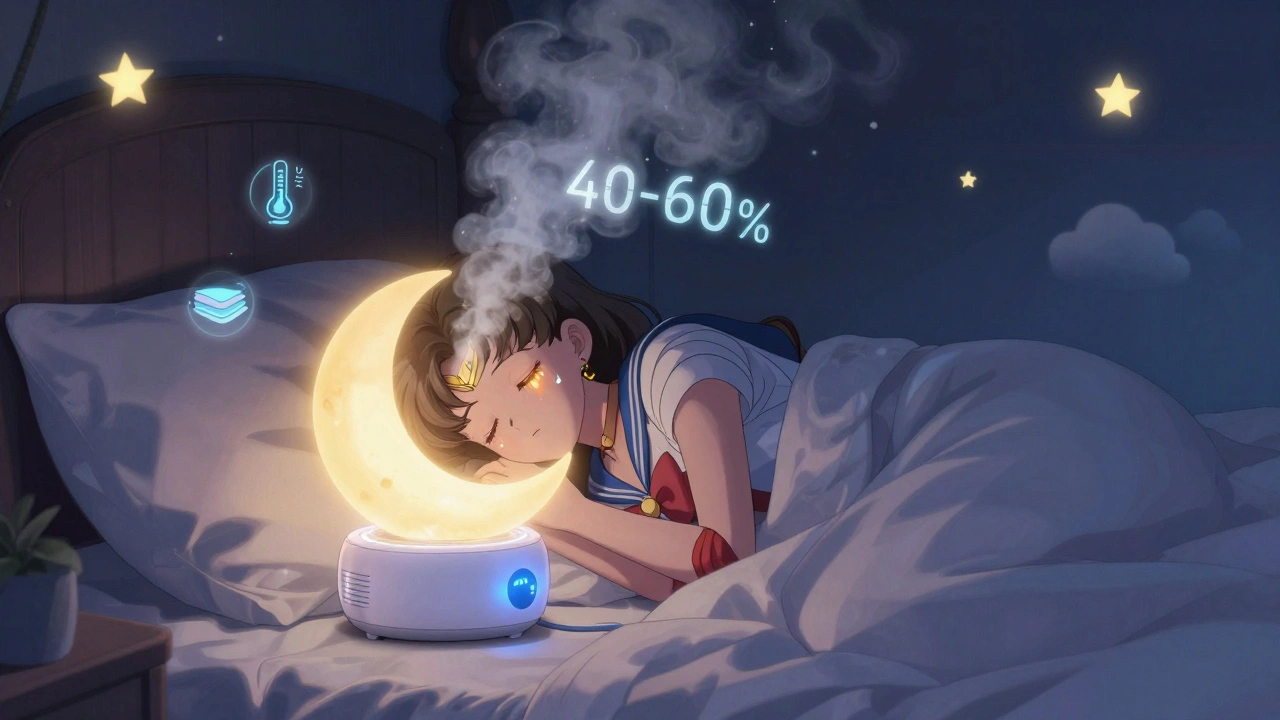
But most people use them wrong. They turn it on, set it to “high,” and leave it running all day. That’s a mistake. Too much humidity (above 60%) encourages mold and dust mites, which can make eye irritation worse. The sweet spot? 40-60% relative humidity. Use a hygrometer (a cheap device you can buy online) to measure it. Place the humidifier near your bed if nighttime dryness is the issue. Run it only during sleep or when you’re in the room for long periods.
A 2024 survey of 342 dry eye patients found that 72% saw noticeable improvement in morning symptoms when they used a humidifier consistently. It doesn’t replace eye drops - but it makes them work better. Think of it like wearing sunglasses in the sun: it doesn’t fix the sun, but it reduces the damage.
Which Medication Is Right for You?
There’s no one-size-fits-all answer. Your choice depends on your symptoms, budget, and how quickly you need relief.
- If you have mild, occasional dryness, start with low-viscosity OTC drops (2-4 times daily).
- If you have moderate to severe symptoms and want to reduce inflammation long-term, try generic cyclosporine. Be patient - results take months.
- If you need faster relief and can handle mild stinging, Xiidra is a strong option.
- If your eyes feel like they’re drying out as soon as you blink, especially in dry or windy environments, Miebo gives instant protection. But check your insurance coverage first.
- If you wake up with crusty, burning eyes every morning, add a humidifier set to 50% humidity overnight.
Many patients find success combining treatments. For example: use Miebo in the morning for quick relief, Restasis twice daily to rebuild tear production, and a humidifier at night. That’s the multimodal approach doctors recommend.
What No One Tells You About Adherence
The biggest reason dry eye treatments fail isn’t because they don’t work - it’s because people stop using them.
Only 52% of Restasis users take it consistently after six months. Why? The initial burning scares them off. But here’s the trick: refrigerate your drops. Cold drops hurt less. Keep them in the fridge, not the bathroom cabinet. Also, wait 15 minutes after applying drops before putting in contacts. Many people skip this and blame the medication - when it’s really the lens.
Another hidden issue: using the wrong drop for your type of dry eye. About 86% of dry eye cases are evaporative - meaning your tears evaporate because the oily layer is missing. That’s where Miebo shines. But if you’re using a water-based drop like Systane, you’re treating the wrong problem. Ask your eye doctor for a tear film analysis. TearLab’s osmolarity test can tell you if your tears are too salty - a sign of chronic inflammation.
What’s Coming Next
The dry eye treatment landscape is changing fast. New drugs are in the pipeline. Reproxalap, a topical anti-inflammatory, showed promising results in early 2024, reducing redness and improving tear production. Tyrvaya, a nasal spray that stimulates tear production through nerve stimulation, is gaining traction - and it’s already growing 43% yearly since its 2021 launch.
Doctors are moving toward personalized treatment. Instead of guessing which drop to use, clinics are using tear tests to match patients with the right therapy. This means fewer trial-and-error months and faster relief.
But for now, the basics still work: lubricants to protect your surface, anti-inflammatories to fix the cause, and humidifiers to create a better environment. It’s not glamorous. But it’s effective.
Frequently Asked Questions
Can I use artificial tears every day?
Yes. Most OTC artificial tears are safe for daily use, even multiple times a day. But if you’re using them more than four times daily for more than a few weeks, your dry eye may need a deeper treatment. Overuse of preserved drops can irritate your eyes over time. Look for preservative-free versions if you need frequent use.
Why does my eye burn when I use Restasis?
Restasis contains cyclosporine, which can irritate the eye surface - especially if your eyes are already inflamed. The burning usually fades after a few weeks as your eyes adjust. To reduce discomfort, refrigerate the bottle before use, and apply it at night when you’re not doing visual tasks. If it’s unbearable after two weeks, talk to your doctor about switching to Xiidra or adding a lubricant before applying Restasis.
Do humidifiers really help dry eyes?
Yes - but only if used correctly. A humidifier set to 40-60% humidity slows tear evaporation, especially during sleep or in dry indoor environments. People who use them consistently report better morning comfort and less need for eye drops. Avoid running them 24/7 or setting them too high - that can cause mold or worsen allergies.
Is Miebo worth the cost?
If you have evaporative dry eye and need immediate relief, yes. Miebo works faster and with fewer side effects than most prescription drops. But it’s expensive - around $650/month. Insurance often requires you to try cheaper options first. If you can’t afford it, ask your doctor about generic cyclosporine or combining OTC lipid-based drops (like Systane Balance) with a humidifier as a lower-cost alternative.
How long before I see results from prescription eye drops?
It varies. Xiidra can show improvement in 2 weeks. Cyclosporine (Restasis) takes 3-6 months. Miebo works immediately but only lasts a few hours per drop. Don’t stop using them just because you don’t feel better right away. Dry eye is a chronic condition - treatment is about long-term repair, not quick fixes.
Next Steps
Start by tracking your symptoms for a week. Note when your eyes feel worst - morning? After screen time? In air-conditioned rooms? Then choose one intervention: either switch to a high-viscosity OTC drop, try a humidifier at night, or talk to your eye doctor about prescription options.
If you’re already on medication and not improving, ask for a tear film test. You might have evaporative dry eye and need a lipid-based solution like Miebo. If cost is an issue, ask about generic cyclosporine or patient assistance programs from manufacturers.
Most importantly - don’t give up. Dry eye isn’t curable, but it’s manageable. With the right mix of lubricants, meds, and environmental tweaks, you can go from struggling to seeing clearly again.
Taya Rtichsheva
December 9, 2025 AT 21:23also why is everyone using these drops like theyre magic water?
Christian Landry
December 10, 2025 AT 22:59but then i started keeping it in the fridge and it became bearable
now i can actually read without squinting 😅
also humidifier on my nightstand = game changer
Kathy Haverly
December 11, 2025 AT 12:49Chris Marel
December 11, 2025 AT 22:31thank you for explaining the difference between evaporative and aqueous dry eye
my doctor never broke it down like this
Evelyn Pastrana
December 13, 2025 AT 17:20then i tried miebo and my eyes were like 'finally someone gets it' 😭
even my cat noticed i wasn't rubbing my eyes all the time
Nikhil Pattni
December 14, 2025 AT 09:39Elliot Barrett
December 14, 2025 AT 13:39Sabrina Thurn
December 15, 2025 AT 08:20additionally, compliance is the silent killer. refrigerating drops reduces stinging by 60% in clinical studies. and yes, preservative-free is non-negotiable if you're using >4x/day. tear osmolarity testing should be standard for anyone with persistent symptoms.
Richard Eite
December 16, 2025 AT 02:05Philippa Barraclough
December 18, 2025 AT 01:34Olivia Portier
December 18, 2025 AT 03:41