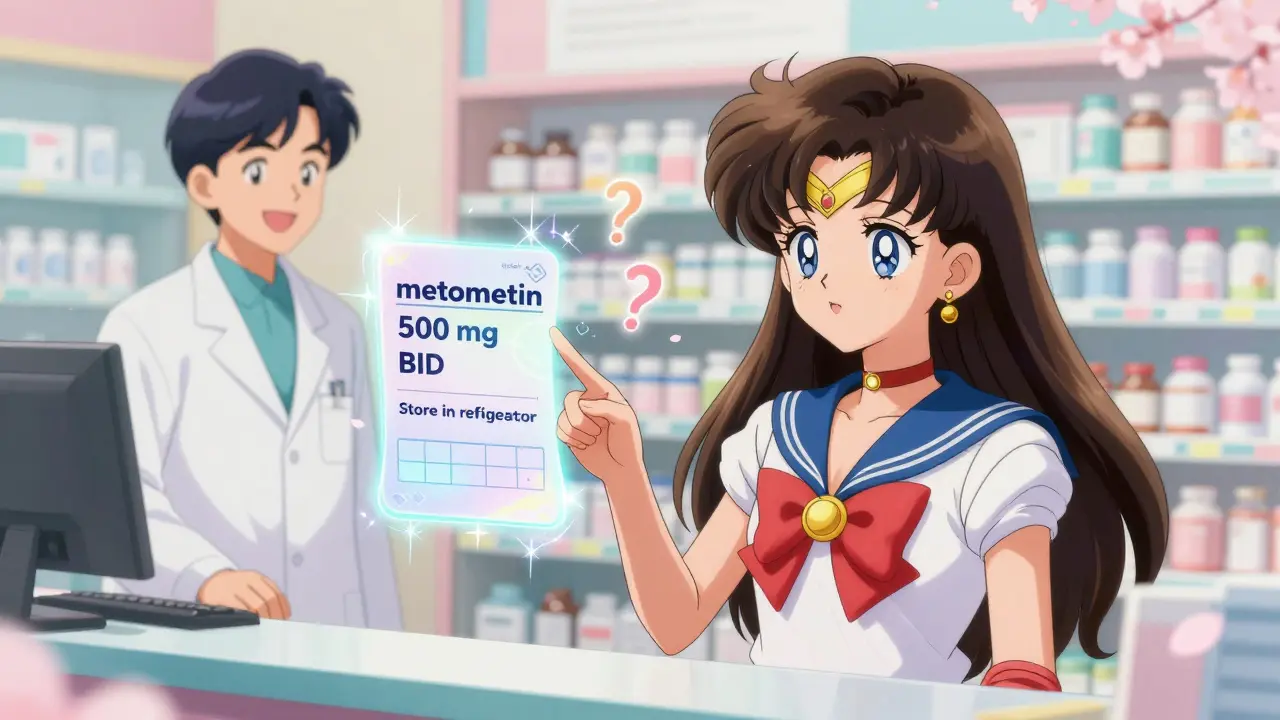
When you pick up your prescription, the label on the bottle might look simple - just a few lines of text, a barcode, maybe a logo. But that little label holds critical information that could keep you safe - or put you at risk. In the U.S., over 1.3 million medication errors happen every year, and nearly a quarter of them come from misunderstandings about the prescription label. You don’t need to be a doctor to spot the red flags. You just need to know what to ask.
What’s on your prescription label - really?
Every prescription label in the U.S. must include nine key pieces of information, according to the National Association of Boards of Pharmacy. That includes your full name, the prescriber’s name, the drug’s brand and generic name, strength, dosage form, quantity, directions for use, number of refills, and the pharmacy’s contact info. Sounds straightforward? Not always. Many patients don’t realize that the generic name (like metformin) and the brand name (like Glucophage) are both listed. If you’re used to hearing one but see the other, it’s easy to think you got the wrong medicine. Always check both.Look at the dosage too. Is it written as "take one tablet by mouth twice daily" or "take 500 mg PO BID"? Abbreviations like "PO" (by mouth) or "BID" (twice a day) are common on labels but confusing to most people. Don’t pretend you know what they mean. Ask the pharmacist to explain them in plain English.
Is this the right medicine for me?
The "5 Rights" of medication safety are simple but powerful: Right Patient, Right Medicine, Right Dose, Right Route, Right Time. You’re the last line of defense. Before leaving the counter, verify each one.- Right Patient: Is your name spelled exactly like your ID? Even one letter wrong can lead to someone else’s medicine being given to you.
- Right Medicine: Does the pill match what you were expecting? If your last prescription was blue and this one is white, ask why. Pills can look different even if they’re the same drug.
- Right Dose: If your doctor changed your dose, is it reflected here? A common error is taking an old dose by habit.
- Right Route: Is it meant to be swallowed, injected, applied to the skin, or inhaled? Mixing these up can be dangerous.
- Right Time: Does "take once daily" mean morning or night? Some meds work better at certain times - like statins at night or blood pressure pills in the morning.
Studies show that patients who verbally confirm these five points with their pharmacist reduce medication errors by up to 58%. Don’t just nod and walk away. Repeat the instructions back to them. "So you’re saying I take this at bedtime, not with food?" That simple step saves lives.
What about storage? I didn’t notice that.
Most people assume all medications should be kept in the medicine cabinet. But 15% of prescription drugs need refrigeration - between 36°F and 46°F. If you leave those in your bathroom or kitchen cabinet, they lose effectiveness. Some, like insulin or certain antibiotics, can become dangerous if not stored properly.Check the label for phrases like "Store in refrigerator" or "Keep at room temperature." If it’s not clear, ask. One patient in a 2023 Consumer Reports survey left her blood pressure medication at room temperature for two weeks because the storage instructions were printed in tiny font on the back of the label. She had no idea until she called the pharmacy.
Also, keep it away from heat and moisture. Bathrooms and sunlit windows are bad spots. A drawer in a cool, dry room is better.
Are there any interactions I should know about?
Your prescription might interact with other medicines, supplements, or even food. For example, some antibiotics like doxycycline shouldn’t be taken with dairy because calcium blocks absorption. Others, like statins, can have dangerous reactions with grapefruit juice.Ask: "What should I avoid eating, drinking, or taking while on this?" Don’t assume your pharmacist knows what else you’re on - unless you tell them. Many people don’t mention vitamins, herbal supplements, or over-the-counter painkillers. But those matter. A 2022 study found that 40% of medication errors involved hidden interactions with supplements.
If you’re on multiple prescriptions, ask if your new drug conflicts with any others. Pharmacists run interaction checks - but only if you give them the full picture.
What if I miss a dose?
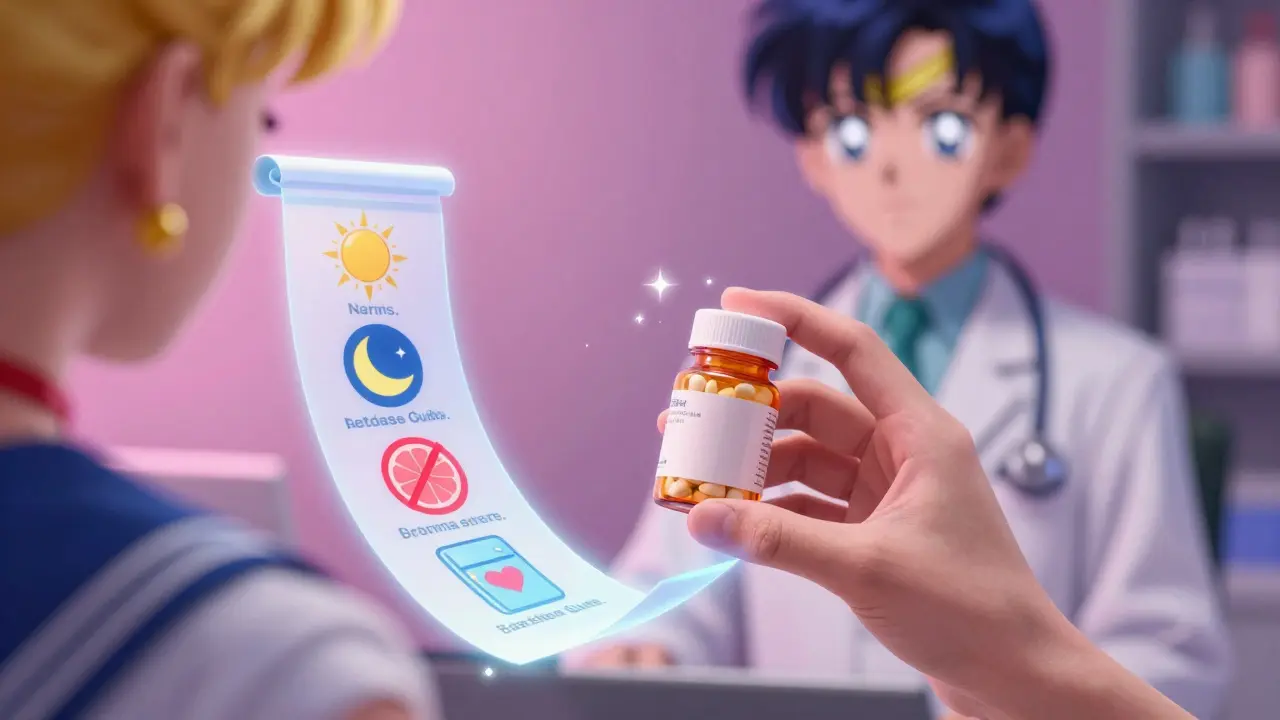
This is one of the most common questions patients forget to ask. Should you take it as soon as you remember? Skip it? Double the next dose? The answer varies by drug.For example, with birth control pills, missing one can reduce effectiveness. With blood pressure meds, skipping a dose might not cause immediate harm but can lead to long-term risks. The label might say "take as directed," but that’s not helpful. Ask for a clear rule: "If I miss a dose, what do I do?" Write it down. Many pharmacies now offer printed reminders or QR codes that link to video instructions.
How long will this last? When do I need a refill?
The label says "30 tablets, 1 refill." But how many days is that really? If you take one a day, it lasts 30 days. But if you take two a day, it’s only 15. Always double-check. And don’t wait until the last pill to refill. Some drugs, like thyroid meds or insulin, need to be refilled early to avoid gaps in treatment.Also, ask: "Will my insurance cover the next refill?" Changes in coverage can happen. The 2022 Medicare Part D "donut hole" confused millions of seniors about when they’d have to pay full price again. Even if you’re not on Medicare, your plan might change its formulary. A simple call to the pharmacy can save you from showing up with an empty bottle.
Is there a Medication Guide?
For 107 high-risk medications - including opioids, blood thinners, and certain cancer drugs - the FDA requires a separate Medication Guide to be handed to you. These aren’t just extra papers. They explain serious side effects, when to seek emergency help, and what to avoid.Ask: "Is there a guide for this?" If they say no, ask why. If you’re given one, read it. Don’t toss it. A 2023 survey found that patients who read their Medication Guide were 47% less likely to have an adverse drug event. These guides are written for you - not for doctors.
Can I get a larger print version?
If you have trouble reading small text - or if your vision is fading - you’re not alone. Over 7.6 million Americans over 45 have visual impairments. But 92% of U.S. pharmacies can print labels in large font at no extra cost. You just have to ask.Same goes for language. If English isn’t your first language, you have the right to a translated label. The Affordable Care Act requires pharmacies that get federal funding to offer translation services. Ask for a label in Spanish, Mandarin, Tagalog, or any other language you speak. Don’t guess what the instructions mean.
What if I have more questions later?
Pharmacies aren’t just pickup counters. They’re healthcare hubs. Ask for the pharmacist’s direct number or email. Many offer follow-up calls. Some even send text reminders about refills or side effects.And if you’re unsure about something days after picking up your prescription, call back. No one will think you’re wasting their time. In fact, pharmacists say patients who call with questions are the ones who stay safest. The FDA’s "Medication Check-Up" program - available at over 8,400 pharmacies - even offers free one-on-one label reviews.
What’s changing soon?
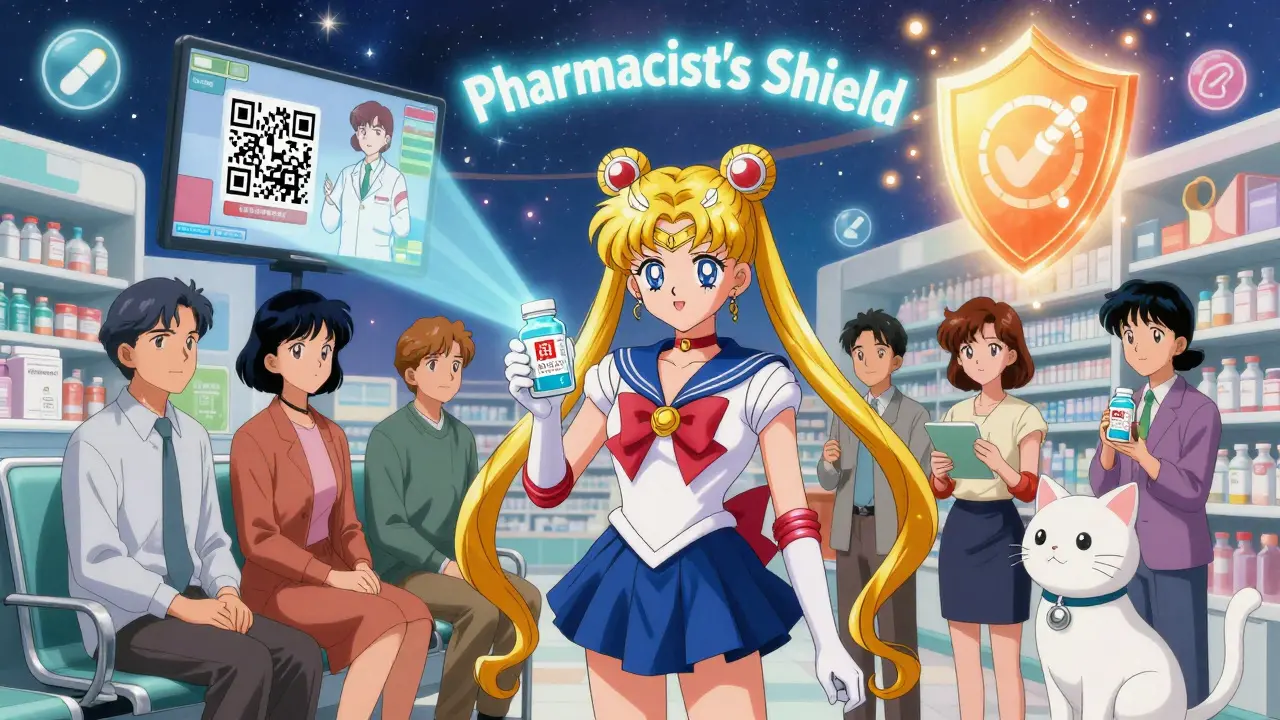
The FDA is rolling out major changes. By 2026, all high-risk medications must have scannable QR codes that link to updated safety videos. Some pharmacies already use augmented reality - point your phone at the bottle, and dosage instructions appear over it. AI systems are being tested to catch labeling errors before they reach you.But until then, the best tech you have is your voice. Don’t be shy. Don’t feel rushed. You’re not just picking up medicine - you’re protecting your health.
What if I don’t understand the abbreviations on my prescription label?
Always ask the pharmacist to explain any abbreviations. Common ones like "BID" (twice a day), "QD" (once daily), or "PO" (by mouth) aren’t obvious to most people. You have the right to clear, plain-language instructions. If the label uses symbols or codes, request a printed translation or a verbal walkthrough.
Can I get my prescription label in a different language?
Yes. Under the Affordable Care Act, pharmacies that receive federal funding must provide translated labels and verbal interpretation services for patients with limited English proficiency. Ask for a label in your preferred language - whether it’s Spanish, Vietnamese, Arabic, or another. Many pharmacies also have bilingual staff or phone translation services available.
Why does my pill look different this time?
Generic drugs can look different from brand names or even from previous batches. Color, shape, or size may change based on the manufacturer. As long as the generic name, strength, and dosage match your prescription, it’s safe. But if you’re unsure, ask the pharmacist to confirm it’s the same medication. Never assume it’s a mistake - and never take it if you’re not sure.
Do I need to check the expiration date?
Yes. The expiration date is the last day the manufacturer guarantees the drug is fully potent and safe. After that, it may not work as well - or, in rare cases, break down into harmful substances. Don’t use expired medication. If the date is faded or missing, ask for a new bottle. The FDA requires all prescriptions to have a clear expiration date printed on the label.
What should I do if I think there’s a mistake on my label?
Stop. Don’t take the medication. Call the pharmacy immediately. Mistakes happen - wrong dose, wrong name, wrong drug. Pharmacists are trained to catch these, but they rely on you to notice. If you’re unsure, ask to speak with the pharmacist directly. Most pharmacies will recheck the prescription with your doctor if needed. It’s better to be safe than sorry.
John Cyrus
March 1, 2026 AT 01:07And don't get me started on people who don't know what PO means. It's not a secret code. It's "by mouth." If you can't handle that, maybe you shouldn't be taking pills at all.
John Smith
March 2, 2026 AT 00:53And don’t even get me started on the tiny font on the back of the label. Like they’re trying to hide the fact that this thing needs to be kept in a freezer. I had to use a magnifying glass and a flashlight. Next time I’m bringing a drone with a camera to scan the label.
Sharon Lammas
March 4, 2026 AT 00:26But what if we treated our own bodies like they mattered? Not because we’re afraid, but because we’re worthy of clear answers. I’ve started asking every time. Even if it’s just "what does this mean?" It changes everything.
Richard Elric5111
March 5, 2026 AT 14:36One must interrogate not merely the content of the label, but the semiotic architecture by which meaning is encoded-and subsequently, deliberately obscured through typographic austerity and linguistic obfuscation. The absence of standardized, universally comprehensible nomenclature constitutes a systemic violation of the principle of informed consent.
Dean Jones
March 6, 2026 AT 14:21And yeah, I didn’t know about the refrigeration thing until my insulin got warm in my gym bag. I thought it was just a suggestion. Turns out it’s a lifeline. Now I keep a little cooler in my purse. No shame. You don’t want your medicine to turn into soup because you didn’t ask a question.
Also, the pharmacist at my place? She remembers my name. She asks how I’m doing. That’s worth more than a QR code.
Betsy Silverman
March 8, 2026 AT 08:14When we finally got the label in Spanish, she cried. Not because she was sad-because she finally understood. I think we forget how much dignity is wrapped up in being able to read your own instructions. Asking for translation isn’t weakness. It’s self-respect.
Ivan Viktor
March 9, 2026 AT 16:46Zacharia Reda
March 11, 2026 AT 06:23Now I ask every single time. Even if it’s dumb. Even if I feel silly. Because the alternative is worse. And honestly? Pharmacists love it. They’re like, "Finally someone who cares."
Jeff Card
March 12, 2026 AT 17:17