When you’re taking medicine to fight cancer, the last thing you expect is for your mouth to start hurting. But for many people, mouth sores and ulcers aren’t just a side effect-they become the worst part of treatment. These painful sores, called oral mucositis, can make eating, talking, and even swallowing unbearable. And while they’re common, they’re not inevitable. The truth is, most of these sores can be prevented-or at least made much less severe-if you know what to do and when to do it.
Why Do Medications Cause Mouth Sores?
Chemotherapy and radiation don’t just target cancer cells. They also attack fast-growing healthy cells, including the ones lining your mouth. This damage triggers inflammation, breaks down the protective tissue, and leaves open sores. It’s not an accident-it’s a predictable result of how these treatments work. About 40% of people on chemotherapy get mouth sores. For those getting head and neck radiation, the number jumps to over 80%. And if you’re having a stem cell transplant, it’s nearly guaranteed.
The severity ranges from mild redness to deep, bleeding ulcers that make it impossible to eat. The pain often peaks around day 7 to 10 after starting treatment. That’s why waiting until your mouth hurts to act is too late. Prevention has to start before treatment begins.
What Works Best to Prevent Mouth Sores?
Not all remedies are created equal. Some are backed by strong science. Others are popular but offer little real benefit. Here’s what actually works, based on clinical trials and expert guidelines:
- Benzydamine mouthwash (0.15%) is the top choice for people getting radiation to the head or neck. Used 3-4 times a day, starting before treatment, it cuts the risk of severe sores by 34%. It’s affordable-around $15-$25 per course-and doesn’t cause major side effects. The only catch: avoid it if you’re allergic to aspirin, since it’s an NSAID.
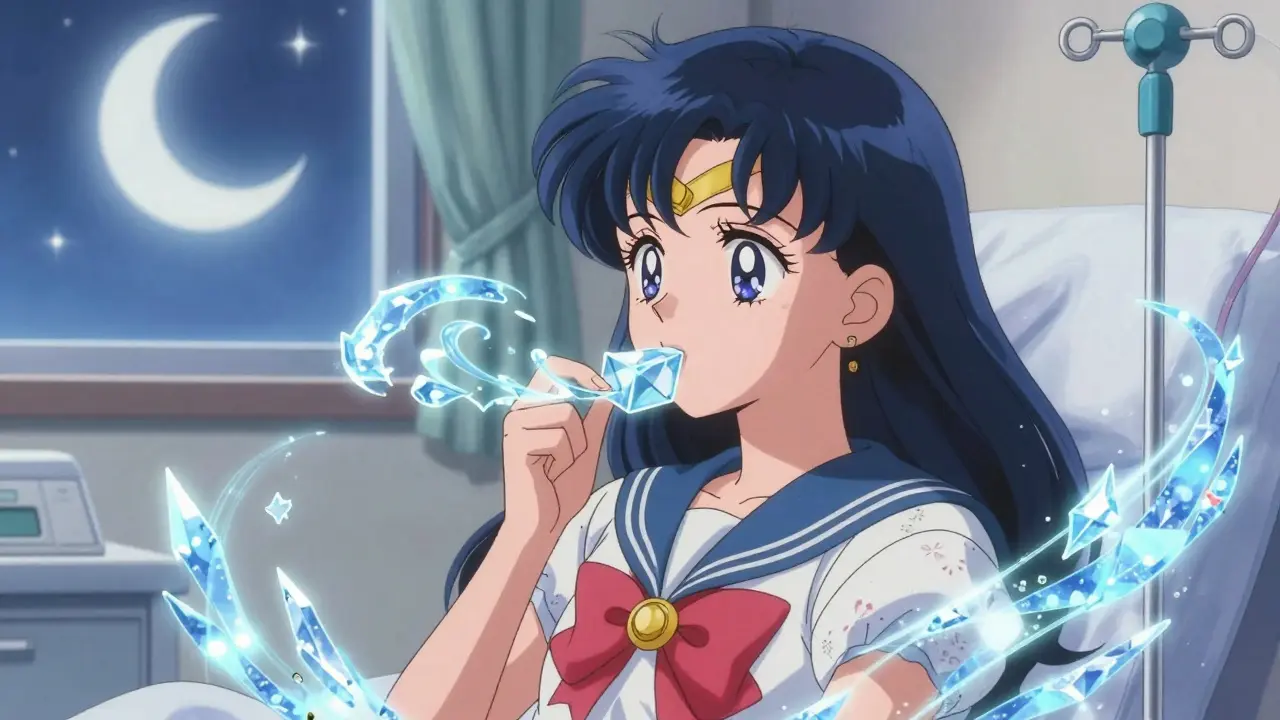
- Cryotherapy (ice chips) is powerful for certain chemo drugs like melphalan and 5-fluorouracil. You suck on ice chips for 30 minutes, starting 5 minutes before your infusion and continuing through it. This freezes the cells in your mouth, slowing down how much drug reaches them. Studies show it cuts severe sores by half. But it only works for short infusions. If your chemo runs for hours, ice won’t help.
- Palifermin is a powerful drug given by injection before and after stem cell transplants. It literally grows new mouth tissue. In trials, it dropped severe mucositis from 63% to just 20%. But it costs over $10,000 per course. Most insurance covers it for transplants, but for others? It’s rarely worth the price.
- Glutamine (15g, 4 times a day) helps some people, especially those with head and neck cancer getting radiation. One study showed a 43% drop in how long sores lasted. But other studies found no benefit. It’s cheap and safe, so it’s worth trying-but don’t count on it.
- Low-level laser therapy (LLLT) is new but promising. In a 2023 study, patients who got laser treatment 3 times a week during radiation had less than half the rate of severe sores compared to those who didn’t. It’s not widely available yet, but more cancer centers are adding it.
What doesn’t work well? Chlorhexidine mouthwash. It’s cheap and common, but studies show it only reduces risk by 15%. Worse, it can stain your teeth and mess up your taste. Many doctors still prescribe it out of habit, but experts now say it’s not worth the downsides.
How to Care for Mouth Sores Once They Happen
Even with prevention, sores can still appear. When they do, your goal shifts from stopping them to managing pain and keeping your mouth clean enough to avoid infection.
- Gelclair is a gel that coats your mouth like a protective film. It contains sodium hyaluronate and glycerin, which soothe and hydrate. People report feeling relief within minutes, and the effect lasts up to 4 hours. It’s not a cure, but it makes eating and talking possible again. The downside? Some say it feels slimy and makes speech muffled.
- Dexamethasone mouthwash (0.5mg/5mL) is a steroid rinse used 4 times a day. It reduces swelling and pain significantly-studies show a 37% drop in pain scores. It’s safe for short-term use during treatment.
- Allopurinol mouthwash (500mg dissolved in water) is emerging as a good option for radiation-induced sores. One study showed a 40% reduction in severe cases. It’s not FDA-approved for this use, but many oncologists prescribe it off-label.
- Don’t use benzocaine (found in OTC numbing gels). The FDA warns against it for adults too-it can cause a rare but dangerous blood condition called methemoglobinemia.
Oral Hygiene That Won’t Make Things Worse
Your toothbrush can be your best friend-or your worst enemy-when you have mouth sores. Here’s what to do:
- Use a soft-bristle toothbrush with bristles under 0.008 inches thick. Hard bristles will tear at your gums.
- Brush gently, 2-3 times a day, with fluoride toothpaste. Avoid toothpastes with sodium lauryl sulfate (SLS)-it’s a foaming agent that irritates sores. Look for brands labeled ‘SLS-free’.
- Rinse after meals with a baking soda solution: 1 teaspoon in 8 ounces of water. This neutralizes acid and keeps your mouth clean without burning.
- Never use alcohol-based mouthwashes. They sting and dry out your mouth, making sores worse.
- If your mouth feels dry (which happens to 63% of radiation patients), use artificial saliva like Biotene or take pilocarpine 5mg tablets 3 times a day. Pilocarpine boosts natural saliva by nearly 50%.
What to Avoid Completely
Some things seem helpful but actually make oral mucositis worse:
- Alcohol-based products-mouthwashes, breath sprays, even some cough syrups.
- Spicy, acidic, or crunchy foods-citrus, tomatoes, chips, salsa. They burn sores.
- Hot drinks-wait until they’re lukewarm.
- Tobacco and alcohol-both slow healing and increase cancer recurrence risk.
- Systemic antibiotics-don’t take them to ‘prevent’ infection. A 2021 study found they raise your risk of C. diff infection by 27%.
When to Call Your Doctor
Not every sore needs emergency care. But if you notice any of these, call your oncology team right away:
- Sores that bleed easily or won’t stop bleeding
- Fever over 100.4°F (38°C)-infection can spread fast
- Difficulty swallowing or breathing
- White patches or thick coating in your mouth (could be thrush)
- Sores that last more than 2 weeks after treatment ends
Your care team should have a plan ready before you start treatment. If they don’t, ask for one. A 2024 study from Roswell Park found that 78% of severe mouth sores could be prevented with proper pre-treatment dental care. That means a checkup 2-4 weeks before chemo or radiation, cleaning any loose teeth, and treating cavities.
Real People, Real Experiences
On CancerCare’s online forum, 78% of people using ice chips during 5-FU chemo said it helped. But 42% quit because the cold was too painful. One woman wrote: ‘I cried for 10 minutes every time I did it-but I did it anyway. The pain in my mouth was worse.’
On Reddit, Gelclair got 4.2 out of 5 stars. ‘It felt like a bandage for my mouth,’ one user said. But another: ‘I couldn’t talk for an hour after using it. Felt like I had cotton in my mouth.’
People who used benzydamine said it stung at first-but 82% kept using it because the pain relief was worth it. And for those who couldn’t afford palifermin? ‘I cried when I saw the bill,’ said one mother of a child in a transplant program. ‘We had to choose between treatment and rent.’
What’s Coming Next
Research is moving fast. A new drug called GC4419, tested in 2024, reduced severe sores by 38% in head and neck cancer patients. And Memorial Sloan Kettering just launched a tool that predicts who’s most likely to get bad mouth sores-using 12 factors like age, cancer type, and medication dose. It’s 84% accurate. Soon, prevention won’t be one-size-fits-all. It’ll be personalized.
The big challenge? Cost. Only 3 out of 12 recommended treatments are affordable enough to meet standard healthcare value benchmarks. That means many people still suffer needlessly-not because nothing works, but because the best options are out of reach.
Until that changes, focus on what’s proven, affordable, and accessible. Start early. Stay consistent. And don’t let anyone tell you mouth sores are just ‘part of the process.’ They’re not. They’re preventable-and you deserve to get through treatment without your mouth on fire.
Can mouth sores from chemo be completely prevented?
Not always, but they can be significantly reduced. With the right prevention strategies-like benzydamine for radiation, ice chips for certain chemo drugs, and proper dental care before treatment-up to 78% of severe cases can be avoided. The goal isn’t perfection; it’s making sores mild enough to manage.
Is it safe to use OTC numbing gels for mouth ulcers?
No. Products with benzocaine (like Orajel or Anbesol) can cause methemoglobinemia, a rare but dangerous blood condition that reduces oxygen delivery. The FDA warns against their use in adults, and they’re banned for children under 2. Stick to doctor-recommended rinses or gels like Gelclair or dexamethasone.
How long should I use ice chips during chemo?
For chemo drugs like melphalan or 5-fluorouracil, suck on ice chips for 30 minutes total: start 5 minutes before your infusion begins and keep going until 5 minutes after it ends. Timing matters-do it too early or too late, and it won’t work. Only use this method if your chemo is given as a short IV push, not a long drip.
Can I still brush my teeth if I have open sores?
Yes, but be gentle. Use a soft-bristle toothbrush and fluoride toothpaste without SLS. Brushing helps prevent infection and keeps your mouth clean. Avoid flossing if your gums are bleeding or raw. Rinse with baking soda water after meals instead. Skipping oral care makes sores worse and increases infection risk.
Why is my mouth so dry during treatment?
Radiation to the head or neck damages saliva glands. Chemotherapy can also reduce saliva production. Dry mouth makes sores more painful and harder to heal. Use saliva substitutes like Biotene, sip water constantly, and ask your doctor about pilocarpine tablets, which can boost natural saliva flow by nearly 50%.
Are there any natural remedies that help?
Some people find relief with aloe vera gel or honey applied to sores, but there’s little strong evidence. Glutamine supplements may help some, especially with radiation, but results are mixed. Avoid herbal rinses like chamomile or tea tree oil-they can irritate sensitive tissue. Stick to proven methods: ice, benzydamine, Gelclair, and good hygiene.
Should I see a dentist before starting cancer treatment?
Absolutely. A dental checkup 2-4 weeks before treatment is critical. Loose teeth, cavities, or gum disease can turn into major problems during chemo or radiation. Dentists can remove risky teeth, treat infections, and give you a custom oral care plan. Studies show this single step prevents 78% of severe mouth sores.
Next Steps: What to Do Today
If you’re about to start treatment:
- Ask your oncologist: ‘What’s my risk for mouth sores?’
- Request a dental evaluation-don’t wait until you’re in pain.
- Ask if benzydamine or ice chips are right for your treatment plan.
- Switch to an SLS-free toothpaste now.
- Buy Gelclair or ask your pharmacy for dexamethasone mouthwash.
- Keep a journal: note what helps and what hurts. Share it with your care team.
If you’re already dealing with sores:
- Stop using alcohol-based products.
- Start rinsing with baking soda water after every meal.
- Try Gelclair before meals to make eating easier.
- Stay hydrated-even small sips help.
- Call your doctor if you have fever, bleeding, or trouble swallowing.
Mouth sores don’t have to be your normal. They’re a sign your body is under stress-but with the right tools, you can keep them from taking over your life.
Rob Deneke
January 15, 2026 AT 15:29Also switch to SLS-free toothpaste NOW. Not tomorrow. Now.
Riya Katyal
January 16, 2026 AT 18:23Henry Ip
January 18, 2026 AT 09:47Kasey Summerer
January 19, 2026 AT 06:39Feels like licking a wet sponge but hey at least I could eat pizza again. Worth it.
Also why is everyone still using chlorhexidine? That stuff tastes like regret and stains your teeth like a bad tattoo.
kanchan tiwari
January 19, 2026 AT 12:47Bobbi-Marie Nova
January 20, 2026 AT 01:55Allen Davidson
January 20, 2026 AT 21:48Also if your oncologist didn't give you a plan before treatment? Fire them. This isn't rocket science. Prevent or manage. No excuses.
evelyn wellding
January 21, 2026 AT 06:05Also pilocarpine? Magic. I used to sip water every 2 minutes. Now I can sleep through the night. Thank you science.
Chelsea Harton
January 21, 2026 AT 17:59Corey Chrisinger
January 22, 2026 AT 22:58And maybe that's the real medicine.
Bianca Leonhardt
January 23, 2026 AT 21:37