
HP Trigger Risk Calculator
How likely are you to have hypersensitivity pneumonitis?
This tool assesses your risk based on environmental exposures and symptom patterns described in the article. It is not a diagnosis.
Enter your information to see your risk assessment.
When you start coughing and feel like you can’t catch your breath, it’s easy to blame a cold, the flu, or even a new medication. But if your symptoms keep coming back after you’re away from work or home for a few days - and then flare up again when you return - something else might be going on. It’s not asthma. It’s not pneumonia. It could be hypersensitivity pneumonitis.
What Is Hypersensitivity Pneumonitis?
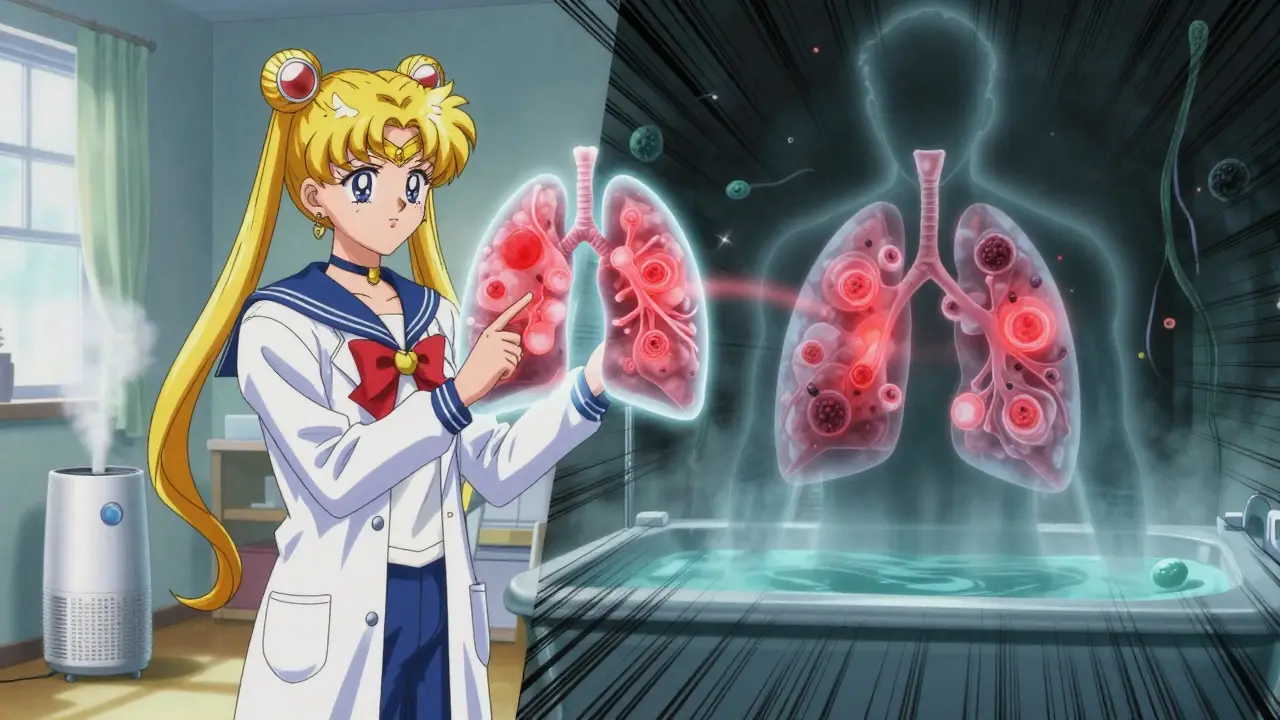
Hypersensitivity pneumonitis (HP) is a lung disease caused by breathing in tiny particles from the environment - not from swallowing pills or getting injections. These particles trigger your immune system to overreact, leading to inflammation deep in your lungs, specifically in the air sacs (alveoli). Over time, this inflammation can turn into scarring, or fibrosis, which makes it harder for oxygen to get into your bloodstream.This isn’t a reaction to drugs. Despite what some people assume, medications like antibiotics, blood pressure pills, or chemotherapy rarely cause true hypersensitivity pneumonitis. What they can cause is a different kind of lung injury called drug-induced interstitial lung disease (DILD). That’s not the same thing. HP requires you to inhale something specific - and it has to happen repeatedly.
Common Triggers You Might Not Realize Are Dangerous
The real culprits behind HP are everyday things you might not think of as harmful:- Bird proteins - from feathers, droppings, or even dust from pet birds. This is called bird fancier’s lung. People who keep parrots, pigeons, or even chickens in their garages are at risk.
- Moldy hay or grain - farmers, grain workers, and even people who store damp hay in barns can develop farmer’s lung.
- Mushroom spores - mushroom growers working in humid greenhouses often get exposed.
- Humidifiers and air conditioners - if not cleaned regularly, they can grow bacteria and fungi that get blown into the air.
- Hot tubs - the mist from warm water can carry bacteria that trigger HP, especially if the tub isn’t properly sanitized.
These aren’t rare causes. In fact, they’re the only well-documented triggers of true hypersensitivity pneumonitis. The Merck Manual, one of the most trusted medical references, lists these as the primary causes - and makes no mention of medications as a cause.
Why Cough and Breathlessness Are the Hallmarks
If you have HP, you’ll likely notice two main symptoms: a dry cough and shortness of breath. But here’s what makes it different from other lung problems:- Timing matters - Symptoms often start 4 to 8 hours after exposure. You might feel fine at work, but by evening, you’re coughing and winded. By the next morning, you feel better - until you go back the next day.
- It’s not constant - Unlike chronic bronchitis or COPD, HP symptoms come and go with exposure. That’s why many people dismiss it as “just a bad cold” or “allergies.”
- It gets worse over time - In the early stage (acute), you might have fever, chills, and muscle aches along with cough. In the subacute phase, symptoms build slowly over weeks. In chronic HP, you might just feel tired, lose weight, and notice you can’t walk as far as you used to.
Advanced cases can lead to clubbing - where your fingertips become rounded and enlarged - and irreversible lung scarring. Once fibrosis sets in, the damage can’t be undone.

How Doctors Diagnose It (And Why It’s Tricky)
There’s no single blood test or X-ray that confirms HP. Diagnosis is like solving a puzzle:- History - Your doctor will ask about your job, hobbies, pets, and home environment. Did you start keeping birds last year? Are you renovating a damp basement? Have you noticed symptoms improve on vacation?
- Imaging - A high-resolution CT scan of your chest shows patterns like ground-glass opacities, mosaic breathing, or air trapping - signs of inflammation and early scarring.
- Blood tests - Some people develop antibodies to the triggering antigen. For example, 70% of bird fancier’s lung cases test positive for antibodies to bird proteins.
- Bronchoalveolar lavage - A tiny tube is inserted into the lungs, and fluid is washed out. If more than 40% of the cells are lymphocytes, it points to HP.
- Lung biopsy - In unclear cases, a small piece of lung tissue is examined. HP shows poorly formed granulomas and lymphocytes clustering around small airways - a signature pattern.
What makes this hard is that 20-30% of cases have no identifiable trigger. But even then, the pattern of symptoms and imaging often points to HP.
What You Can Do - And What You Shouldn’t
The single most important treatment? Stop breathing in the trigger.- If it’s birds - rehome them. Don’t just clean the cage. The dust lingers in carpets, curtains, and ventilation systems.
- If it’s moldy hay - change your job or use proper respirators. A simple dust mask won’t cut it.
- If it’s a humidifier - clean it weekly with vinegar and water. Don’t use tap water; use distilled.
- If it’s a hot tub - keep chlorine levels high and drain it monthly.
Medications? Only in severe cases. Corticosteroids like prednisone may be used short-term to calm inflammation, but they don’t fix the root cause. Long-term use has side effects - weight gain, bone loss, diabetes - and won’t help if you keep breathing in the trigger.
And here’s something surprising: cigarette smokers have a lower risk of developing HP. Not because smoking is good - it’s not - but because it suppresses the immune response in the lungs. That’s why doctors don’t recommend smoking as a treatment. It’s just a grim statistical quirk.
What Happens If You Ignore It?
If caught early - especially in the acute or subacute phase - most people recover fully after avoiding the trigger. Up to 80% of acute cases bounce back with no lasting damage.But if you keep exposing yourself? The inflammation turns to scarring. About 30-50% of chronic HP cases develop progressive fibrosis. Once that happens, survival rates drop. Five-year survival ranges from 50% to 80%, depending on how much scarring is present.
Advanced cases may need oxygen therapy, pulmonary rehab, or even a lung transplant. Transplant success rates for HP are about 50-60% at five years - similar to other severe lung diseases.
What Medications Actually Do to Your Lungs
You might be thinking: “But my doctor said my cough is from my medication.” That’s possible - but it’s not HP.Drugs like amiodarone (for heart rhythm), nitrofurantoin (an antibiotic), and bleomycin (a chemo drug) can cause lung injury. But they don’t cause the same immune reaction as HP. Instead, they cause direct cell damage, chemical buildup, or allergic reactions that look different under the microscope.
Doctors call these drug-induced interstitial lung diseases (DILD). They’re serious - but they’re not hypersensitivity pneumonitis. Confusing the two can lead to wrong treatments. You don’t need to avoid your bird if your cough is from amiodarone. And you don’t need to stop your antibiotic if your cough is from moldy hay.
What to Do Next
If you’ve had a persistent cough and breathlessness - especially if it gets worse at work or home - ask yourself:- Do I feel better on weekends or vacations?
- Do I have pets, a hot tub, or a humidifier?
- Have I recently started gardening, farming, or working in a damp space?
- Do I have a bird or visit someone who does?
If you answered yes to any of these, talk to a pulmonologist. Bring a list of your daily activities. Don’t assume it’s asthma or a cold. HP is rare - but it’s treatable if caught early.
Don’t wait for permanent scarring. Your lungs can heal - if you remove the trigger.
Can medications cause hypersensitivity pneumonitis?
No, medications do not cause true hypersensitivity pneumonitis. While some drugs like amiodarone or nitrofurantoin can cause lung injury, they trigger different types of damage - such as direct toxicity or organizing pneumonia - not the immune-mediated, inhalational reaction that defines HP. True HP requires repeated breathing in of environmental antigens like bird proteins or mold spores.
Is hypersensitivity pneumonitis the same as asthma?
No. Asthma affects the airways (bronchi), causing wheezing and tightening, often triggered by allergens like pollen or pet dander. Hypersensitivity pneumonitis affects the air sacs (alveoli) deep in the lungs and is caused by inhaling organic dusts. Symptoms are more like a flu - fever, chills, and dry cough - and improve when you’re away from the trigger.
How long does it take to recover from hypersensitivity pneumonitis?
In acute cases, if you stop exposure right away, symptoms often clear up in 24 to 48 hours. Full recovery can take days to weeks. In subacute or chronic cases, recovery may take months - and sometimes the lung damage is permanent. The sooner you remove the trigger, the better your chances of avoiding scarring.
Can I still have a pet bird if I have hypersensitivity pneumonitis?
If you’ve been diagnosed with bird fancier’s lung, keeping birds is not safe. Even after cleaning your home, bird proteins linger in dust for months. Most people need to rehome their birds to fully recover. Some try strict air filtration and protective gear, but relapse is common. Avoidance is the only reliable solution.
Is hypersensitivity pneumonitis contagious?
No. HP is not contagious. It’s an individual immune response to environmental antigens. You can’t catch it from someone else. But if multiple people in the same environment - like a farm or a bird-breeding facility - develop similar symptoms, it suggests a shared exposure.
Can I prevent hypersensitivity pneumonitis?
Yes. If you work with birds, mold, or humidifiers, take steps to reduce exposure: use N95 respirators, clean equipment regularly, avoid damp environments, and ensure good ventilation. If you’re prone to allergies or have a family history of lung disease, be extra cautious. Early detection and avoiding triggers can prevent lifelong damage.
Lisa Rodriguez
February 2, 2026 AT 10:57I had no idea humidifiers could cause this. I clean mine every week but never thought about using distilled water. Guess I'm switching now. My cough's been acting up since winter started and I thought it was just dry air. This makes so much sense now.
Chris & Kara Cutler
February 4, 2026 AT 03:37OMG I just realized my parrot is the culprit 😱 I’ve been coughing for months and thought it was allergies. Time to rehome Benny… RIP my feathered roommate 🥲
Donna Macaranas
February 4, 2026 AT 03:51This is actually really helpful. I’ve been telling my coworker for months that her farmer’s lung isn’t just ‘bad bronchitis.’ She finally got tested last week. Hope she catches it early.
Aditya Gupta
February 4, 2026 AT 07:21Bro this is wild. I work in a mushroom farm and never thought my cough was from spores. Just thought I was getting old. Gonna get a proper mask and see a doc. Thanks for the heads up 👍
Lu Gao
February 5, 2026 AT 10:40Actually, this post is misleading. Amiodarone CAN cause hypersensitivity pneumonitis - the distinction between DILD and HP is blurry in clinical practice. The Merck Manual isn't gospel. I've seen cases where patients developed HP-like symptoms from meds after prolonged use. Don't oversimplify.
Angel Fitzpatrick
February 6, 2026 AT 09:04Of course they're not telling you the real cause. Big Pharma doesn't want you to know that 80% of these cases are triggered by government-approved mold spores in public HVAC systems. They're spraying it to keep us docile. And don't get me started on the bird industry - they're in cahoots with the CDC. Your humidifier? Probably a bioweapon. Wear a gas mask. Seriously.
Jamie Allan Brown
February 6, 2026 AT 15:18Thank you for writing this. I've had a friend with chronic HP for five years - she had to quit her job, move cities, and still struggles. The fact that it's reversible if caught early is so important. People need to know this isn't just 'a cough' - it's a silent killer. Sharing this everywhere.
Nicki Aries
February 8, 2026 AT 08:43Wow. I didn't realize that the term 'hypersensitivity pneumonitis' was even a thing. I've been treating my chronic cough with OTC meds for two years. I'm scheduling a pulmonologist appointment tomorrow. This might have saved my lungs.
Ed Di Cristofaro
February 10, 2026 AT 07:38Smokers have lower risk? Lmao so now smoking’s a preventative? Nah bro, that’s just nature being a cruel joke. Don’t go lighting up thinking you’re protecting your lungs - you’re just trading one slow death for another.
Lilliana Lowe
February 12, 2026 AT 01:07While the post is broadly accurate, it exhibits a troubling conflation of 'rare' with 'nonexistent.' The literature on drug-induced HP is growing - particularly in cases involving prolonged exposure to low-dose inhaled pharmaceuticals, such as inhaled corticosteroids in asthma patients. The Merck Manual's omission is not evidence of absence. You've presented an oversimplified dichotomy that may mislead clinicians and patients alike.