
When you’re traveling in a hot climate, your medications aren’t just sitting in your bag-they’re under attack. A car dashboard can hit 140°F in under 30 minutes. An EpiPen left there might stop working. Insulin could lose potency. Birth control pills might fail. This isn’t theoretical. People have ended up in emergency rooms, had unplanned pregnancies, or suffered asthma attacks-all because their meds were cooked in the sun.
Why Heat Destroys Medications
Most pills and liquids are designed to stay stable between 68°F and 77°F (20°C to 25°C). That’s not "room temperature" as most people think of it. In summer, your house might hit 85°F. Your car? It’s a sauna. The American Pharmacists Association says vehicle interiors can hit 120°F in just 20 minutes on an 85°F day. That’s enough to break down the chemical structure of many drugs.Temperature-sensitive meds like insulin, EpiPens, thyroid pills, hormonal contraceptives, and some antibiotics start degrading above 86°F. Cedars-Sinai research found that after 24 hours at 104°F, some medications lost up to 32% of their effectiveness. That’s not a small drop-it’s the difference between a treatment working and failing completely.
Even if the medicine looks fine, it might not work. You won’t know until it’s too late. A nurse on Reddit shared how a patient’s birth control failed after being left in a car for two days during a road trip. The result? A pregnancy. No warning. No symptoms. Just a broken pill.
Which Medications Are Most at Risk?
Not all meds are equally fragile. But some are extremely sensitive:- Insulin: Loses potency quickly above 86°F. Once opened, it must stay cool. A vial left in a hot car can stop working within hours.
- EpiPens: The epinephrine inside degrades fast in heat. If your EpiPen fails during an allergic reaction, it’s life-threatening.
- Hormonal birth control: Heat can alter hormone levels enough to reduce effectiveness. The FDA warns this is a documented risk.
- Thyroid meds (like levothyroxine): Even small temperature changes can affect absorption.
- Albuterol inhalers: The propellant can break down, making the spray inconsistent or useless.
- Antibiotics (like amoxicillin suspension): Liquid forms spoil faster in heat. Some become toxic.
If your medication is refrigerated at home, assume it needs cooling while traveling. If it’s stored at room temperature at home, assume it can’t handle 90°F+.
What NOT to Do
These are the most common mistakes-and they’re dangerous:- Leaving meds in the glove compartment: It’s one of the hottest spots in a car. A4PC.org found temperatures there can hit 140°F in summer.
- Storing meds in the trunk: Even worse. Trunks get hotter than interiors because they’re insulated and have no airflow.
- Putting them in direct sunlight: Even a sunny windowsill at a hotel can cook your pills.
- Using regular coolers without insulation: Ice melts. Water leaks. Meds get wet, frozen, or exposed to wide temperature swings.
- Checking them in luggage on planes: Cargo holds can drop below freezing or soar above 120°F. The International Air Transport Association confirms this.
One Drugs.com user reported their albuterol inhaler stopped working after being left in a car during a beach day. They ended up in the ER. That’s preventable.
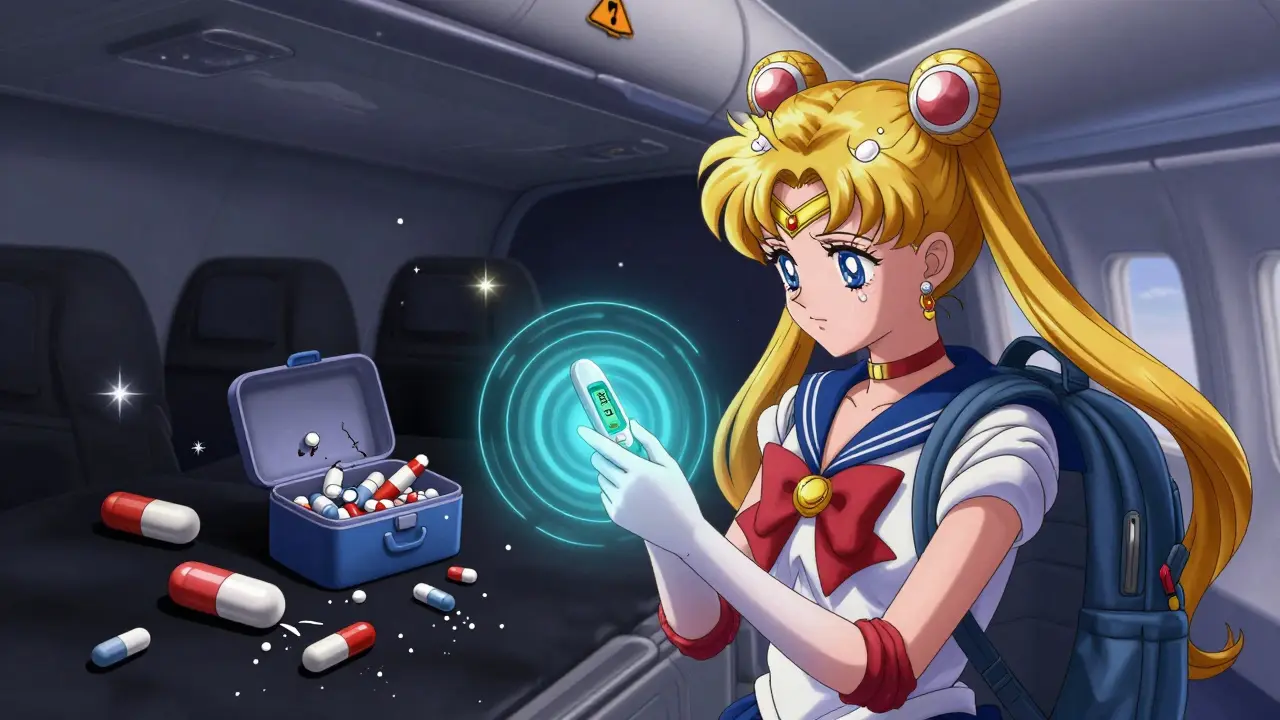
How to Pack Medications for Hot Weather
Follow this step-by-step system:- Use an insulated medication bag. Look for ones with phase-change materials that hold 59°F-77°F for 48-72 hours. The MedActiv Travel Case ($34.99) and Frio Insulated Wallet ($24.99) are top-rated. Frio’s wallet keeps insulin below 77°F even in 100°F heat.
- For refrigerated meds, use a pharmaceutical-grade cooler. The MyMediCarrier ($89.95) uses ice bricks and maintains 36°F-46°F for 72 hours. Independent tests show it outperforms regular coolers.
- Wrap cold packs in towels. Never let ice or gel packs touch medication directly. Condensation can ruin labels and damage pills. Wrap them first.
- Keep meds with you on flights. Always carry them in your carry-on. Cabin temps stay steady at 68°F-75°F. Checked bags? Too risky.
- Use a small thermometer. The American Society of Health-System Pharmacists now recommends carrying a $10 digital thermometer. Check your bag every few hours.
- Don’t rely on hotel mini-fridges. They’re not calibrated. Temperatures can swing wildly. Use your own cooler instead.
Pro tip: If you’re on a long road trip, park in the shade. Open your window slightly. Point a small portable fan at your medication bag. Senior Helpers tested this-fans can drop internal temps by 12°F-15°F.
Smart Tech for Medication Monitoring
New tools are making this easier:- TempSure Medication Cooler ($129.99): Has Bluetooth and a screen that shows real-time internal temp. If it goes outside the safe range, your phone alerts you.
- TempTraq Medication Monitor ($49.95): A small sensor you stick inside your pill case. Tracks temperature over time and syncs to an app. Sales jumped 220% in Q2 2023.
These aren’t luxuries anymore-they’re safety devices. The FDA is pushing for better labeling, but until then, you have to be your own watchdog.
Traveling by Air: Special Rules
Air travel adds another layer of risk:- Never check meds. Cargo holds can drop to 20°F or rise above 120°F. The American Journal of Health-System Pharmacy found refrigerated meds degrade 47% faster in standard coolers during long flights.
- Keep originals. TSA requires medications to be in original pharmacy-labeled containers. Don’t transfer pills to pill organizers for the flight.
- Bring a doctor’s note. Especially for injectables or controlled substances. It speeds up security.
- Carry extra. Always bring at least 20% more than you think you’ll need. Delays happen.
By 2024, airlines plan to install temperature-controlled compartments for medications in cabins. Until then, take responsibility yourself.

What to Do If Your Meds Get Too Hot
If you suspect your meds were exposed to extreme heat:- Don’t use them. Especially insulin, EpiPens, or birth control.
- Check the expiration date. If it’s expired or the packaging is warped, discard it.
- Call your pharmacist. The FDA says if meds were above safe temps for more than 24 hours, you need professional advice before using them.
- Get replacements. Pharmacies in most countries can provide emergency refills. Carry a list of your meds and dosages.
One user in Arizona left her insulin in a car for 12 hours at 102°F. She used a thermometer, saw the temp had spiked, and threw it out. She bought a new vial at a local pharmacy. She lived to tell the story.
Future Changes and What to Watch For
The industry is waking up:- The FDA is now requiring manufacturers to print temperature stability info on labels. Full compliance started in November 2023.
- Color-coded heat exposure indicators are coming in early 2024. Look for red dots or symbols that change when meds overheat.
- Travel insurance companies like Allianz now cover replacement costs for heat-damaged meds. Check your policy.
- Medicare beneficiaries now get storage instructions with prescriptions 68% of the time-up from 42% in 2020.
The World Health Organization predicts medication storage issues will grow 15-20% yearly due to rising global temperatures. This isn’t a one-time problem. It’s the new normal.
Final Checklist Before You Leave
Before you head out on your trip, run through this:- ✔️ Are your meds in original containers with labels?
- ✔️ Are you carrying a thermometer?
- ✔️ Are you using an insulated bag or cooler rated for meds?
- ✔️ Are cold packs wrapped in towels?
- ✔️ Are you keeping meds in your carry-on?
- ✔️ Do you have extra doses?
- ✔️ Do you know where to get replacements abroad?
It takes 15 minutes to pack right. That’s less time than it takes to get stuck in traffic. But it could save your life-or your health.
Can I leave my medication in the car if it’s just for a few minutes?
No. Even 10 minutes in a hot car can raise internal temps enough to damage insulin, EpiPens, or birth control. The temperature inside a parked car rises faster than you think-by 20°F in just 10 minutes. Don’t risk it.
Is it safe to store pills in a ziplock bag while traveling?
Only if you’re using it inside an insulated cooler or medication bag. A ziplock alone offers zero temperature protection and exposes pills to moisture and heat. Always keep them in their original containers with labels for safety and legal reasons.
Do I need to refrigerate all my medications when traveling?
No. Only medications that require refrigeration at home need cooling while traveling. Check the label or ask your pharmacist. Most pills and capsules are fine at room temperature (68°F-77°F), but never assume-heat can still affect them.
What if I can’t find a medication cooler where I’m traveling?
Use a regular cooler with ice packs wrapped in towels. Keep it in the shade. Open it only when necessary. You can also wrap your pill case in a damp towel and place it near a fan-this can reduce heat by up to 15°F. If you’re staying somewhere with a fridge, use it-but test the temp first with a thermometer.
Can heat make my medication toxic?
Yes, in rare cases. Liquid antibiotics and some hormones can break down into harmful byproducts when overheated. While this is uncommon, it’s enough of a risk that experts advise discarding any medication exposed to extreme heat, especially if it’s discolored, smells odd, or has changed texture.
Elen Pihlap
January 8, 2026 AT 08:08I left my insulin in the car for like 20 mins and now I’m scared to use it lol
Alex Danner
January 8, 2026 AT 15:42This is so real. I had a friend pass out on a road trip because his EpiPen didn’t work-he thought it was just old, but it had been sitting in the glovebox for days. The heat didn’t change how it looked, just how it worked. Now I carry a little thermometer in my med bag. $10 could save your life. Also, never trust hotel fridges. I checked mine in Phoenix and it was at 52°F. Too cold for some meds. Weird, right?
Paul Mason
January 9, 2026 AT 13:22Man I can’t believe people still do this. I’m British and we’ve had this info for years. You don’t just toss pills in the car like snacks. Even my nan knew not to leave her heart meds in the sun. And don’t get me started on those Americans who think a ziplock bag is a cooler. Come on. You wouldn’t leave a chocolate bar in a hot car-why would you risk your life with medicine?
Sai Ganesh
January 10, 2026 AT 08:42In India, we deal with this every summer. Many people don’t have access to insulated bags, so we use wet cloth wrapped around the pill bottle and keep it in the shade. Some even place it near a running fan. It’s not perfect, but it drops the temp by 10-15°C. Also, we always carry extra doses because pharmacies in small towns might not have what you need. And yes, if your insulin looks cloudy or your pills are sticky-throw them out. No second chances.
Katrina Morris
January 12, 2026 AT 05:33Just got back from Bali and I used the frio wallet and it worked great. I didn’t know about the thermometer tip but now I’m obsessed with checking it every few hours. Also I accidentally left my birth control in the car for like 40 minutes and panicked but then remembered the post and checked the temp-only 88°F so I kept it. Fingers crossed. Also I think everyone should carry a photo of their meds list on their phone. Just in case.
Emma Addison Thomas
January 12, 2026 AT 15:29I’ve been a nurse for 18 years and I’ve seen too many people ignore this. One woman came in with a ruptured appendix because her antibiotics degraded in the heat and she didn’t know. She thought she was just getting worse. It’s not paranoia-it’s science. I keep a small insulated pouch in my purse now. I don’t care how silly it looks. Better than a funeral.
Rachel Steward
January 13, 2026 AT 20:29Let’s be honest-this whole thing is a capitalist scam. Why do meds even degrade this fast? Because drug companies don’t want you to use them longer. They want you to buy new ones. The FDA knows this. The temperature stability info on labels? It’s barely regulated. And those fancy coolers? $130 for a plastic box? That’s a ripoff. You can make a better one with a thermos and a damp towel. Stop buying into fear marketing. Also, if you’re using birth control and it gets warm, just use condoms. It’s cheaper and safer.
Jonathan Larson
January 15, 2026 AT 04:01The ethical imperative here extends beyond personal safety-it reflects a broader societal failure in health literacy and infrastructure. When pharmaceutical stability is contingent upon individual consumer diligence, rather than systemic design, we are placing undue burden on vulnerable populations. The fact that a $10 digital thermometer is now a medical necessity underscores a critical gap in public health policy. One might reasonably argue that temperature-stable formulations should be the baseline, not the exception. Until then, we are all de facto pharmacists, custodians of our own survival, navigating a landscape where corporate convenience and regulatory inertia have outsourced risk to the individual. This is not merely practical advice-it is a call to advocate for systemic reform.
Anthony Capunong
January 16, 2026 AT 01:22Y’all are overcomplicating this. In America, we don’t need fancy gadgets. If you’re going on a road trip, just keep your meds in your shirt pocket. Body heat keeps ‘em stable. I’ve done it for years. My cousin’s dad took insulin in his pocket for a whole month in Arizona and he’s still alive. If you can’t handle a little heat, maybe you shouldn’t be traveling. This country built the interstate system-stop whining about your pills.