
Antibiotic Phototoxicity Risk & Protection Guide
Select the medication you are currently taking to see your risk level and the recommended protection protocol.
Doxycycline
Ciprofloxacin
Levofloxacin
Moxifloxacin
Doxycycline
High RiskExpected Effect:
Exaggerated sunburn, blistering, and rapid redness.
Urgency:
Critical. Immediate protection required.
Required Protection Protocol:
Imagine spending a weekend getaway only to return with a burn that feels like a severe second-degree sunburn, despite only spending an hour in the sun. If you're taking certain antibiotics, this isn't just a possibility-it's a documented medical reaction called phototoxicity. It's not an allergy; it's a direct chemical reaction where the medication in your system absorbs UV light and damages your skin cells almost instantly. For some, this leads to blistering or lasting hyperpigmentation, and for about 20% of people, it's so painful they actually stop their treatment entirely, which can lead to antibiotic resistance or a returning infection.
The good news is that you can almost entirely avoid this by understanding which drugs are the culprits and how to block the specific light waves that trigger the reaction. Here is how to keep your skin safe while getting the treatment you need.
Quick Summary: Key Protection Steps
- Use SPF 50+: Lower SPFs (like 30) are significantly less effective during antibiotic therapy.
- Wear UPF 40+ Clothing: Standard white cotton T-shirts aren't enough; look for certified UV-protective fabrics.
- Time Your Dose: For specific drugs like fluoroquinolones, taking them in the evening reduces daylight risk.
- Avoid Peak Hours: Stay indoors or in deep shade between 10 AM and 4 PM.
- Check Your Meds: Know if you're on a high-risk drug like doxycycline.
Which Antibiotics Cause the Most Trouble?
Not every antibiotic makes you a "sun magnet." The risk varies wildly depending on the chemical structure of the drug. The most common offenders are those that interact with UVA radiation (wavelengths between 315-400 nm).
Doxycycline is a tetracycline antibiotic frequently used for acne and Lyme disease that carries one of the highest risks of phototoxicity. If you're taking more than 100mg a day, your skin becomes significantly more sensitive. Its sibling, minocycline, is much safer, but doxycycline is notorious for causing rapid redness and edema.
Fluoroquinolones are a class of powerful broad-spectrum antibiotics including ciprofloxacin and levofloxacin. Among these, ciprofloxacin has a moderate risk of triggering reactions. Interestingly, moxifloxacin is much lower risk because it has a specific methoxy group at the C-8 position that makes it more stable under sunlight.
| Antibiotic | Risk Level | Common Effect |
|---|---|---|
| Doxycycline | High | Exaggerated sunburn, blistering |
| Ciprofloxacin | Moderate | Erythema (redness), itching |
| Levofloxacin | Low-Moderate | Mild redness, skin sensitivity |
| Moxifloxacin | Low | Rarely triggers reactions |
| Sulfonamides | Negligible | Very low phototoxic potential |
The "Evening Dose" Strategy
One of the smartest ways to lower your risk is to change when you take your pills. This is particularly effective for fluoroquinolones. By taking your medication 2-3 hours before bedtime, you ensure that the serum concentration of the drug in your bloodstream is at its lowest during the peak daylight hours of the following day.
Clinical data shows that this simple shift can reduce the risk of phototoxic reactions by about 37%. Instead of having a peak concentration of the drug in your skin while the sun is at its strongest, you're essentially "timing" the medication to be less active when the UV index is highest.
Advanced Sun Protection Protocols
If you're on a high-risk medication, your usual "slap on some sunscreen" routine isn't enough. Antibiotics can make your skin degrade sunscreens faster than normal.
The SPF 50+ Requirement
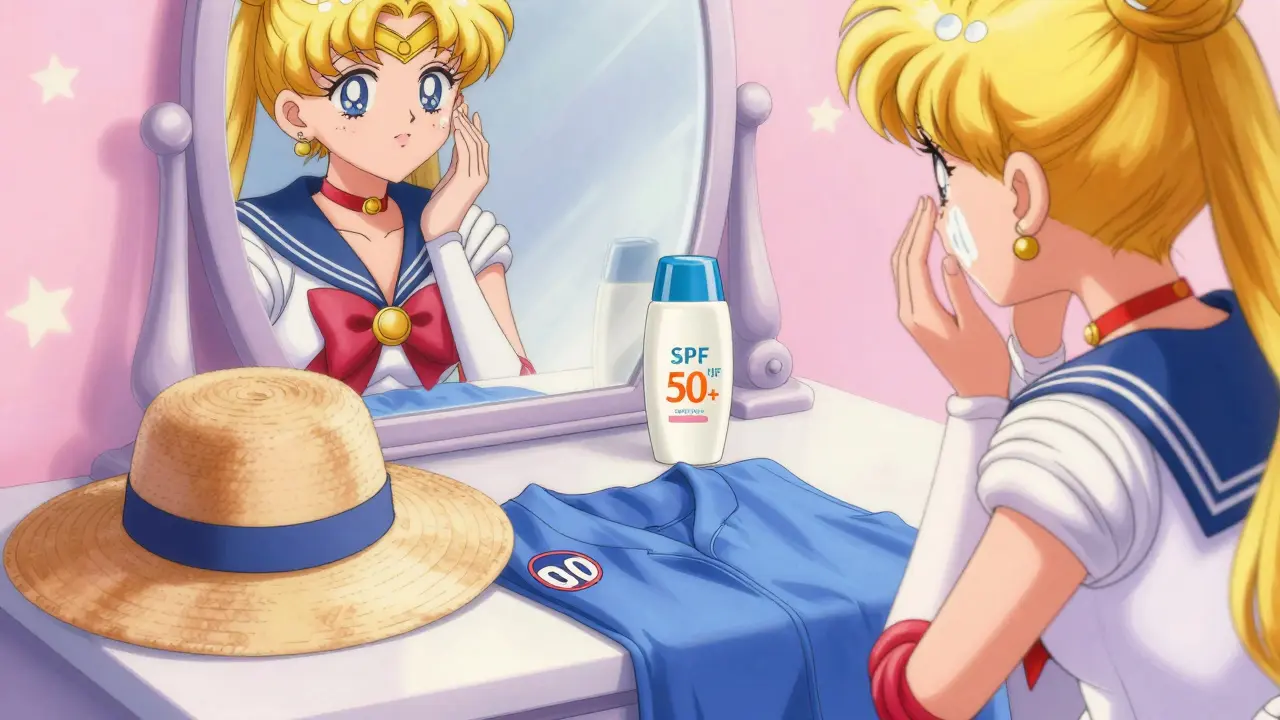
Most people reach for SPF 30, but when you're fighting phototoxicity, that's not a strong enough shield. Research shows that SPF 30 only provides about 55% protection against these specific drug reactions, whereas SPF 50+ jumps that protection to 92%. You need a broad-spectrum formula that specifically lists UVA and UVB protection. Because these drugs increase skin sensitivity, you should apply it 15-30 minutes before going outside and reapply every hour-not every two or four hours as usually recommended.
Clothing as a Shield
Don't rely on a white T-shirt. A standard cotton tee typically has a UPF (Ultraviolet Protection Factor) of only 5 to 10, which lets a surprising amount of radiation through. You want clothing labeled UPF 40+, which is a textile standard that ensures a specific percentage of UV radiation is blocked from reaching the skin. A UPF 50+ garment blocks about 98% of radiation. Opt for synthetic blends like polyester or tightly woven fabrics rather than loose cotton.
The Hat Factor
A baseball cap protects your forehead, but it leaves your ears and the back of your neck completely exposed-areas where phototoxicity often hits hardest. A wide-brimmed hat is a must; they provide roughly 95% facial protection compared to the 45% provided by a standard cap.
Common Pitfalls to Avoid
Many people think they are protected, but they fall into a few common traps. First is the "washing cycle" problem. If you have UV-protective clothing, be aware that the protection can degrade over time. Some fabrics lose up to 22% of their effectiveness after 20 washes. If your gear is old, it might be time for an upgrade.
Another mistake is the "one-and-done" sunscreen application. Many patients forget to reapply, thinking the morning dose is enough. Because antibiotic-induced sensitivity is dose-dependent and occurs within minutes of exposure, a gap in your sunscreen coverage can lead to an immediate burn.

Dealing with Chronic Therapy
Preventing reactions during a 10-day course of antibiotics is relatively straightforward. However, if you're using tetracyclines for long-term acne treatment, the challenge grows. About 62% of patients on chronic therapy experience "breakthrough" reactions even if they try to follow the rules. In these cases, you should talk to your doctor about adjusting the dose or switching to a lower-risk alternative like minocycline.
If you have a very fair complexion (Fitzpatrick skin types I-II), you are at a much higher risk. People with lower melanin levels lack the natural antioxidant protection that helps neutralize the free radicals created during a phototoxic reaction, meaning you need to be about 37% more aggressive with your protection than someone with a darker skin tone.
Is this the same as a sun allergy?
No. A sun allergy (photoallergy) is an immune response that can take days to develop. Phototoxicity is a direct chemical reaction between the drug and light that happens almost immediately upon exposure. It doesn't require a previous "sensitization" period; if the drug is in your system and the light hits your skin, the reaction can happen.
Can I use a tanning bed while on these medications?
Absolutely not. Tanning beds use concentrated UVA radiation, which is the exact wavelength (315-400 nm) that triggers phototoxic reactions. Using a tanning bed while taking doxycycline or ciprofloxacin is an extremely high-risk activity that can lead to severe blistering and skin damage.
How long after finishing the antibiotics do I need to protect my skin?
Most phototoxic drugs leave the system relatively quickly, but you should remain cautious for a few days after your last dose. Check with your pharmacist about the "half-life" of your specific medication to know exactly when it's safe to return to your normal sun habits.
What should I do if I notice my skin is becoming red?
Get out of the sun immediately. Cool the skin with a damp cloth and avoid using heavy oils or fragrances that might irritate the area. Contact your doctor; you may need to adjust your dosing schedule or switch medications to avoid a more severe reaction.
Are there any supplements that help?
Some newer medical formulations using beta-carotene have shown success in reducing reactions, but you should never start a supplement to "counteract" a drug without a doctor's approval, as some supplements can interfere with how the antibiotic works.
Next Steps and Troubleshooting
If you are an outdoor worker or an athlete who can't avoid the sun, be proactive. Don't wait for the reaction to happen. Tell your doctor, "I spend 6 hours a day in the sun; is there a non-phototoxic alternative to this drug?" In many cases, a simple switch to a different class of antibiotic can solve the problem entirely.
For those who must stay on high-risk meds, consider using a UV-tracking app. These tools can send you real-time alerts when the UV index hits a dangerous level in your specific zip code, reminding you to reapply your SPF 50+ or move into the shade. If you see a rash that looks like an exaggerated sunburn, stop sun exposure immediately and document the timing of your last dose and your sun exposure to help your doctor diagnose the reaction.