
When a pharmacist hands you a pill bottle labeled "generic," most people assume it’s just a cheaper version of the brand-name drug. But for NTI generics, that assumption can be dangerous. Narrow Therapeutic Index drugs - like warfarin, levothyroxine, and phenytoin - don’t play by the same rules. A tiny difference in how your body absorbs the medicine can mean the difference between healing and hospitalization. And pharmacists are sounding the alarm.
What Exactly Are NTI Generics?
NTI stands for Narrow Therapeutic Index. These are drugs where the gap between a safe, effective dose and a toxic or ineffective one is razor-thin. For example, warfarin, a blood thinner, needs to keep your INR (a blood clotting measure) between 2.0 and 3.0. Go slightly above that, and you risk bleeding. Go slightly below, and you could get a stroke. The same goes for levothyroxine: too little, and your thyroid stays underactive; too much, and your heart starts racing. The FDA doesn’t publish an official list of NTI drugs, but it does flag them in the Orange Book with special codes. These drugs require therapeutic drug monitoring - regular blood tests to check levels. That’s not something you’d need for, say, ibuprofen or metformin. Yet, generic versions of these critical drugs are often swapped in automatically at the pharmacy counter, even when the prescriber didn’t intend it.Why Pharmacists Are Worried
In 2024, the American Society of Health-System Pharmacists surveyed 1,200 pharmacists. Two-thirds said they’re worried about substituting NTI generics. Why? Because bioequivalence standards for these drugs are still too loose. For most generics, the FDA allows a 80% to 125% range in how much of the drug enters your bloodstream compared to the brand. For NTI drugs, they recommend a tighter window: 90% to 111%. But even that’s not always enforced. And here’s the kicker: different generic manufacturers make the same drug with slightly different fillers, coatings, or manufacturing processes. That can change how quickly or completely the drug is absorbed. One hospital pharmacist in Ohio told me she saw three patients admitted for INR spikes after switching from one warfarin generic to another. All three had been stable for years on the same brand. The switch wasn’t even documented in their records. That’s not a fluke. Between 2020 and 2024, the FDA’s adverse event database logged over 1,200 incidents tied to NTI generic switches - more than triple the number for non-NTI generics.The Real Cost of Savings
Yes, NTI generics cost 80% to 85% less than brand-name versions. That’s huge for patients on fixed incomes. One independent pharmacy owner in Iowa said his patient abandonment rate for levothyroxine dropped 35% when generics became available. That’s a win. But the trade-off isn’t just financial. It’s clinical. When a patient switches between different generic brands - say, from Mylan to Teva to Sandoz - their blood levels can swing. That’s not hypothetical. The University of Minnesota’s 2024 study found 15 NTI drugs where even a 10% change in bioavailability led to real harm: seizures, strokes, organ rejection. And it’s getting worse. In 2024, 47 NTI drugs were in shortage - 17.4% of all drug shortages, even though NTI drugs make up only 6% of generic prescriptions. Why? Because manufacturers don’t make money on low-volume, high-risk drugs. When one plant shuts down, there’s no backup. The FTC says group purchasing organizations have made this worse by forcing pharmacies to switch suppliers to cut costs. No one checks if the new version is truly interchangeable.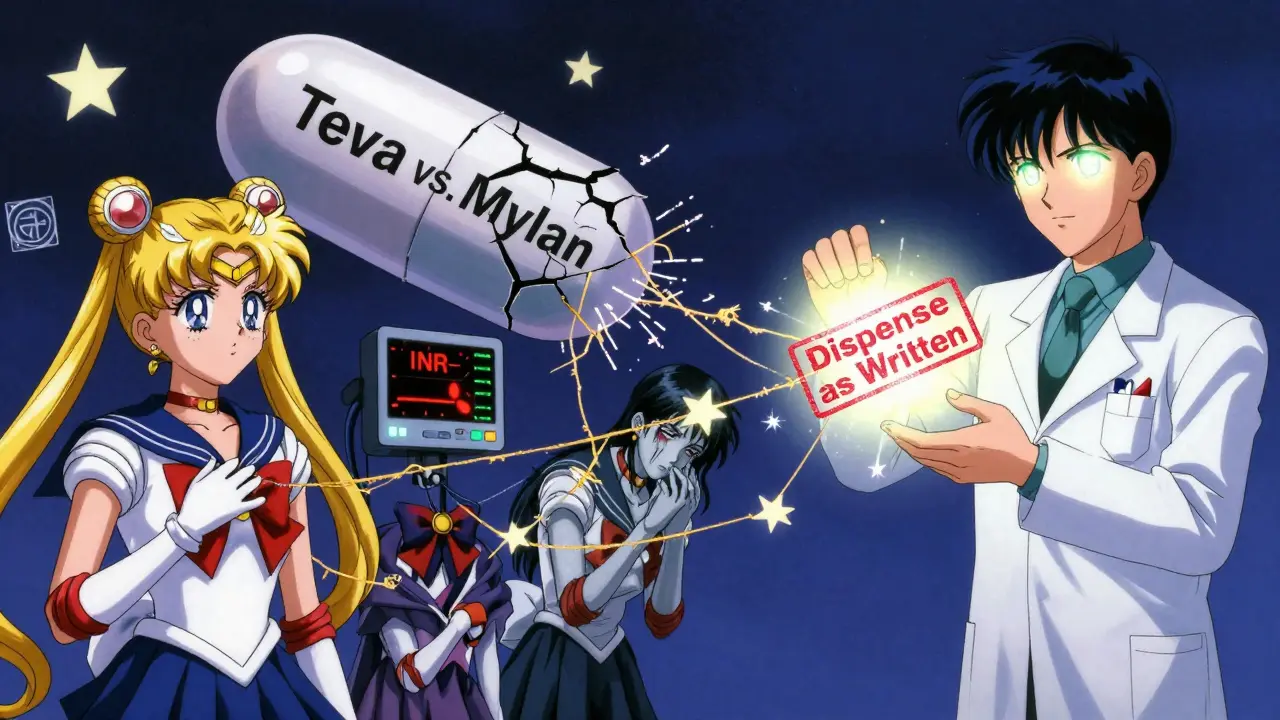
What’s Being Done - and What’s Not
Some states have tried to fix this. As of January 2026, only 28 states require prescriber approval before substituting an NTI generic. Six states ban automatic substitution entirely. The rest? They let pharmacists swap them like cough syrup. The FDA’s 2025 update to its bioequivalence framework is a step forward. They’re targeting 12 high-risk NTI drugs for stricter testing by 2026. That includes better chiral separation methods - because some of these drugs have mirror-image molecules (stereoisomers) that behave differently in the body. But many pharmacists say it’s too little, too late. The American Association of Colleges of Pharmacy’s CEO, Dr. Lucinda L. Maine, put it bluntly: “Pharmacists are being asked to manage risks they weren’t trained for.” Only 78% of hospital pharmacists feel confident in their NTI drug knowledge after pharmacy school. Most learned on the job - by watching patients crash after a switch.What Pharmacists Are Doing Right Now
Despite the system’s flaws, pharmacists are stepping up. At Kaiser Permanente and Mayo Clinic, teams now use “single-source” policies: once a patient starts on a specific generic brand, they stay on it. No switching. No surprises. About 63% of hospital systems now do this. Pharmacists are also pushing for better communication. The American Pharmacists Association found that 61% of pharmacists want state laws to require prescribers to write “Dispense as Written” or “Do Not Substitute” on NTI prescriptions. Right now, that’s optional in most places. In community pharmacies, many now keep a printed list of NTI drugs on the counter. When a prescription comes in for carbamazepine or digoxin, they call the doctor. They explain the risk. They ask: “Do you want us to switch?”
What Patients Should Know
If you’re on warfarin, levothyroxine, phenytoin, cyclosporine, or any of the 42 drugs with recommended tighter bioequivalence ranges, here’s what to do:- Ask your pharmacist: “Is this the same brand I’ve been taking?”
- Check the label. Generic names change with the manufacturer - it’s not always obvious.
- Don’t assume a lower price means the same effect.
- Get your blood levels checked regularly - even if you feel fine.
- If you notice new symptoms - fatigue, dizziness, irregular heartbeat - ask if your medication changed.
The Road Ahead
The Medicare Drug Price Negotiation Program is now including three NTI drugs among its first 10 targeted medications. That’s good for affordability - but risky if it triggers more supply chain chaos. Lisa Schwartz from NCPA warned that the 21-day reimbursement delay under MDPNP could force small pharmacies to stop stocking these drugs entirely. The future? More pharmacist-led stewardship programs. By 2027, 74% of healthcare systems plan to have pharmacists managing NTI drug therapy - not just filling prescriptions. That means pharmacists will review blood levels, track manufacturer changes, and consult with doctors before any switch. But until then, the burden falls on the patient and the pharmacist. And the system is still designed for volume, not safety.Frequently Asked Questions
Are all generic drugs unsafe?
No. Most generic drugs - like antibiotics, statins, or blood pressure meds - are just as safe and effective as brand names. The risk is only with Narrow Therapeutic Index (NTI) drugs, where tiny changes in absorption can cause serious harm. Out of the thousands of generic drugs, only about 40 are classified as NTI.
Can I ask my pharmacist to keep me on the same generic brand?
Yes, absolutely. You can ask for a specific manufacturer’s version - even if it costs more. Many pharmacists will honor that request, especially for NTI drugs. Some even keep a small stock of a preferred brand on hand for patients who need consistency.
Why don’t doctors know about this?
Many don’t. Pharmacy school covers NTI drugs in depth, but medical school often doesn’t. A 2024 ACCP study found that 40% of primary care doctors couldn’t name five NTI drugs. That’s why pharmacists are becoming the frontline protectors - they’re the ones who see the label, check the manufacturer, and notice the INR spike.
Is there a list of NTI drugs I can check?
Yes. The FDA’s Orange Book lists therapeutic equivalence codes - look for drugs marked with "AB" or "A" codes. The American Society of Health-System Pharmacists (ASHP) also maintains a public list of high-risk NTI drugs. Common ones include warfarin, levothyroxine, phenytoin, carbamazepine, digoxin, cyclosporine, and theophylline.
What if my insurance only covers one generic brand?
Ask your pharmacist to file a prior authorization. Many insurers will approve a specific brand if you can show a history of stability on it. Some states have laws requiring insurers to cover non-preferred generics for NTI drugs if medically necessary. Don’t accept a blanket refusal - push back.
Alexandra Enns
January 24, 2026 AT 18:11This is such a load of fearmongering BS. The FDA regulates generics like a hawk. If you're telling me that a $5 warfarin pill is going to kill you but the $25 brand name won't? That's not science, that's pharmaceutical industry propaganda. I've been on generics for 12 years and I'm still alive. Stop scaring people for clicks.
Marie-Pier D.
January 24, 2026 AT 21:21Thank you for writing this. I'm a nurse and I've seen patients crash after a switch. One woman went from stable INR 2.5 to 7.8 after her pharmacy swapped her warfarin brand. She ended up in the ER with a brain bleed. It's not about fear-it's about respect for the medicine. Let's not pretend all generics are the same. 🙏
Himanshu Singh
January 25, 2026 AT 08:39There's a deeper truth here: we treat medicine like a commodity, not a lifeline. In India, we have generics everywhere, but we also have doctors who monitor levels. Maybe the problem isn't the generic-it's the system that removes human oversight. We need pharmacists to be part of the care team, not just pill dispensers.
Jamie Hooper
January 26, 2026 AT 11:25so like… the system is broken? wow. who woulda thunk it. 🤡 i mean, i get it, people are dying but like… why do we keep pretending this is new? it’s been this way since like 2010. just say it: capitalism > safety. move on.
Don Foster
January 27, 2026 AT 20:19NTI drugs are not some magical exception. The bioequivalence standards are statistically sound. Anyone who claims otherwise is either misinformed or pushing an agenda. The real issue is poor patient compliance and lazy prescribers who don't follow up. Stop blaming the generic manufacturers. They're just following the rules
siva lingam
January 29, 2026 AT 08:43pharmacists are worried? lol. they're worried about their paycheck. if you pay me less to switch pills i'll cry too. meanwhile real people are dying because they can't afford the brand. so yeah keep your fancy blood tests and your 'single source' nonsense. the poor don't get luxury medicine
Chloe Hadland
January 30, 2026 AT 17:19I just started on levothyroxine and my pharmacist actually called my doctor to confirm I should stay on the same brand. It meant I paid $15 more a month but I felt better immediately. I didn't even know this was a thing until now. Thanks for the heads up. 🙏
Amelia Williams
January 31, 2026 AT 02:39This is exactly why we need more pharmacist-led clinics. I had a friend on cyclosporine after a transplant and her levels went haywire after a generic switch. They didn't catch it for weeks. If pharmacists had more authority to monitor and intervene, this wouldn't be happening. We need to empower them, not silence them. Let's make this a movement, not a footnote.
Viola Li
January 31, 2026 AT 03:53It's not the generics' fault. It's the patients' fault for not monitoring themselves. If you're too lazy to check your INR or get blood tests, then you deserve to suffer. The system works if you actually care. Stop expecting everyone else to fix your negligence.
Marlon Mentolaroc
January 31, 2026 AT 12:23Let me break this down like I'm talking to a toddler: The FDA allows a 90-111% absorption range for NTI drugs. That means a pill could be 11% weaker or 11% stronger. For warfarin? That’s like driving with your brakes set to ‘sometimes work’. Now imagine your mechanic swaps your brake pads without telling you. That’s what’s happening. The math doesn't lie. The system is a time bomb.
Gina Beard
February 1, 2026 AT 19:25Human beings are the variable. Not the pill.