Antibiotic Impact Calculator
How Antibiotic Use Affects Resistance
Every antibiotic course you take helps bacteria evolve resistance. This calculator shows how your usage patterns contribute to the growing threat of superbugs.
Important: Antibiotics only treat bacterial infections. They don't work on viruses like colds or flu.
Enter your information above to see your antibiotic impact score.
Every time you take an antibiotic when you don’t really need it, you’re not just treating yourself-you’re helping create a superbug. It’s not science fiction. It’s happening right now, in hospitals, in homes, and in places where people can’t even get basic care. The bacteria that once responded to a simple pill are now laughing at our best drugs. And the reason? Too many antibiotics, too often.
What Happens When Antibiotics Stop Working?
Antibiotics don’t kill all bacteria. They kill the weak ones. The strong ones? They survive. And then they multiply. This isn’t magic-it’s evolution, happening faster than ever. When you take an antibiotic repeatedly, especially for minor infections like colds or viral sore throats (which antibiotics can’t touch), you’re giving resistant bacteria a free pass to take over. They don’t just survive-they share their resistance genes with other bacteria, even different kinds. This is called horizontal gene transfer. It’s like bacteria texting each other: "Hey, this drug doesn’t work. Here’s how to beat it." By 2024, the CDC found that carbapenem-resistant Enterobacterales (CRE), one of the most dangerous types of drug-resistant bacteria, had surged 460% in the U.S. since 2019. These bugs can turn a simple urinary tract infection into a death sentence. Mortality rates for bloodstream infections caused by CRE? Between 40% and 50%. That’s not a rare outlier. That’s the new normal in too many hospitals.
Who’s Most at Risk?
You might think this only affects the elderly or people in ICUs. But it’s not that simple. A 32-year-old cystic fibrosis patient in Baltimore spent 18 months on IV antibiotics after multiple treatments failed. Her infection was caused by Pseudomonas aeruginosa-a bug that’s now resistant to nearly every drug available. The cost? Over $1.2 million. She wasn’t immunocompromised from cancer or organ failure. She just had a chronic condition that required frequent antibiotics. And each course made her more vulnerable to the next resistant strain.
Even healthy people aren’t safe. A woman in the UK spent six months battling MRSA after hip surgery. She went through 11 different antibiotics. Three more surgeries. And still, the infection came back. She told her story online: "The emotional toll of knowing the medicine might not work was almost worse than the pain." That’s the hidden cost of antibiotic resistance-not just the medical bills, but the fear, the uncertainty, the loss of trust in medicine itself.
The Bigger Picture: Resistance Is Everywhere
It’s not just hospitals. It’s in the food we eat, the water we drink, and the air we breathe. Nearly 60% of all antibiotics used globally are given to animals in farming-not because they’re sick, but to make them grow faster. That’s not treatment. That’s mass exposure. And those resistant bacteria don’t stay on the farm. They get into our soil, our rivers, and eventually, our bodies.
Even non-antibiotic drugs are playing a role. A January 2025 study in Nature Communications found that common medications like antidepressants, antihypertensives, and even some painkillers can promote bacterial resistance. They don’t kill bacteria, but they stress them out enough to trigger defense mechanisms that also protect against antibiotics.
And the resistance isn’t random. The WHO reports that 1 in 5 urinary tract infections caused by E. coli are already resistant to common drugs like ampicillin and fluoroquinolones. MRSA rates are still high in many regions. And then there’s Candida auris, a fungus that resists all three major classes of antifungal drugs. It’s not bacteria-but it’s the same story. One drug fails, then another, then another. Soon, there’s nothing left.
Why Aren’t We Making New Antibiotics?
Here’s the brutal truth: pharmaceutical companies stopped investing in new antibiotics decades ago. Why? Because they don’t make money. Unlike drugs for diabetes or high cholesterol, which people take for life, antibiotics are meant to be used briefly-and ideally, never again. Companies can’t charge enough to recoup their research costs. A 2023 analysis found that for every dollar spent developing a new antibiotic, companies only get back 20 cents.
The result? Only 39 antibiotics are currently in clinical development worldwide. Just eight of them are truly new-meaning they work in ways we’ve never seen before. Compare that to the 1980s, when over 100 new antibiotics were approved every year. Today, we’re scraping the bottom of the barrel. The last new class of antibiotics discovered? In the 1980s. That’s 40 years without a real breakthrough.
Some experts call this a "silent pandemic." The World Health Organization says antimicrobial resistance has already killed over one million people a year since 1990. Without action, that number could hit 10 million annually by 2050-more than cancer.
What’s Being Done? And Is It Enough?
There are glimmers of hope. In January 2025, the FDA approved cefepime-taniborbactam, the first new antibiotic specifically designed to fight NDM-CRE-the most dangerous CRE strain. In clinical trials, it worked in nearly 90% of cases. That’s huge. But it’s one drug. One weapon. Against an army of evolving superbugs.
Another promising idea? The PASTEUR Act in the U.S. Congress. Instead of paying for antibiotics by the pill, the government would pay a fixed fee-like a subscription-to make sure companies get paid even if their drug is used sparingly. That could bring back drug development. The Congressional Budget Office estimates it could triple the number of new antibiotics in the pipeline over 10 years.
Some countries are already proving it’s possible. Sweden’s Strama program, launched in 1995, cut antibiotic use by 28% and resistance rates by 33%. How? Public education, strict prescribing rules, and tracking every prescription. Hospitals that followed the CDC’s seven-step stewardship program saw a 22% drop in inappropriate antibiotic use and a 17% drop in deadly C. difficile infections in just 18 months.
But globally? Only 12% of countries have full national action plans. Two-thirds lack even basic systems to track resistance. In parts of Southeast Asia, nearly 9 out of 10 people buy antibiotics without a prescription. In the U.S., only 38% of community hospitals can test for resistance quickly. That means doctors are often guessing-which means they’re prescribing too much.

What You Can Do Right Now
You don’t need to be a scientist to fight this. Here’s what actually works:
- Don’t ask for antibiotics for colds, flu, or sore throats. These are usually viral. Antibiotics won’t help-and they’ll hurt.
- If you’re prescribed antibiotics, take them exactly as directed. Never skip doses. Never save leftovers. Never share them.
- Ask your doctor: "Is this antibiotic really necessary?" Many infections clear on their own. Sometimes, watchful waiting is the best treatment.
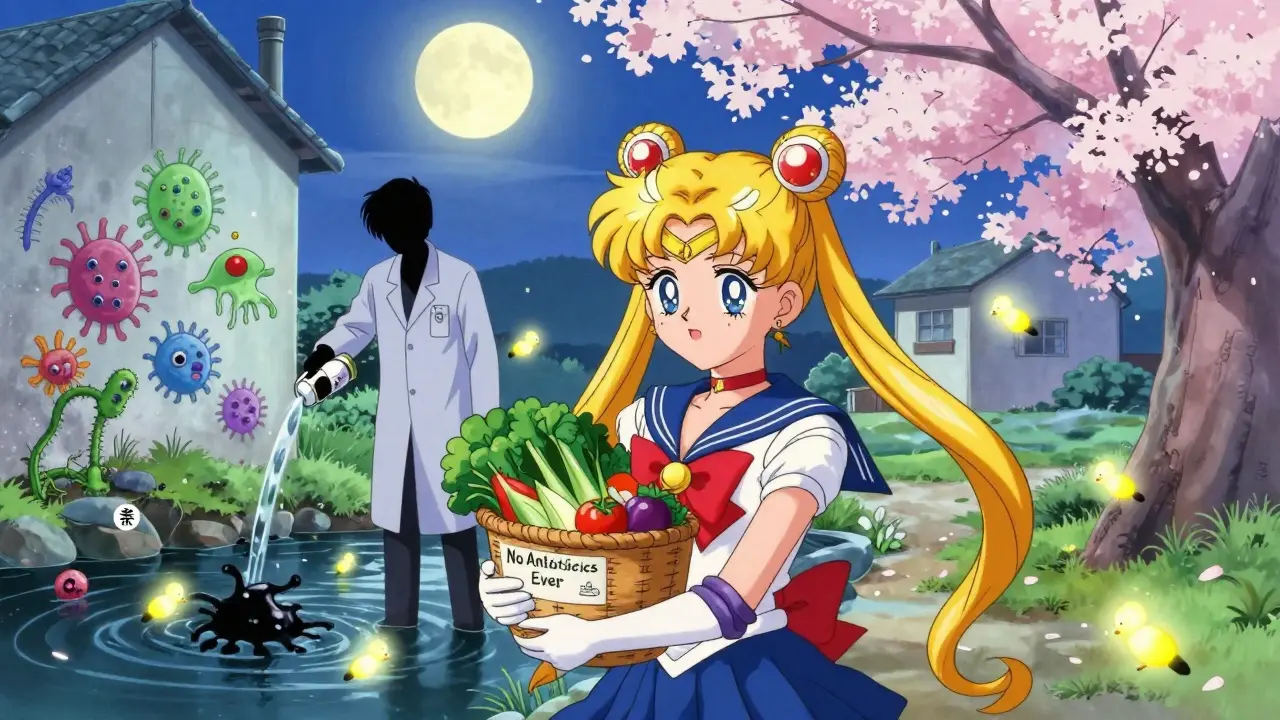
- Choose meat raised without routine antibiotics. Look for labels like "no antibiotics ever" or "raised without antibiotics."
- Support policies that fund antibiotic research. Contact your representatives. Ask them to back the PASTEUR Act or similar laws.
One course of antibiotics might seem harmless. But when millions of people do it-every year-it adds up. And the cost? Not just money. It’s the loss of the ability to treat infections. To do surgery. To survive cancer treatment. To have children safely.
The Future Is Not Written
We’re not doomed. But we’re at a crossroads. If we keep treating antibiotics like candy-giving them out freely, using them unnecessarily, ignoring the consequences-we will return to a world where a scraped knee can kill. Where a C-section becomes a gamble. Where pneumonia is a death sentence again.
But if we act-now, decisively, together-we can turn this around. We can fund new drugs. We can change how we use the ones we have. We can protect the next generation from the silent pandemic we’ve helped create.
The bacteria are evolving. The question is: are we?
Can I get antibiotic resistance from someone else?
Yes. You don’t need to take antibiotics yourself to carry resistant bacteria. They can spread through touch, contaminated food, water, or even the air in hospitals. Someone with a resistant infection can pass those bacteria to you-even if you’re perfectly healthy. That’s why infection control in hospitals matters so much.
Are natural remedies effective against drug-resistant bacteria?
No. Honey, garlic, essential oils, and herbal supplements might have some mild antibacterial properties, but they are not proven to treat serious infections caused by drug-resistant bacteria. Relying on them instead of medical care can delay treatment and lead to life-threatening complications. Always consult a doctor for confirmed infections.
Why don’t we have more new antibiotics?
Because drug companies can’t make money from them. Antibiotics are used for short periods, unlike drugs for chronic conditions. Developing a new antibiotic costs over $1 billion, but returns only about 20 cents for every dollar spent. That’s why most big pharmaceutical companies left the market decades ago.
Can children be affected by antibiotic resistance?
Absolutely. Children are often prescribed antibiotics for ear infections, sore throats, and bronchitis-even when viruses are the cause. Overuse in childhood increases the risk of carrying resistant bacteria into adulthood. Studies show kids who get multiple courses of antibiotics before age 2 are more likely to develop resistant infections later.
How long does it take for resistance to develop?
It can happen in days. Bacteria reproduce quickly-some in under 20 minutes. A single course of antibiotics can kill off susceptible strains and leave resistant ones behind. These survivors multiply rapidly. Within a week, a resistant strain can dominate in your body or environment. That’s why short, targeted use is critical.
Is antibiotic resistance only a problem in hospitals?
No. While hospitals are hotspots because of high antibiotic use and vulnerable patients, most resistant infections start in the community. Community-acquired MRSA, resistant urinary tract infections, and drug-resistant pneumonia are rising everywhere. The problem is in the water, food, and over-the-counter sales of antibiotics in many countries.
What Comes Next?
If nothing changes, we’ll see more deaths from simple infections. More surgeries canceled. More cancer patients unable to undergo chemotherapy because their bodies can’t fight off even minor infections. More parents burying children who caught a bug that no drug can cure.
But if we act-now-we can still change the course. It’s not about fear. It’s about responsibility. Every antibiotic you take, every prescription you ask for, every choice you make about food and health-it adds up. The bacteria aren’t waiting. Neither should we.
Aditya Kumar
December 16, 2025 AT 03:02Yeah sure, antibiotics are bad. But I’ve never even taken one unless I was literally dying. Why should I care what some random person in a hospital does?
Colleen Bigelow
December 17, 2025 AT 17:28Let’s be real - this whole ‘antibiotic resistance’ thing is just a Big Pharma psyop to sell you more expensive meds. The government’s been poisoning our water with glyphosate and fluoride for decades, and now they want you to believe bacteria are winning? Wake up. The real superbugs are the ones in Congress and the FDA. They don’t want you cured - they want you on lifelong subscriptions. I’ve seen the documents. They’re hiding the cure in plain sight - it’s called ozone therapy and colloidal silver. But you won’t hear that from your ‘trusted’ doctor. They’re paid off. Stay vigilant.
Billy Poling
December 18, 2025 AT 03:16It is, in fact, a matter of considerable scientific and public health urgency that the widespread and often indiscriminate use of antimicrobial agents - not only in clinical settings but also in agricultural and industrial contexts - has precipitated a global crisis of microbial adaptation, wherein horizontal gene transfer mechanisms have enabled the rapid dissemination of resistance determinants across phylogenetically diverse bacterial taxa. This phenomenon, while well-documented in peer-reviewed literature since the 1950s, has only recently gained sufficient public traction to warrant legislative attention, despite the fact that mortality projections for 2050 exceed those of most malignant neoplasms. The systemic failure of market incentives to reward innovation in narrow-spectrum therapeutics, coupled with regulatory barriers to clinical trial design, has resulted in a therapeutic vacuum that threatens to reverse over a century of medical progress.
Mike Smith
December 18, 2025 AT 15:34This is one of those issues that feels overwhelming - until you realize you have power. You don’t need to be a doctor or a politician to make a difference. Just say no to antibiotics for a cold. Ask your doctor if they’re really needed. Choose meat labeled ‘no antibiotics ever.’ That’s it. Small actions, multiplied by millions, change the world. You’re not powerless. You’re part of the solution. Keep speaking up.
Kitty Price
December 19, 2025 AT 18:49Man, this post hit hard 😔 I had a friend go through 11 antibiotics for MRSA… she still has nightmares about it. We need to wake up. 🙏
Randolph Rickman
December 21, 2025 AT 17:26Here’s the thing - we’ve been warned for 30 years, and we keep hitting snooze. But guess what? We still have time. The PASTEUR Act isn’t just a bill - it’s a lifeline. And that new drug cefepime-taniborbactam? It’s proof we can still innovate. We just need to fund it. Call your rep. Share this post. Tell your mom. This isn’t about fear - it’s about legacy. What kind of world do you want your kids to inherit? One where a scraped knee kills? Or one where we finally got our act together?
sue spark
December 22, 2025 AT 22:05SHAMSHEER SHAIKH
December 23, 2025 AT 14:41Let me tell you something - I am a physician in Delhi, and I have seen children die from urinary tract infections because the only available antibiotic was resistant. I have prescribed last-resort drugs knowing that tomorrow, the next patient will have nothing left. This is not abstract. This is not theoretical. This is my daily reality. We do not have the luxury of waiting for policy. We need action - now. And yes, it is your responsibility too. Every time you buy chicken raised with antibiotics, you are contributing to this crisis. Every time you demand a pill for a viral infection, you are helping the enemy. Please - do not wait until it is too late. The bacteria are not waiting. Neither should you.
James Rayner
December 24, 2025 AT 17:41It’s funny… we spend so much time fearing AI, climate collapse, nuclear war - but the thing that could quietly end modern medicine? We barely whisper about it. We’ve built cathedrals of science, only to forget that we’re still just animals living in a microbial ocean. Antibiotics were our magic wand… and we waved it like children with fireworks. Now the forest is burning. And no one’s holding the hose. Maybe the real question isn’t how to make new drugs… but how to stop being so arrogant. We thought we’d conquered nature. Turns out, nature was just biding its time.
Souhardya Paul
December 25, 2025 AT 19:31I’ve been reading up on this for months now and honestly, the most surprising thing for me was learning that even non-antibiotic meds like blood pressure pills can nudge bacteria toward resistance. That’s wild. I used to think only antibiotics mattered. But if everything we take is stressing out microbes… then maybe we need to rethink everything. Not just prescriptions - but how we live, what we eat, how we treat our bodies. It’s not just about medicine. It’s about culture.