
Bupropion Drug Interaction Checker
Check Your Medications
This tool helps identify potentially dangerous interactions between bupropion and other medications you may be taking. Always consult your doctor or pharmacist for medical advice.
Added Medications:
Enter medications to check for interactions with bupropion.
Quitting smoking is one of the hardest things many people ever do. The cravings hit hard, the mood swings are real, and the fear of gaining weight or losing control can make people give up before they even start. That’s where bupropion comes in. Marketed as Zyban, it’s not a nicotine patch or gum-it doesn’t replace nicotine at all. Instead, it changes how your brain reacts to cravings. But here’s the catch: bupropion doesn’t play nice with every other medication you might be taking. If you’re considering it to quit smoking, you need to know what drugs it can clash with-and what to watch out for.
How Bupropion Actually Works
Bupropion was originally developed as an antidepressant (Wellbutrin), but doctors noticed something odd: patients who were depressed and took it often stopped smoking on their own. That led to a new use. Today, it’s one of the first-line medications recommended by the CDC and the U.S. Surgeon General for quitting smoking.
Unlike nicotine replacement therapies (NRTs) like patches or lozenges, bupropion doesn’t give you nicotine. It works by blocking the reuptake of dopamine and norepinephrine in the brain. This helps smooth out the emotional crash that comes when you stop smoking. It also blocks nicotinic receptors, which reduces the pleasure you get from cigarettes-even if you slip up.
Studies show it doubles your chances of quitting compared to a placebo. In controlled trials, about 20% of people who took bupropion were still smoke-free after six months. That’s compared to just 7-10% who took a sugar pill. For people with depression, it’s especially useful because it doesn’t make low mood worse-some even feel a little better.
When and How to Take It
You don’t start bupropion on your quit date. You start it 1 to 2 weeks before.
The standard dose is 150 mg once daily for the first three days. Then you bump it up to 150 mg twice a day-never less than 8 hours apart. The second dose should be no later than 5 p.m. to avoid insomnia. Most people take it for 7 to 9 weeks, but some doctors extend it to 12 weeks if you’re doing well.
It takes about 8 days for the drug to build up in your system. That’s why starting early matters. If you wait until the day you quit, you’ll be fighting cravings with an empty tank. By the time your quit date rolls around, your brain is already getting the support it needs.
Big Red Flags: What You Can’t Mix With Bupropion
This is where things get serious. Bupropion has a few dangerous interactions that can put your health at risk.
Don’t take it with MAOIs. That’s monoamine oxidase inhibitors-drugs like phenelzine (Nardil) or tranylcypromine (Parnate) used for depression. Mixing them with bupropion can cause a life-threatening spike in blood pressure, seizures, or even death. You must wait at least 14 days after stopping an MAOI before starting bupropion. And if you’ve ever taken one, tell your doctor-even if it was years ago.
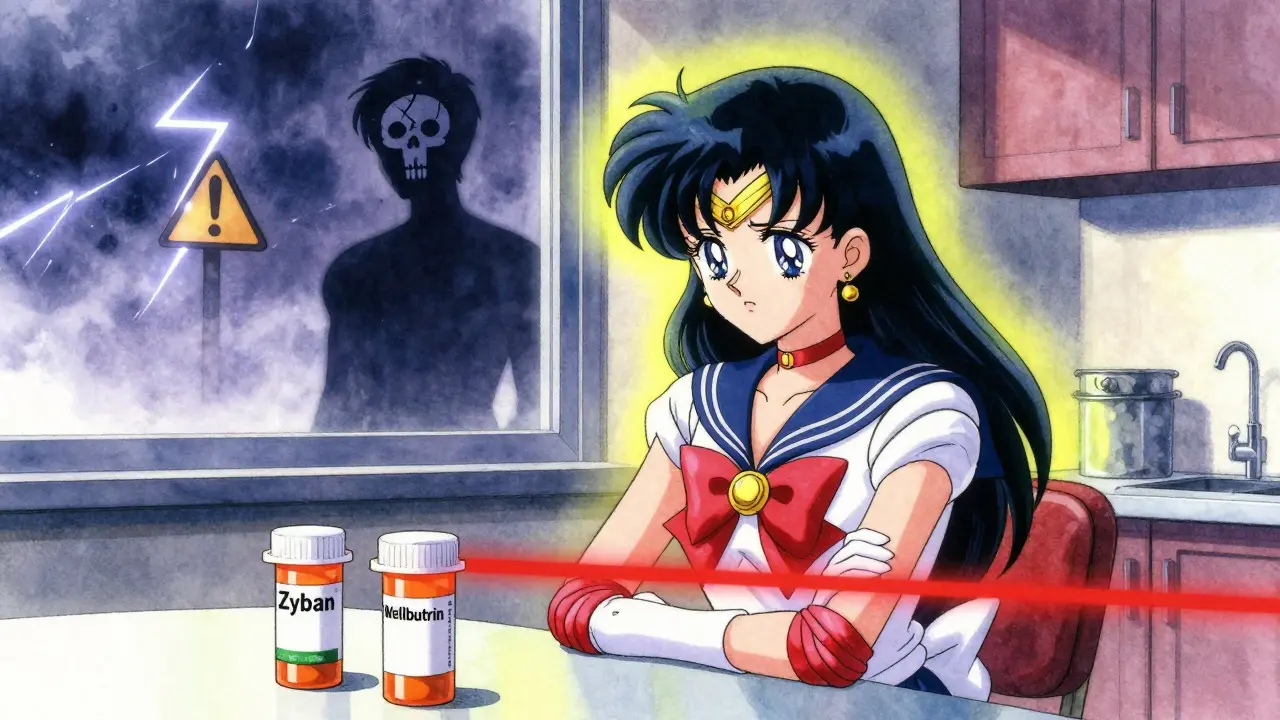
Avoid other bupropion products. If you’re already taking Wellbutrin for depression, don’t add Zyban on top. You’ll double your dose and increase your risk of seizures. The same goes for generics like Aplenzin or Forfivo-same active ingredient, same risks.
Don’t combine it with varenicline (Chantix). The FDA says this combo increases the risk of serious neuropsychiatric side effects: agitation, hostility, suicidal thoughts. Even though some trials like EAGLES showed mixed results, most doctors avoid it. If you’ve tried one and it didn’t work, wait at least a month before switching to the other.
Watch out for seizure triggers. Bupropion lowers your seizure threshold. If you’ve ever had a seizure-even as a kid-you shouldn’t take it. The risk is low (about 1 in 1,000) for healthy people, but it jumps if you’re taking other seizure-lowering drugs like antipsychotics, stimulants, or even some antibiotics like ciprofloxacin. If you’re on any of these, ask your doctor if bupropion is safe.
Other Medications to Be Careful With
Bupropion is broken down in your liver by an enzyme called CYP2B6. Anything that messes with that enzyme can change how much of the drug stays in your body.
- Antidepressants like SSRIs (Prozac, Zoloft)-not a direct interaction, but combining them increases the chance of side effects like anxiety or insomnia. Not dangerous, but can make quitting harder.
- Stimulants (Adderall, Ritalin)-both raise heart rate and blood pressure. Add bupropion to the mix, and you’re stacking the deck. People with high blood pressure or heart issues should avoid this combo.
- Alcohol-yes, even a beer or glass of wine. Alcohol lowers your seizure threshold too. If you’re used to drinking daily, quitting both alcohol and smoking at once is a recipe for trouble. Cut back slowly, or delay starting bupropion until you’re alcohol-free.
- Over-the-counter cold meds-some contain pseudoephedrine or phenylephrine. These can raise your blood pressure. Bupropion does too. Together, they can push your numbers into dangerous territory.
Always tell your pharmacist every medication you take-even herbal ones. St. John’s Wort, for example, affects serotonin and can worsen side effects. Kava kava? It increases seizure risk. Even some CBD oils can interfere with liver enzymes.
Side Effects You Shouldn’t Ignore
Most people tolerate bupropion fine. But side effects are common-and some are easy to fix.
- Insomnia-the #1 complaint. About 24% of users report trouble sleeping. Fix it by taking your second dose before 5 p.m. If it still keeps you up, talk to your doctor about lowering the dose or switching timing.
- Dry mouth-drink water. Chew sugar-free gum. It’s annoying, but not dangerous.
- Headaches-usually mild and fade after a week.
- Nausea-take it with food. Most people get used to it.
- Agitation or anxiety-if you feel unusually restless, irritable, or have thoughts of self-harm, stop taking it and call your doctor immediately. This is rare but serious.
One study found that 28% of people quit bupropion because of side effects. But here’s the twist: 63% of people who stuck with it for the full course were smoke-free at three months. The ones who quit early? Only 41% were still off cigarettes.
Bupropion vs. Other Quitting Meds
How does bupropion stack up against the competition?
| Medication | How It Works | 6-Month Quit Rate | Common Side Effects | Best For |
|---|---|---|---|---|
| Bupropion (Zyban) | Blocks dopamine/norepinephrine reuptake; inhibits nicotine receptors | 19-23% | Insomnia, dry mouth, headache | People with depression, those avoiding nicotine |
| Varenicline (Chantix) | Partial nicotine receptor agonist | 22-25% | Nausea, vivid dreams, mood changes | People with strong cravings, no history of mental illness |
| NRT (Patch + Gum) | Replaces nicotine gradually | 16-20% | Skin irritation, jaw pain, nausea | People who want immediate relief, those with heart disease |
| Nicotine Vaping (e-cigarettes) | Delivers nicotine without smoke | 18-21% | Throat irritation, cough, unknown long-term risks | Younger users, those skeptical of pills |
Bupropion wins on cost. A 30-day supply of generic bupropion costs about $35. Varenicline? Around $550. Insurance often covers bupropion, but not always Chantix. For people on tight budgets, that makes a huge difference.
It also doesn’t cause weight gain like some NRTs. Many people quit smoking and gain 10 to 15 pounds. Bupropion helps prevent that. One Reddit user wrote: “I lost 8 pounds while quitting with Zyban. My sister gained 20 with patches.”
Who Should Avoid Bupropion
It’s not for everyone. You should not take it if you:
- Have a history of seizures
- Have an eating disorder like anorexia or bulimia
- Are currently on an MAOI or stopped one in the last 14 days
- Are allergic to bupropion or any of its ingredients
- Are already taking another bupropion product
- Have uncontrolled high blood pressure
Also, if you’ve had suicidal thoughts in the past, or have bipolar disorder, your doctor needs to monitor you closely. Bupropion can trigger mania in some people.

What Happens After You Stop
Here’s the truth: bupropion doesn’t rewire your brain permanently. It helps you get through the first few months. Once you stop taking it, the support goes away.
Studies show most people who quit with bupropion stay off cigarettes for 6 months. But after that, relapse rates climb. That’s why behavioral support matters-counseling, apps, quitlines. The CDC found that people who used their free support materials alongside bupropion were 45% more likely to stick with it.
There’s no magic pill that makes you never want a cigarette again. But bupropion gives you the breathing room to build new habits. The goal isn’t to rely on it forever-it’s to use it as a bridge.
What’s New in 2026
There’s exciting stuff on the horizon. In 2023, the FDA approved a new combo: bupropion + a low-dose nicotine patch. Early results show 31% of people stayed quit at 6 months-better than either alone.
Researchers are also testing a new version of bupropion that’s less likely to cause seizures. And they’re looking at genetic testing. Some people have a gene variation (CYP2B6) that makes them break down bupropion slowly. Those people might need a lower dose. Others break it down too fast-they might need more. Personalized dosing could be the next big step.
And while vaping is replacing cigarettes for many, bupropion is now being studied for vaping cessation too. Early data suggests it helps reduce the urge to vape, especially for people who use it to cope with stress.
Bottom line: bupropion is still one of the most effective, affordable, and accessible tools for quitting smoking. But it’s not a magic bullet. It works best when you know the risks, avoid the bad combos, and pair it with real support.
Can I take bupropion if I’ve had seizures before?
No. If you’ve ever had a seizure-even once as a child-you should not take bupropion. It lowers your seizure threshold, and even a single seizure can be life-threatening. This is a hard stop. Tell your doctor your full medical history, including childhood seizures or febrile convulsions.
How long does it take for bupropion to start working?
It takes 7 to 10 days for bupropion to build up in your system enough to reduce cravings. That’s why you start taking it 1 to 2 weeks before your quit date. If you wait until you quit to start the pill, you’ll be fighting intense cravings with no help. Don’t skip the lead-in period.
Can I drink alcohol while taking bupropion?
It’s not recommended. Alcohol increases your risk of seizures, and so does bupropion. If you drink regularly, quitting both at once can be dangerous. Talk to your doctor about tapering alcohol first. If you only have an occasional drink, keep it to one drink and never binge. The combination is unpredictable and risky.
Is bupropion safe if I have high blood pressure?
It depends. Bupropion can raise blood pressure slightly. If your blood pressure is well-controlled with medication, your doctor may still approve it. But if your blood pressure is uncontrolled or you’re on multiple medications for it, they’ll likely recommend something else. Get your BP checked before starting and again after 2 weeks.
What if bupropion doesn’t work for me?
It’s not a failure. About 1 in 3 people don’t respond well to bupropion. If you’ve taken it for 6 to 8 weeks and still crave cigarettes, talk to your doctor. You might switch to varenicline, try NRTs, or combine them. Some people succeed with counseling alone. The key is not giving up-just trying a different strategy.
Can I take bupropion with antidepressants?
Yes, but carefully. Bupropion is often prescribed with SSRIs like sertraline for people with depression who smoke. But combining them increases the risk of insomnia, anxiety, and agitation. Your doctor will start with low doses and monitor you closely. Never combine bupropion with MAOIs or St. John’s Wort.
Next Steps
If you’re thinking about bupropion, start by talking to your doctor. Bring a list of every medication, supplement, and herb you take-even the ones you think don’t matter. Ask: “Is bupropion safe with what I’m already on?”
Don’t buy it online or take someone else’s prescription. Generic versions are fine, but only if they’re from a licensed pharmacy. And don’t rush. The first week is the hardest. Stick with it. Most people who quit with bupropion say the cravings faded after 10 days-but only if they didn’t quit the pill too soon.
Quitting smoking isn’t about willpower. It’s about chemistry. Bupropion helps balance your brain’s chemistry so you have a real shot. Just make sure you’re not mixing it with something that could undo all the good it does.
Christi Steinbeck
January 19, 2026 AT 04:13I quit smoking with Zyban in 2021 and still haven’t had a craving since. Seriously, it’s not magic-it’s chemistry. I was on Zoloft too, and my doc warned me about the combo, but we started low and monitored me. Insomnia sucked at first, but moving my second dose to 3 p.m. fixed it. I lost 12 pounds. My sister used patches and gained 20. Not even close.
Don’t let the side effects scare you. If you’re ready to change, this is your best shot. Just don’t mix it with alcohol or cold meds. I learned that the hard way after one beer and a sinus pill-felt like my head was going to explode. Don’t be me.
Josh Kenna
January 19, 2026 AT 21:07so i took bupropion and it made me feel like a robot on a caffeine bender. like i couldnt stop talking but also wanted to punch my dog. i didnt quit smoking. i just became a more aggressive version of myself. also my tongue felt like sandpaper for 3 weeks. why do doctors still push this? its like giving someone a chainsaw to fix a leaky faucet.
Erwin Kodiat
January 20, 2026 AT 05:48Man, I’ve seen so many people try to quit smoking with patches, gums, vapes-you name it. But bupropion? That’s the one that actually lets you breathe again. Not because it’s perfect, but because it doesn’t trick your brain with nicotine. It lets you feel the withdrawal without drowning in it.
I used it with counseling. Took me three tries to quit, but this time stuck. Now I run 5Ks on weekends. Who knew quitting smoking would make me feel alive again?
sujit paul
January 22, 2026 AT 00:15Let me be clear: Big Pharma has weaponized bupropion to create dependency on pharmaceuticals while pretending to help you quit. The real reason it works is because it numbs your emotional pain-not because it’s a miracle drug. They don’t tell you that depression and smoking are symptoms of a broken society, not chemical imbalances.
And yet, they profit. The 20% quit rate? That’s a marketing lie. Most relapse because they never addressed trauma, poverty, or isolation. You think a pill fixes that? Wake up. The real solution is community, not chemistry.
Aman Kumar
January 22, 2026 AT 07:12It's not merely a pharmacological intervention-it's a neurochemical recalibration that modulates dopaminergic and noradrenergic pathways, thereby attenuating the reinforcing properties of nicotine through receptor antagonism and reuptake inhibition. Yet, the clinical efficacy remains statistically marginal when compared to behavioral interventions. The FDA's approval is less a validation of therapeutic superiority and more a reflection of regulatory inertia.
Moreover, the CYP2B6 polymorphism data is systematically underreported. If you're a slow metabolizer, you're essentially ingesting a seizure-inducing cocktail. Your doctor didn't test your genotype? You're playing Russian roulette with your frontal lobe.
Jake Rudin
January 22, 2026 AT 20:44It’s fascinating, isn’t it?-how we’ve turned a human struggle into a biochemical problem, then solved it with a pill that has more side effects than benefits for most… and yet, we call it progress.
We don’t ask why people smoke. We don’t ask about loneliness, trauma, or the crushing weight of modern life. We just hand them a chemical bandage and call it freedom. But freedom isn’t the absence of craving-it’s the presence of meaning. And bupropion doesn’t give you meaning.
It just makes the silence between cigarettes a little less unbearable.
Lydia H.
January 23, 2026 AT 04:37I’ve been on bupropion for 11 weeks now. Cravings? Gone by week 4. Insomnia? Still there, but I just drink chamomile tea and call it a night. I’m not saying it’s perfect-but it’s the first thing that didn’t make me feel like a zombie or a junkie.
And honestly? The fact that it helps with weight too? Huge. I didn’t realize how much I used food to cope after smoking. Now I’m eating less and moving more. It’s not about the pill-it’s about the space it gives you to rebuild.
Valerie DeLoach
January 24, 2026 AT 17:36For anyone considering bupropion: get your liver enzymes checked. And if you’re on any antibiotics-especially ciprofloxacin-talk to your pharmacist. I didn’t, and I had a seizure during week 5. Not fun. Not glamorous. Just terrifying.
My neurologist said it was a fluke, but I still blame myself for not reading the fine print. Don’t be like me. Print out the drug interaction sheet. Highlight everything. Show it to your doctor. You’re worth the extra 20 minutes.
Tracy Howard
January 25, 2026 AT 12:53Y’all in the U.S. are so obsessed with popping pills like they’re Skittles. In Canada, we quit smoking with willpower, cold turkey, and a damn good hockey game to distract us. Bupropion? That’s American medicine at its worst-overprescribed, overhyped, and under-questioned.
And don’t even get me started on the cost. $35? That’s a joke. In Toronto, you’d get free nicotine patches from the public health unit. We don’t need Big Pharma to tell us how to live.
Astha Jain
January 26, 2026 AT 01:35i tried zyban and it made me so anxious i started crying in the grocery store over oat milk. like… why is the oat milk so expensive? why does everyone have a cat? why am i even here? i quit the pill after 3 days. now i vape. its not perfect but at least i dont feel like my brain is being rewired by a drunk intern.
Phil Hillson
January 26, 2026 AT 13:52So bupropion doubles your chance of quitting? Cool. But what about the 80% who still fail? And what about the ones who get seizures? Or mania? Or suicidal thoughts? No one talks about that. They just show you a chart with a 20% success rate like it’s a miracle.
Meanwhile, the real success story? The guy who quit cold turkey after his kid was born. No pills. No patches. Just love. But that doesn’t sell.
Stop selling pills. Start selling hope.
Jacob Hill
January 26, 2026 AT 21:51Just a heads-up: if you’re on Adderall and thinking about bupropion-DON’T. I did it. Thought I was superhuman. Heart rate hit 130. ER visit. Now I’m on a beta-blocker. The doc said it was a ‘classic interaction.’ Classic? More like avoidable.
Always check with your pharmacist. Even if you think you’re fine. I didn’t. And now I have a new fear: caffeine.
Lewis Yeaple
January 27, 2026 AT 05:31The efficacy of bupropion in smoking cessation is supported by randomized controlled trials with a number needed to treat (NNT) of approximately 7. This places it in the moderate efficacy range, comparable to nicotine replacement therapy but inferior to varenicline. However, its advantage lies in its cost-effectiveness and minimal weight gain liability.
Pharmacokinetic considerations are paramount: bupropion is metabolized primarily via CYP2B6, with genetic polymorphisms significantly altering plasma concentrations. The 150 mg BID regimen is predicated on steady-state plasma concentrations achieved after 7–10 days, underscoring the necessity of pre-quit initiation.
Contraindications are non-negotiable. A history of seizure disorder, eating disorders, or concurrent MAOI use renders bupropion absolutely contraindicated. The risk-benefit ratio must be evaluated on an individualized basis, with emphasis on comorbid psychiatric conditions.
Jackson Doughart
January 28, 2026 AT 16:29I used bupropion after losing my brother to lung cancer. I didn’t want to be the next one. It wasn’t easy-I cried a lot. But it gave me the space to grieve without reaching for a cigarette.
People say it’s just a drug. But sometimes, a drug is the thing that lets you feel again. I didn’t quit smoking because of chemistry. I quit because I finally had the courage to face my pain.
And that? That’s worth more than any statistic.
Malikah Rajap
January 29, 2026 AT 00:19Wait, wait-so if I take bupropion and then drink wine, I could have a seizure? But I’ve been doing that for years! I thought it was just me being dramatic when my hands shook after two glasses…
Oh my god. I’m gonna stop drinking tonight. And I’m gonna call my doctor tomorrow. I didn’t know. I really didn’t know. Thank you for saying this. I think I just saved my life.