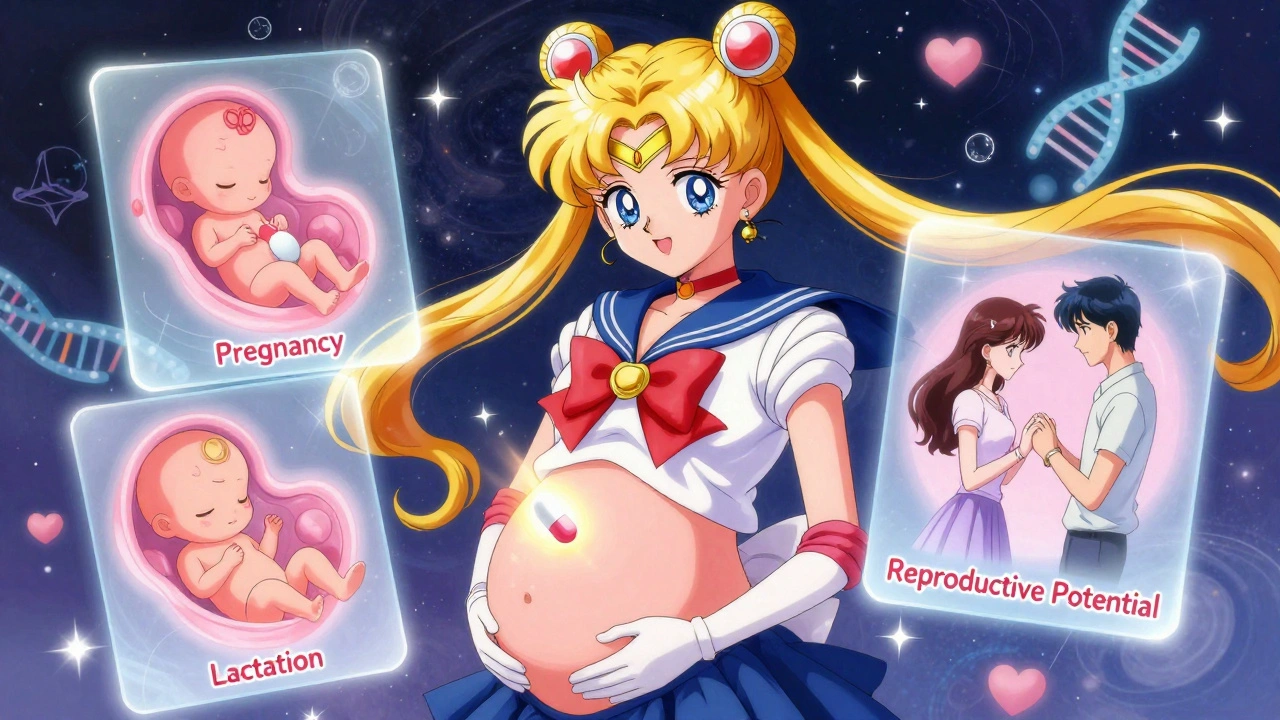
Back in 2015, the FDA did something big. They got rid of the old A, B, C, D, X pregnancy categories that doctors and patients had been using for over 35 years. Why? Because those letters didn’t tell you anything real. They made people think a drug labeled "C" was "kind of risky," when really, it could mean anything from "no data" to "serious harm in animals, no human studies." That’s not helpful when you’re pregnant or breastfeeding and need to make a decision about your health-or your baby’s.
What Replaced the Letter Categories?
The new system is called the Pregnancy and Lactation Labeling Rule, or PLLR. It doesn’t use letters. Instead, it gives you real stories. Real numbers. Real context. Every prescription drug label now has three clear sections under Section 8: Pregnancy, Lactation, and Females and Males of Reproductive Potential. Each one follows the same structure: Risk Summary, Clinical Considerations, and Data. No more guessing. No more oversimplifying.Reading the Pregnancy Section: Risk Summary
The Risk Summary isn’t a warning. It’s a baseline. It starts by telling you the background risk of birth defects-about 3% in every pregnancy-and miscarriage, which happens in 10-20% of known pregnancies. That’s important. Because if a drug increases risk from 3% to 4%, that’s not the same as jumping from 3% to 15%. The label now tells you exactly how much higher the risk is, if any. For example, you might read: "Exposure during the first trimester is associated with a 1.5-fold increased risk of neural tube defects compared to the background rate of 0.1% to 0.2%." That means out of 1,000 pregnancies, instead of 1-2 babies having a neural tube defect, you might see 1-3. That’s different from hearing "Category C" and assuming the worst.Clinical Considerations: What You Can Actually Do
This part tells you what to do. Not just "avoid," but "monitor," "test," or "adjust dose." For instance:- "Monitor fetal growth every 4 weeks if used after 20 weeks gestation."
- "Pregnancy testing recommended prior to initiation and monthly during treatment."
- "Use effective contraception during treatment and for 30 days after last dose."
The Data Section: Where the Numbers Come From
This is the fine print-but it matters. It tells you whether the information comes from animal studies, small human trials, or large registries tracking thousands of pregnancies. It notes limitations: "Data are limited to observational studies; no randomized trials exist." Or: "Includes 1,200 pregnancies with 85% follow-up through delivery." You’ll also see if there’s an active pregnancy registry for that drug. As of 2023, there are 47 such registries in the U.S. tracking outcomes for drugs like SSRIs, anticonvulsants, and biologics. These aren’t just paperwork-they’re how we learn what’s safe. If you’re prescribed a drug with a registry, you might be asked to join. It’s not a burden. It’s how future moms get better information.
Lactation: How Much Gets Into Breast Milk?
The old system didn’t even have a separate lactation section. Now it does-and it’s detailed. The label tells you:- How much of the drug passes into breast milk (e.g., "infant exposure is 5% of maternal weight-adjusted dose").
- Whether the drug is detectable in infant serum (e.g., "serum levels below quantifiable limits in 90% of infants").
- Potential effects on the baby (e.g., "no adverse effects reported in 200 exposed infants; drowsiness noted in 1 case").
What About Fertility and Contraception?
Section 8.3 is often overlooked, but it’s critical. It tells you if the drug affects fertility, what kind of contraception is needed, and when to test for pregnancy. For example:- "Contraception with failure rate <1% recommended during treatment and for 6 months after last dose."
- "May cause oligospermia; sperm count should be assessed before treatment."
- "Pregnancy test required within 7 days before starting therapy."
Why This Matters More Than Ever
In 2025, over 1,800 prescription drugs in the U.S. have updated PLLR labeling. That’s 78% of all prescription meds. And it’s not just about safety-it’s about empowerment. A 2023 study found that when doctors used PLLR labels during counseling, 71% of patients felt more confident in their decisions. That’s huge. The old letter system made people afraid. The new system makes people informed. Yes, it takes longer to read. Yes, it’s more complex. But it’s accurate. And in medicine, accuracy beats speed every time.
What to Do If You’re Confused
If you’re reading a drug label and it feels overwhelming, you’re not alone. Many doctors still feel the same way. Here’s what you can do:- Use MotherToBaby or TERIS-free, evidence-based services staffed by specialists who explain drug risks in plain language.
- Ask your pharmacist: "Can you help me understand the pregnancy and breastfeeding info on this label?" Most pharmacists now have access to PLLR summaries.
- Check if your EHR system has a built-in PLLR tool. Many do, but only 42% use it well. If yours doesn’t, ask for it.
- Don’t stop a medication without talking to your provider. Sometimes, the risk of stopping is higher than the risk of continuing.
What’s Coming Next?
The FDA is working on visual risk icons to go with the text-like traffic lights for risk levels. They’re also pushing for more diverse data in pregnancy registries. Right now, only 15% of participants are Black or Hispanic, even though those groups make up 30% of pregnancies. Better data means better care for everyone. The goal isn’t perfection. It’s progress. The PLLR isn’t just a label change. It’s a shift in how we think about pregnancy and breastfeeding-not as obstacles to treatment, but as conditions that deserve thoughtful, individualized care.Are the old pregnancy letter categories (A, B, C, D, X) still used today?
No. The FDA officially retired the A, B, C, D, X categories in 2015 with the implementation of the Pregnancy and Lactation Labeling Rule (PLLR). While you might still see them on older packaging or in outdated resources, all new and updated drug labels since 2020 use the narrative format. Relying on the old letters can lead to dangerous misunderstandings because they don’t reflect real risk levels or context.
If a drug says "risk cannot be ruled out," does that mean I shouldn’t take it?
Not necessarily. "Risk cannot be ruled out" is a phrase you’ll see in the Data section of older labels, but under PLLR, labels give you specific numbers. For example, a drug might say, "No increased risk of major malformations observed in 800 exposed pregnancies." That’s far more useful than "Category C." Always look for the Risk Summary and Clinical Considerations. If the data shows no clear harm and the drug is essential for your health, continuing it may be safer than stopping.
Can I breastfeed while taking medication?
Many medications are safe during breastfeeding. The Lactation section of the drug label will tell you how much of the drug passes into breast milk and whether any effects have been seen in infants. For example, sertraline and levothyroxine show very low infant exposure and no reported adverse effects. If the label says "infant exposure is less than 10% of maternal dose" and "no adverse effects reported," breastfeeding is typically safe. Always check the label and consult a lactation specialist or MotherToBaby if unsure.
Why do some drug labels say "no data available" for pregnancy?
It means there are no human studies-or not enough to draw conclusions. This doesn’t mean the drug is dangerous. It just means we don’t know yet. Many drugs are labeled this way because ethical research in pregnancy is limited. In these cases, doctors rely on animal data, case reports, and registries. If the drug is critical for your health, your provider may still recommend it, especially if similar drugs are known to be safe. Always weigh the benefit of treating your condition against the unknown risk.
How do I know if a pregnancy registry exists for my medication?
Check the Pregnancy section of the drug label. If there’s an active registry, it will be listed under "Pregnancy Exposure Registry" with contact information. You can also visit MotherToBaby.org or call 1-866-626-6847. They maintain a full list of all 47 active U.S. registries. Joining a registry helps researchers understand how drugs affect pregnancies and improves future labeling for other women.
Is it safe to take over-the-counter drugs during pregnancy?
Not all OTC drugs are safe, and many don’t have PLLR labeling because they’re not prescription. That doesn’t mean they’re risk-free. For example, NSAIDs like ibuprofen are linked to fetal kidney issues after 20 weeks. Acetaminophen is generally considered low risk, but long-term use may have unknown effects. Always check with your provider before taking any OTC medication, even if it seems harmless. Look for labels that say "consult your doctor if pregnant"-that’s there for a reason.
Next Steps: What to Do Right Now
If you’re currently taking medication and are pregnant, planning to become pregnant, or breastfeeding:- Find the most recent prescribing information for your drug-visit the manufacturer’s website or use the FDA’s DailyMed database.
- Go straight to Section 8.1 (Pregnancy) and Section 8.2 (Lactation).
- Read the Risk Summary first-look for numbers, not words like "may" or "possible."
- Check Clinical Considerations for actionable steps.
- If unsure, contact MotherToBaby or ask your pharmacist for a plain-language summary.
Monica Evan
December 11, 2025 AT 06:43Jean Claude de La Ronde
December 11, 2025 AT 23:54Jim Irish
December 12, 2025 AT 18:45Mia Kingsley
December 14, 2025 AT 03:10Katherine Liu-Bevan
December 15, 2025 AT 18:54Courtney Blake
December 16, 2025 AT 07:53Kristi Pope
December 17, 2025 AT 15:51Eddie Bennett
December 17, 2025 AT 21:13Doris Lee
December 18, 2025 AT 01:06Neelam Kumari
December 18, 2025 AT 11:11Queenie Chan
December 18, 2025 AT 12:06Paul Dixon
December 19, 2025 AT 01:45john damon
December 20, 2025 AT 06:20