Most people think flushing medication down the toilet is bad for the environment-and they’re right. But there’s a small, critical exception. The FDA flush list exists for one reason: to prevent deaths. If you have certain powerful painkillers or sedatives at home and can’t get them to a take-back program, flushing them might be the safest thing you can do.
Why Flushing Is Normally a Bad Idea
Flushing pills, patches, or liquids into the sewer system doesn’t make them disappear. Pharmaceuticals end up in rivers, lakes, and even drinking water supplies. The EPA and scientists have found traces of medications in waterways across the U.S. for decades. That’s why federal guidelines say: never flush unless absolutely necessary. But here’s the catch: some drugs are so dangerous that the risk of keeping them in the house is greater than the risk of flushing them.The FDA Flush List: Only 15 Active Ingredients
The FDA doesn’t list brand names. It lists active ingredients. And only 15 of them are on the official flush list as of April 2024. These aren’t your everyday prescriptions. These are drugs that can kill someone-sometimes in minutes-if a child, pet, or stranger finds them in the trash. Here’s exactly what’s on the list:- Buprenorphine (in brands like SUBOXONE, BELBUCA, BUTRANS)
- Fentanyl (ABSTRAL, ACTIQ, DURAGESIC patches, FENTORA)
- Hydromorphone (EXALGO extended-release)
- Meperidine (DEMEROL)
- Methadone (DOLOPHINE, METHADOSE)
- Morphine (ARYMO ER, AVINZA, EMBEDA, KADIAN, MORPHABOND ER, MS CONTIN)
- Oxymorphone (OPANA, OPANA ER)
- Tapentadol (NUCYNTA, NUCYNTA ER)
- Sodium oxybate (XYREM, XYWAV)
- Diazepam rectal gel (DIASTAT, DIASTAT ACUDIAL)
- Methylphenidate transdermal system (DAYTRANA)
Why These Drugs? The Real Danger
These medications aren’t dangerous because they’re strong. They’re dangerous because they’re deadly in tiny doses. A single fentanyl patch can kill a child. One dose of methadone can stop someone’s breathing. A child who finds a used patch stuck to the floor, or a pill in the trash, might not even know what it is-but their body will react fast. Between 2010 and 2022, the FDA recorded 217 cases of accidental fentanyl exposure in children. Nine of them died. In one case, a toddler found a discarded patch on a playground slide. In another, a teenager took a leftover pill from a relative’s medicine cabinet. The FDA’s own environmental review in 2021 concluded: for these 15 drugs, the risk of accidental death outweighs the risk of water contamination.When to Flush: The Three-Step Rule
You should never flush just because it’s convenient. Here’s the official order of what to do:- Use a take-back program. This is always the first choice. The DEA runs National Take Back Days twice a year-in April and October. You can also find year-round drop-off sites at pharmacies, hospitals, or police stations. Search the DEA’s website for the nearest location.
- If no take-back is available, and the drug is on the FDA flush list, flush it. This applies only if you’re in a home with children, pets, or visitors who might access the medicine. If you live alone and the meds are locked up, you don’t need to flush.
- If the drug isn’t on the list, mix it with dirt, coffee grounds, or cat litter, seal it in a plastic bag, and throw it in the trash. Don’t crush pills. Don’t dissolve them. Just mix and seal.
Special Rules for Patches
Fentanyl, buprenorphine, and methylphenidate patches are especially risky. They still contain medicine even after use. If you’re flushing a patch:- Fold it in half, sticky side to sticky side.
- Flush it immediately.
- Don’t let it sit in the sink or trash.
What About Empty Packaging?
Before tossing the bottle or box in the trash, remove or scratch out your name, prescription number, and any other personal info. Identity thieves have been known to steal empty pill bottles to forge prescriptions.What’s Not on the List? (And Why You Shouldn’t Flush It)
You might be tempted to flush:- Antibiotics
- Antidepressants
- Birth control pills
- Cholesterol meds
- Insulin
What’s Changed Recently?
The FDA doesn’t keep this list static. In 2021, they removed 11 medications because newer versions had abuse-deterrent features-like pills that turn to gel when crushed, making them harder to misuse. In early 2024, the FDA announced it’s reviewing whether to add new transdermal forms of buprenorphine after 17 accidental exposures in children last year. They’re also considering removing three drugs by 2025 if safety improvements make flushing unnecessary.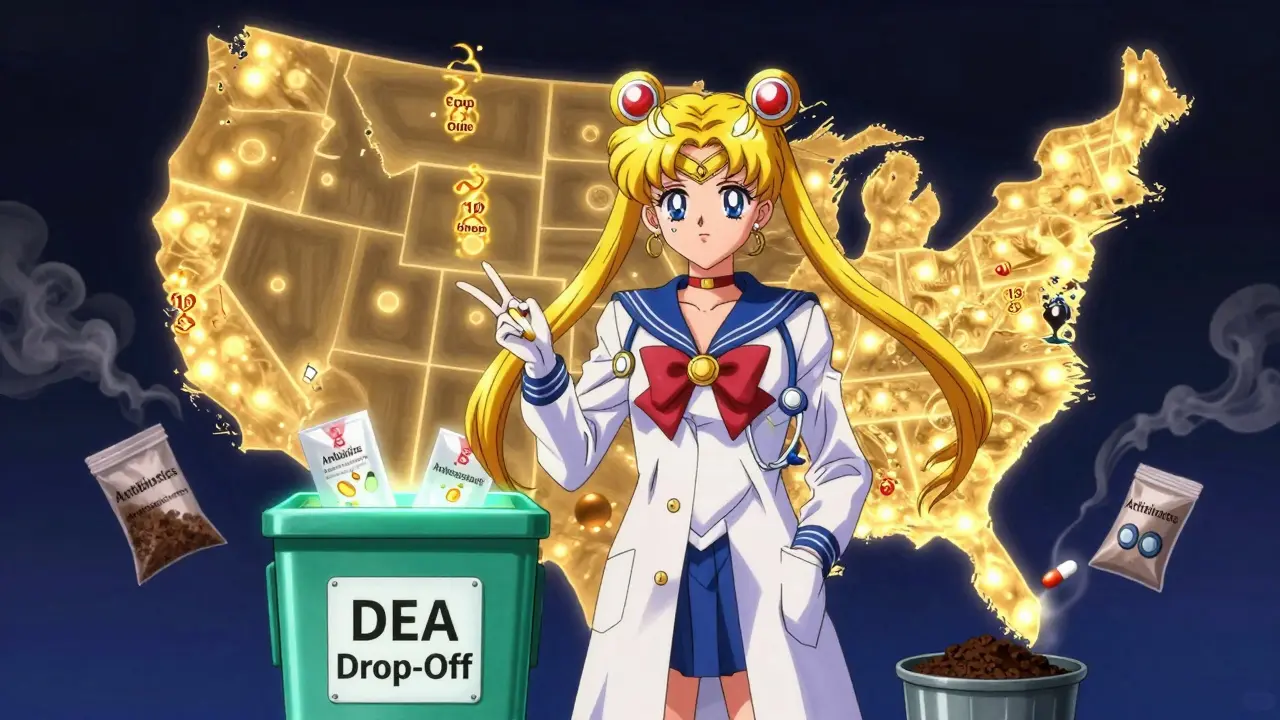
What If You Can’t Find a Take-Back Site?
In rural areas, take-back sites are rare. One site per 50,000 people isn’t uncommon. If you’re in one of those areas and have a drug on the flush list, flushing is the FDA’s official backup plan. But don’t give up. Check:- Your local pharmacy-many now have drop boxes.
- Your city or county health department website.
- The DEA’s online locator: dea.gov/takeback
What About Other Countries?
This advice applies only to the United States. New Zealand, Canada, and the EU have different rules. In New Zealand, for example, pharmacies offer free return programs for all medications. No flushing is ever recommended. If you’re outside the U.S., check your local health authority. Don’t assume U.S. rules apply.What Happens If You Flush the Wrong Thing?
Flushing non-flushable meds won’t get you in legal trouble. But it contributes to long-term environmental harm. The EPA estimates that pharmaceutical pollution affects aquatic life, disrupts hormone systems in fish, and may contribute to antibiotic resistance. It’s not about punishment. It’s about responsibility.Final Reminder: This Is a Last Resort
The FDA’s message is clear: Take-back is always better. Flushing is only for when there’s no other option-and only for the 15 drugs on the list. If you’re unsure, call your pharmacist. They know the list. They know your meds. They’ve seen the consequences of improper disposal. Don’t guess. Don’t assume. Don’t flush unless you’re certain.One wrong pill in the wrong hands can be fatal. The FDA flush list exists to stop that.
Matthew Hekmatniaz
January 1, 2026 AT 16:28Really glad this got shared. I had no idea flushing certain meds was actually the safer option in some cases. My grandma had a fentanyl patch left over after her surgery, and we just tossed it in the trash thinking we were being responsible. Scary to think how easily a kid or pet could’ve gotten to it.
Thanks for laying out the list so clearly. I’m printing this out and taping it to our medicine cabinet.
Liam George
January 3, 2026 AT 04:29Let’s be real - the FDA doesn’t care about your water. They’re just letting Big Pharma off the hook. These ‘flush list’ drugs? They’re all patented, high-margin opioids. The real agenda? Keep the public dependent while shifting blame onto disposal. The EPA’s been monitoring pharmaceutical runoff for decades - but you never hear about the 90% of meds that aren’t flushed because they’re not profitable enough to kill people with.
They’re not protecting kids. They’re protecting stock prices. And the ‘take-back’ programs? Mostly empty boxes in Walgreens with security cameras pointed at the drop-off. You think that’s coincidence?
sharad vyas
January 5, 2026 AT 00:20In India, we don’t flush anything. Even antibiotics. We mix with old newspaper and throw in dustbin. Sometimes neighbor’s dog eats it - not good. But flushing? Too much fear of water. We trust earth to take it. Maybe not perfect. But also not poisoning rivers with pills.
Still, I agree - if child or pet can reach it, better flush. Life more important than river.
Dusty Weeks
January 5, 2026 AT 09:03so like… if i have oxycontin and no takeback site, i just flush it?? 😳
also why is there no app for this?? like a barcode scanner that tells you if your pill is flushable??
also why do patches even exist if they’re just little death stickers??
also i flushed my ex’s antidepressants last year… hope that’s not illegal?? 🤷♂️💊
Sally Denham-Vaughan
January 5, 2026 AT 19:04My cousin’s 3-year-old found a fentanyl patch in the trash last winter. She stuck it to her arm like a sticker. Took 45 minutes to get to the hospital. She’s fine now, but…
Just wanted to say - this post saved lives. I’m flushing my dad’s leftover methadone tomorrow. No take-back in my town. And I’d rather my water taste like chemicals than my niece die from a sticky square on the floor.
Bill Medley
January 7, 2026 AT 10:48Flushing is a last resort. Take-back is preferred. The list is limited. Compliance is critical.
Do not flush unless all conditions are met.
Richard Thomas
January 8, 2026 AT 21:43There’s an ethical tension here that’s rarely discussed. We’re told to avoid environmental harm, yet we’re also told that certain substances are so dangerous they warrant immediate destruction - even if that destruction pollutes. It’s a utilitarian calculus: one life saved versus an uncertain, long-term ecological cost.
But here’s the deeper question: Why do we allow these drugs to be distributed in the first place with such lethal potential? Why aren’t we investing more in abuse-deterrent formulations, or in universal take-back infrastructure, rather than treating disposal as a reactive afterthought? The FDA’s list is a symptom, not a solution.
And yet - in the absence of systemic change - I’ll flush the patch. Because the alternative is too terrifying to ignore.
Paul Ong
January 10, 2026 AT 11:12flush the patches fold em sticky side in and go
takeback if you can but dont wait forever
your kid dont care about the river
they care about what they find on the floor
just do it
its not hard
its just scary
so do it anyway
Andy Heinlein
January 12, 2026 AT 02:13Just found out my neighbor’s kid almost died from a patch last year 😭
Now I’m flushing my dad’s pain meds even though we have a take-back site 20 mins away - just in case someone sneaks in the garage. Better safe than sorry. Also, why does no one talk about this more?? This is life or death info and it’s buried in a government PDF.
Thanks for sharing this. I’m sending it to my whole family.
Ann Romine
January 12, 2026 AT 09:07I’m curious - how often is the FDA flush list updated? Are there any drugs being considered for removal right now? I’ve heard some newer formulations are harder to abuse - like the ones that turn to gel when crushed. Is that why some were taken off recently?
Would love to see a public tracker for this. Like a living document.
Austin Mac-Anabraba
January 13, 2026 AT 04:32Let’s cut the narrative. The FDA’s flush list is not about safety. It’s about liability management. They knew they’d be sued when children died from discarded patches. So they created a ‘safe’ pathway - not to protect the environment, not to protect families - but to protect themselves from litigation. The environmental cost is an acceptable externality.
And the fact that you’re being told to flush instead of demanding better infrastructure? That’s the real tragedy. You’re being trained to accept broken systems as normal.
Don’t flush. Demand change. But if you do? At least know you’re complicit.